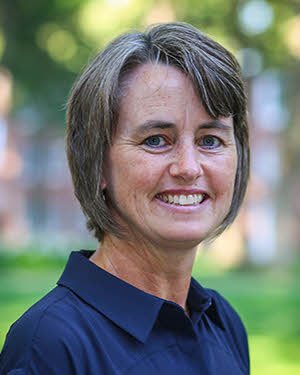
During the course of my four years at GC, I was able to explore all of the different aspects of the business department, eventually figuring out that my main interests lie within marketing. I will be starting my master’s program in marketing at the University of Reykjavik in the fall, and studying at GC has definitely helped me prepare well and set me up for success.

Marketing
Major | Minor
Why marketing matters
Understand how people decide, then build the brand, the message, and the campaign that reaches them at the moment it matters.
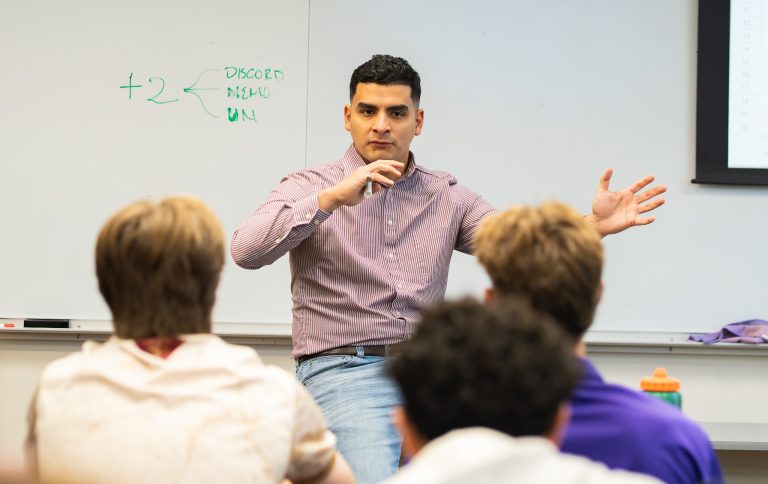
Marketing is often mistaken for advertising. Advertising is one output, but the actual discipline is research, psychology, strategy, and measurement: figuring out who your customer is, what they’re really choosing between, where they lose interest, and what would change their mind. The creative work gets better when it’s built on that foundation.
Goshen College’s marketing program, offered as both a major and a minor, builds those creative and analytical skills through real campaigns with local businesses, nonprofits, and student-led enterprises in Goshen, Indiana. You won’t just talk about ideas; you’ll move them, starting with your very first projects. Along the way, you’ll learn to craft brand stories and use data-driven strategy to connect people and ideas with purpose.
The program is grounded in ethical leadership, social responsibility, and hands-on work, and those skills travel with you across industries and across borders.

What you’ll study
At Goshen you can study marketing as a 52-credit major or add it as a 19-credit minor.
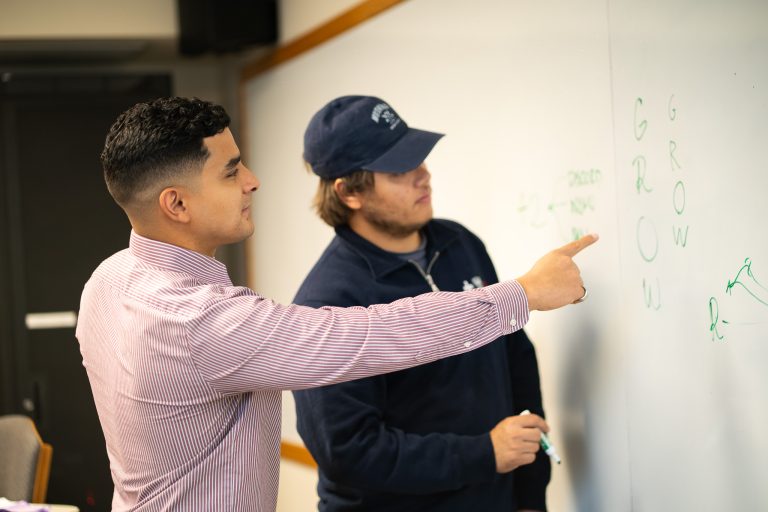
Courses include a core in consumer behavior, information systems and marketing fundamentals. Additional classes in communications, economics and strategy builds creative and analytical skills through real experiences both on and off campus. You learn to craft brand stories and use data-driven strategy to connect people and ideas with purpose.

Hands-on learning opportunities
Every student with a major in the business department is required to complete at least three credits of experiential learning from one of four set choices. These include:
- A paid internship with a business or organization
- Manage Java Junction, the student-run coffee bar on campus through the BUS360 course
- Engage in Job-connected applied learning inside a working organization such as Goshen College through an on-campus job
- Take the business process innovation course and see how companies apply best practices to improve the bottom line.
Applied on-campus experience
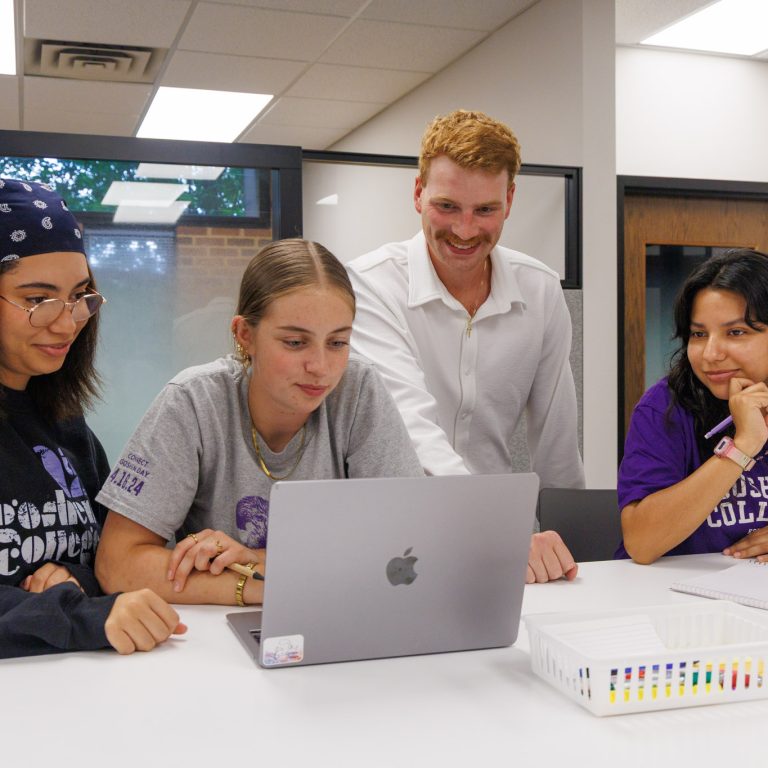
Marketing students have an additional opportunity to apply their skills through Applied Marketing, a course that puts students in the Project Manager role with an on-campus client to execute a marketing project over the course of a semester. Taken three times over the course of a student’s plan of study (majors) or once for minors, this resume building experience allows students to practice what they are learning in the classroom right away.

Brynja Hjartardottir '25
Travel Consultant at Icelandair

What it costs, and the aid behind it
Scholarships make up a large portion of Goshen financial aid packages, which average almost $26,000 per student, not counting work-study or loans. Enrolled business students may also qualify for endowed awards including the Sauder Scholarship and the Gorsline Scholarship.
To see your own price after aid, run the net price calculator, or explore your options at the financial aid and scholarships pages.
Common questions about the marketing major & minor
The minor pairs with any major and is especially complementary to business, communication, public health, and graphic design. Specific requirements are listed in the Course Catalog.
Goshen marketing graduates find roles in agencies, nonprofits, health care, manufacturing, and technology. Here are just a few of the titles a graduate with a marketing major or minor might hold: Brand Manager, Marketing Director, Digital Strategist, and Communications Coordinator. Marketing is changing rapidly, so those who pursue careers in it will keep learning new skills, and their degree can take them just down the road or halfway across the world.
Yes. Real-world experience is built into the program. You apply classroom learning through projects with community partners and on-campus ventures like the Java Junction coffee shop and student-led marketing campaigns. Internships with local businesses and organizations build your resume before graduation.
Sample courses include Marketing Management, Consumer Behavior, Digital and Social Media Marketing, Brand Management, and Business Analytics. You study branding, consumer behavior, and digital marketing strategy.
Ready to get started?
Michelle Horning
Professor of Accounting
Program Director
Department ChairAlysha Liljeqvist
Associate Professor of Business
Patrick Farran
Associate Professor of Business
Jason Harrison
Assistant Professor of Business
Andrew Hartzler
Professor of Accounting
Jerrell Richer
Professor of Economics
Carl Kreider Chair and Co-Director of Global EngagementJorge Montenegro Martinez
Assistant Professor of Business
Eyob Zeleke
Assistant Professor of Information Technology