Build inclusive classrooms and learn how schools can meet the needs of every student.
Disability Studies
Minor
Make your career more inclusive
This minor teaches you to engage with people with disabilities with a commitment to access and care.
The Disability Studies minor at Goshen College examines how disability is shaped by cultural, political, social and historical forces, and builds the advocacy and accessibility skills to make communities more inclusive. It’s open to students in any major, and you declare it with your academic advisor.
It pairs naturally with education, social work, psychology and public policy. Whatever you major in, you’ll leave understanding the lived experiences of people with disabilities and how to help institutions respond to difference with equity, not just good intentions.

Majors that work well with a disability studies minor
Pair With Education

Pair With Social Work
Serve people with disabilities and their families with a deeper grounding in advocacy and access.
Pair With Psychology
Understand how society shapes experiences of ability, and prepare for graduate study in the field.

Learn by doing
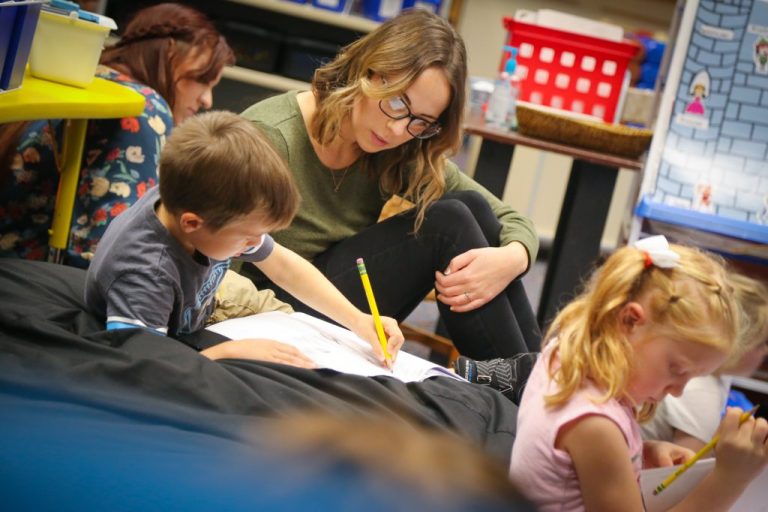
Your coursework is enriched by hands-on experience. Several of your classes will give you the experience of working in school settings supporting students with disabilities, and some of your elective classes can give you hands-on experiences in other contexts. It’s the kind of responsibility that builds an advocate, and it’s how you find out what part of this work is yours.
The minor is a mix of required courses and electives that you can tailor to your interest and career path.
View the complete program requirements in our catalog.
Being an introvert, this posed a challenge as I didn’t know how to connect with others without feeling like an interruption. Having professors and mentors who encourage and give you the resources to connect and build relationships with your community is truly the most rewarding experience.”
Aaliah Higareda '26
Freelance Graphic Designer
Paying for Goshen
Scholarships make up a large portion of Goshen financial aid packages, which average almost $26,000 per student, not counting work-study or loans. To see your own price after aid, run the net price calculator, or explore your options at the financial aid and scholarships pages.
Common questions about the disability studies minor
Graduates work in disability advocacy organizations, K-12 education, civil-rights policy in local government, independent living centers and higher-education disability resource offices, in roles like inclusive educator, accessibility consultant and mental-health advocate. Many continue to graduate study in psychology, public policy, speech and hearing sciences, education, or social work.
You’ll study the social, cultural, and historical contexts of disability, learn to advocate for the disability community, and examine the inequities and injustices that affect people with disabilities. The goal is real skill in building access and equity, not just awareness, so you can help drive meaningful change.
No. The minor is open to any major, and it’s designed to pair with fields like education, social work, psychology, communication or public policy.
Yes. A field placement in an ability-diverse setting is required. Students also take part in internships focused on disability advocacy, support services or inclusive education, service-learning built into coursework and collaborations with local organizations that serve people with disabilities.
Disability studies is broader — it covers disability across many conditions and contexts, while Deaf Studies centers Deaf culture and language and the interpreting major prepares you to work professionally as an interpreter. The programs overlap: INT 380, The Deaf Community: Subcultures, counts as a disability studies elective. No ASL coursework is required for this minor.
Ready to get started?
Steven Thalheimer
Associate Professor of Education
Department ChairBrooke Lemmon
Professor of Education
Director of Special EducationJeanne Liechty
Professor of Social Work
Department ChairJulia Schiavone Camacho
Professor of History