I am certain it will involve working with animals. I am currently working with horses and hope to continue to do so until I’m called elsewhere.

Pre-Veterinary
Study Track
What is the pre-veterinary study track?
You want to know one thing: how can you best prepare for vet school? This study track is the answer.
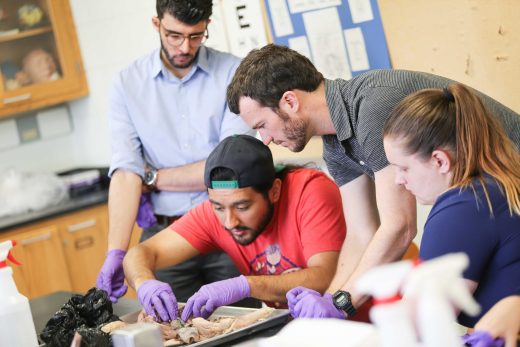
Goshen College’s pre-veterinary study track is an advising path you follow alongside a science major in biology or environmental science. An academic advisor fits in the prerequisites veterinary schools require, and you graduate with a bachelor’s degree with the coursework, building animal-experience, and research record vet schools look for.
You do it in small classes through one-on-one advising with biology faculty who know your name. The work that makes your application real happens here: in the labs of Schrock Science Hall, on farms, at animal hospitals and in the field at the 1,189-acre Merry Lea Environmental Learning Center.

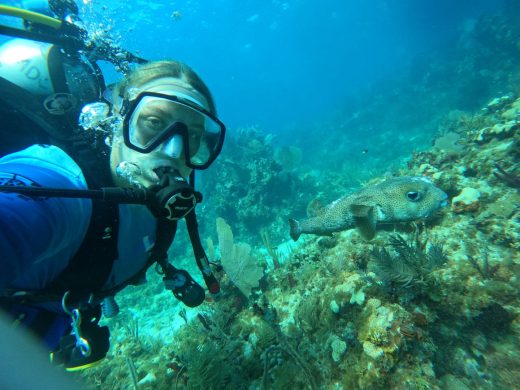
Where pre-veterinary graduates go
Goshen College pre-veterinary alumni have gone on to study at leading veterinary schools and to work in clinics, farms, zoos, and research institutions nationwide. With veterinary school behind you, the most direct path is becoming a veterinarian (DVM). But you’re not limited to just that: our graduates have also become animal nutritionist, veterinary research scientist, veterinary technician, wildlife biologist and zookeeper.
Pre-veterinary is a track, not a major, so you choose biology or environmental science as your major, and your advisor maps your courses to each veterinary school’s prerequisites. View the complete program requirements in our catalog.
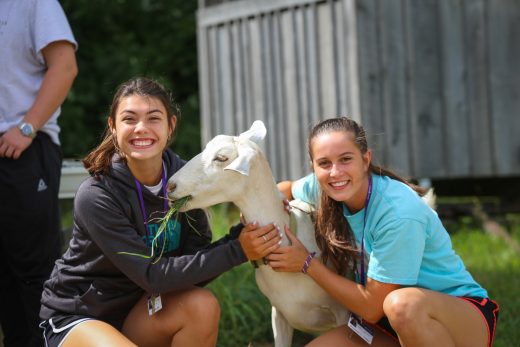
Where you’ll get real animal experience
You gain hands-on experience through internships at animal hospitals, farms and conservation organizations, and by volunteering with veterinary professionals. At the 1,189-acre Merry Lea Environmental Learning Center, you do field-based learning in animal ecology and environmental systems.
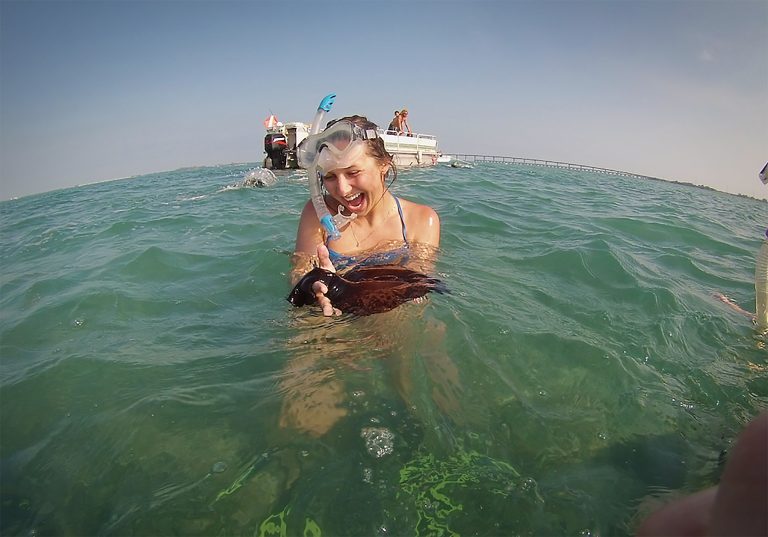
Many students also do research through the Maple Scholars program or work directly with faculty on collaborative science projects involving wildlife, farm animals, or microbiology. You conduct coursework in the state-of-the-art Schrock Science Hall, with the research labs and ecological habitats veterinary schools value. Closer in, students help manage the restored prairies on campus itself, running controlled burns and studying how grazing shapes the land. Farther out, our J.N. Roth Marine Biology Station in the Florida Keys opens up animal work most pre-vet students never touch — coral reef ecosystems, sea turtles, and marine species you can’t study from Indiana.
Zoe Brown '23
Biology Major at Goshen College
Paying for Goshen
The pre-veterinary track adds no cost to a typical major, so the real question is your price after aid. Most students receive $26,000 on average in financial aid and scholarships. To see your own price after aid, run the net price calculator, or explore your options at the financial aid and scholarships pages.
Common questions about the pre-veterinary study track
No. Pre-veterinary is a professional track, not a major, so you’ll choose a major alongside it — most students pick biology, environmental science, or molecular biology and biochemistry. You’ll work with an academic advisor to build a schedule that covers your major’s requirements and your veterinary school prerequisites at the same time. That structure works in your favor: you graduate with a full degree in a science field, which means you have somewhere to go whether you head straight to veterinary school, take a year to gain animal experience first, or decide along the way that wildlife biology or research is the better fit.
Veterinary schools typically require coursework in biology, general and organic chemistry, biochemistry, physics and statistics. Goshen’s science departments offer this coursework within the majors pre-vet students typically choose, and your advisor will confirm that your schedule covers what your target schools require.
Expect a demanding load of organic chemistry, biochemistry and physics stacked alongside your major requirements. Most of those courses run three lectures and a three-hour lab every week, so carrying several at once makes for a different kind of semester than four lecture classes. That workload is the point: it’s the preparation that gets Goshen graduates into doctoral programs at rates well above the national average.
With 91% of classes under 30 students, science faculty get to know your specific research and animal experience background well enough to write detailed letters of recommendation. That matters enormously in veterinary school admissions, which are among the most competitive of any graduate program.
Ready to get started?
Jonathon Schramm
Professor of Sustainability and Environmental Education
Department ChairPhil Allman
Professor of Marine Biology
Andy Ammons
Professor of Biology
Raquel Montanez Gonzalez
Associate Professor of Biology