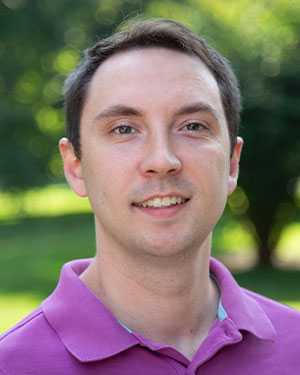
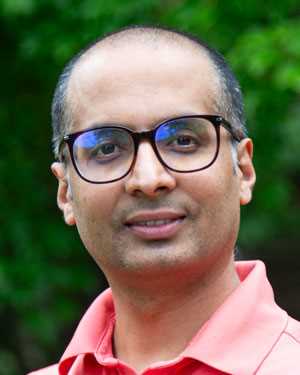
I always say that Goshen gave me the education to get the job of my dreams, and it gave me the wisdom to select the right job for my dreams.
Data Science
Major & Minor
Find the story within the data
Learn to ask honest questions of data, and to answer them well.
Data science at Goshen College is a new major and minor, planned to launch in the 2027–28 academic year, that teaches you to collect, clean, analyze and visualize data, then turn what you find into decisions that help revolutionize business and serve the people that make it happen.
It grows out of the department’s established mathematics and computer science majors, and it carries the same human-centered approach to computing that grounds graduates in the kind of processes that will allow them to extract actionable and relevant insights.

A growing field, a fresh approach
Data shapes decisions in nearly every field, including health care, business, sports and politics. People who know how to make sense of it are in demand. The U.S. Bureau of Labor Statistics projects that data scientist jobs will grow 35% from 2025 to 2035. That’s the third-fastest growth of any occupation, compared with 3% for all jobs.
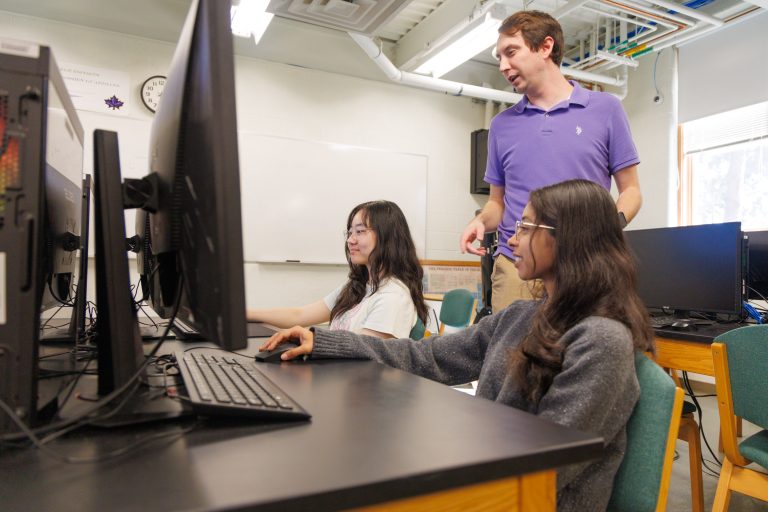
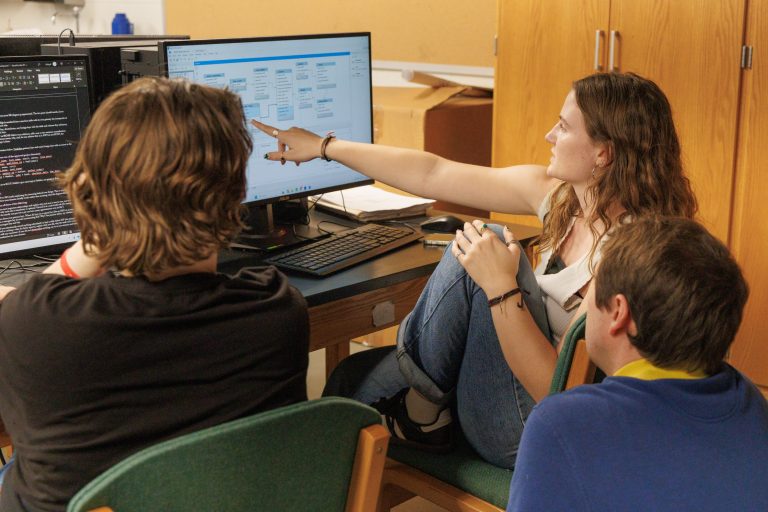
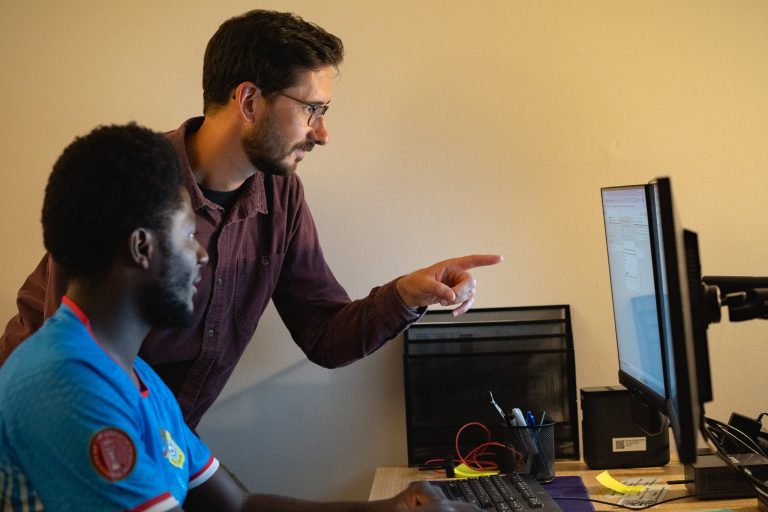
Goshen College’s new Data Science major prepares you to meet that demand skillfully and responsibly. It combines mathematics, statistics and computer science to give you a foundation in statistical modeling, machine learning, programming, data management and visualization. Most courses are hands-on and project-based. You’ll work with real data, often alongside local organizations, and graduate with a portfolio to show employers. You’ll also learn why your tools work, not just how to use them, and pay close attention to bias, fairness and the people your decisions affect.
Where data science can take you
Data science is used almost everywhere data is collected, so you can point it at what you already care about:
- Sports: analyze player performance and game strategy
- Health: track patient outcomes and public health trends
- Environment: model climate, water and wildlife data
- Business: forecast demand and understand customers
- Politics and policy: study polling, elections and whether programs work
Graduates go on to roles such as data analyst, data scientist, machine learning engineer and data engineer, or continue to graduate school.

Sidharth Sahni, BA '97, RM '97
Senior Vice President) of Corporate Strategy at McKesson
Paying for Goshen College
Data Science majors are eligible for a variety of scholarships at Goshen College. To see your own price after aid, run the net price calculator or explore your options at the financial aid and scholarships pages.
Common questions about the data science program
Computer science at Goshen is about building software and systems. Mathematics is about theory and proof. Data science draws on both to work with real data and decide what it means. All three are taught in the same department, which serves students across Mathematics, Computer Science, and Data Science.
How they differ at Goshen
- Computer science is built around programming and systems. The catalog lists courses such as Human Computer Interaction, Computer Networking, Data Privacy and Security, Operating Systems, Analysis of Algorithms, Database Design, plus an internship. Its required math is Discrete Mathematics, Calculus I, Linear Algebra, and the catalog lists no statistics course.
- Mathematics is theory-first. Core courses include Calculus, Discrete Mathematics, Linear Algebra, Differential Equations, Probability and Statistics, Abstract Algebra, Modern Geometry, and Problem Solving. Probability and Statistics is its only statistics course.
- Data science combines the two, with much more statistics. Joey describes a foundation in statistical modeling, machine learning, programming, data management and visualization, taught mostly through projects with real data. It also covers the ethics of data-driven decisions, which neither of the other majors has as a central theme. The department’s faculty job posting gives planned courses as examples: Introduction to Data Science, Data Visualization, Predictive Modeling, Machine Learning/AI, and Capstone Projects.
Data science is more than code and statistics. You also need to understand where data comes from, explain what you find to people who aren’t experts, and weigh who your conclusions will affect. A National Academies report on undergraduate data science calls communication, subject knowledge and ethics essential, and notes that traditional math, statistics and computer science courses often leave them underdeveloped. A liberal arts education fills that gap. Courses across the humanities, sciences and social sciences help you ask better questions of data. Writing- and discussion-heavy classes teach you to explain your findings clearly. And through the Study-Service Term, which every Goshen student completes, you’ll learn to see the people and cultures behind the numbers.
The major and minor are planned to launch in the 2027–28 academic year.
Enrollment is open to current GC students who can immediately transition into this major by contacting their faculty advisor.
Data science graduates work as data analysts, data scientists and machine learning engineers, or go on to graduate study. Nationally, the Bureau of Labor Statistics projects data scientist jobs to grow 35% from 2025 to 2035.
Ready to get started?
Joey Lyon
Assistant Professor of Computer Science
Manu Bhattarai
Assistant Professor of Physics
David Housman
Professor of Mathematics
Department ChairKathryn Marsh
Visiting Associate Professor of Mathematics