

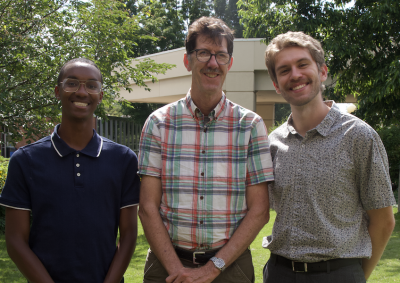
Kevin Liddell, physics major from South Bend, Indiana, Drew Hackman, a 2024 graduate and physics major from Bethesda, Maryland, and Paul Reimer, professor of physics, observed water storage and conducted a clustering study of regions grouped by greater and lesser changes in water storage during a window of COVID-19 economic impact, identifying the common features of the ensuing clusters.
Maple and Hickory Scholars
Research Program
Spend your summer doing research that matters
Maple Scholars is Goshen College’s flagship undergraduate research program: an eight-week, fully funded summer fellowship built on one idea: that undergraduates are capable of real scholarship when they’re paired with the right mentor and given the time and resources to do it. The Maple Scholars program has enabled students to explore the relationship between math and music, test the stress levels of drunk honeybees and develop curriculum for a criminal justice course at the county jail and much more.
Each scholar is paired with a faculty member who works as colleague and supervisor at once, not a professor grading from a distance. Scholars live together for the eight weeks, forming a working cohort that meets every Friday to present findings and defend them in front of peers. Every project ends the same way, presented publicly to the college and beyond. Some projects are finished in a single summer; others become two or three years of sustained work between a student and a faculty partner. Either way, it’s the same process: high-achieving students doing original research as full partners with Goshen faculty.
Previous maple and hickory scholars
Groundwater Withdrawals
Spanish Literature
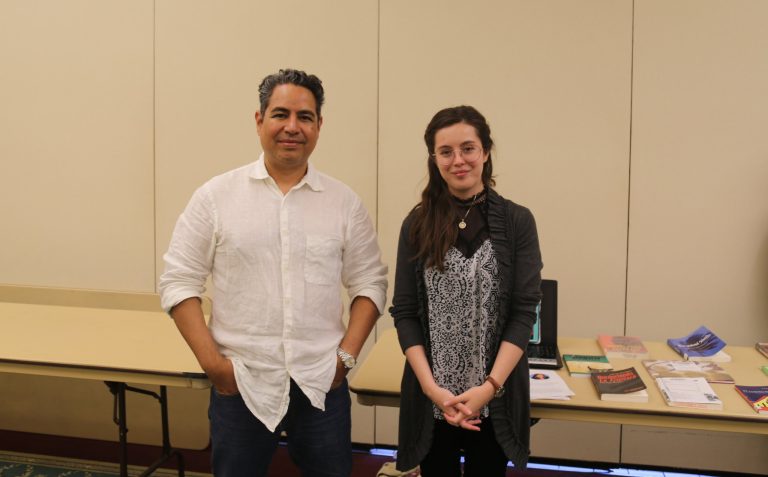
Adriana Martinez Diaz De Leon, a 2022 graduate and psychology major from Goshen, and Cristóbal Garza González are selecting several creative works by US Latinx and Latin American writers to develop a six-lesson unit to be taught in Hispanic and Latinx culture and literature courses. Through this project, they are hoping to find connections between current Latinx literary expressions and the experiences of students at Goshen College.
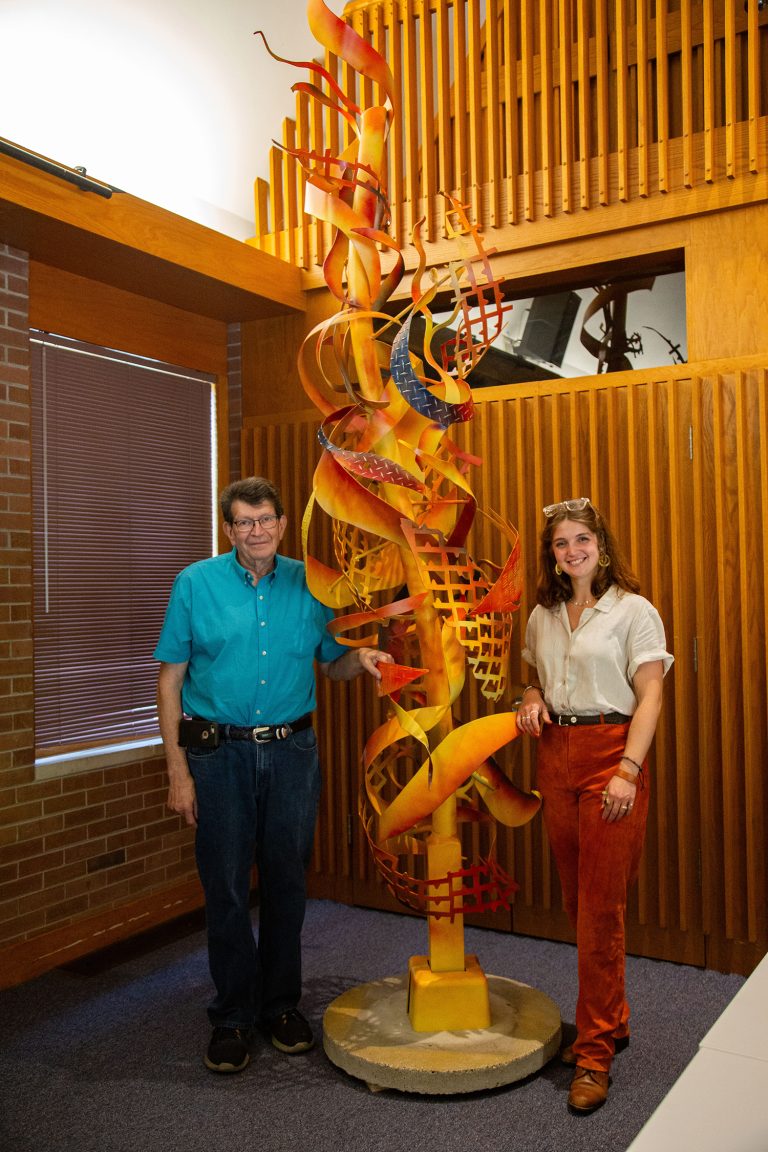
Sculpture for Mennonite Mission Network
Emma Zuercher, a 2023 graduate and sign language interpreting major and art minor from Apple Creek, Ohio, and John Mishler designed and built a sculpture commissioned by the Mennonite Mission Network. The sculpture replaced a light pole and reflects the rich Anabaptist history and the mission statement of the Mission Network.
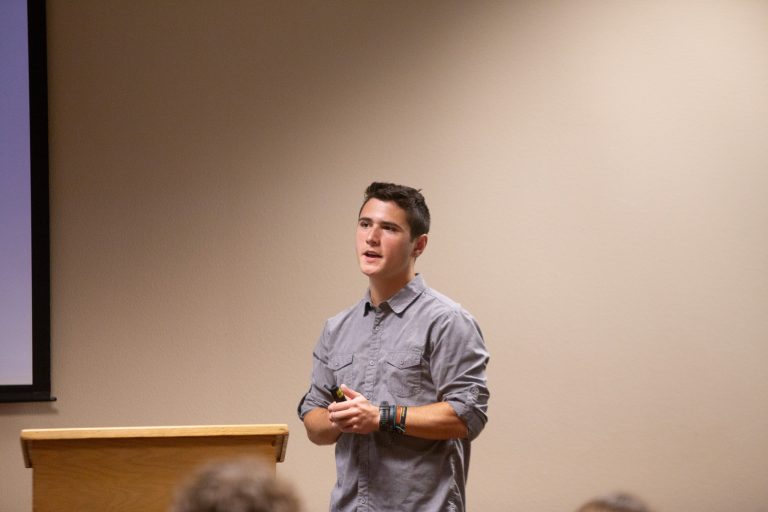
Roommates and Room Matchings
Josiah Miller, math and secondary education double major from Cedar Springs, Michigan, studied game theory with David Housman, professor of mathematics and chair of the department, studying algorithms to solve the “roommate problem,” a classic game theory problem where the goal is to find stable matching for an even-sized set.
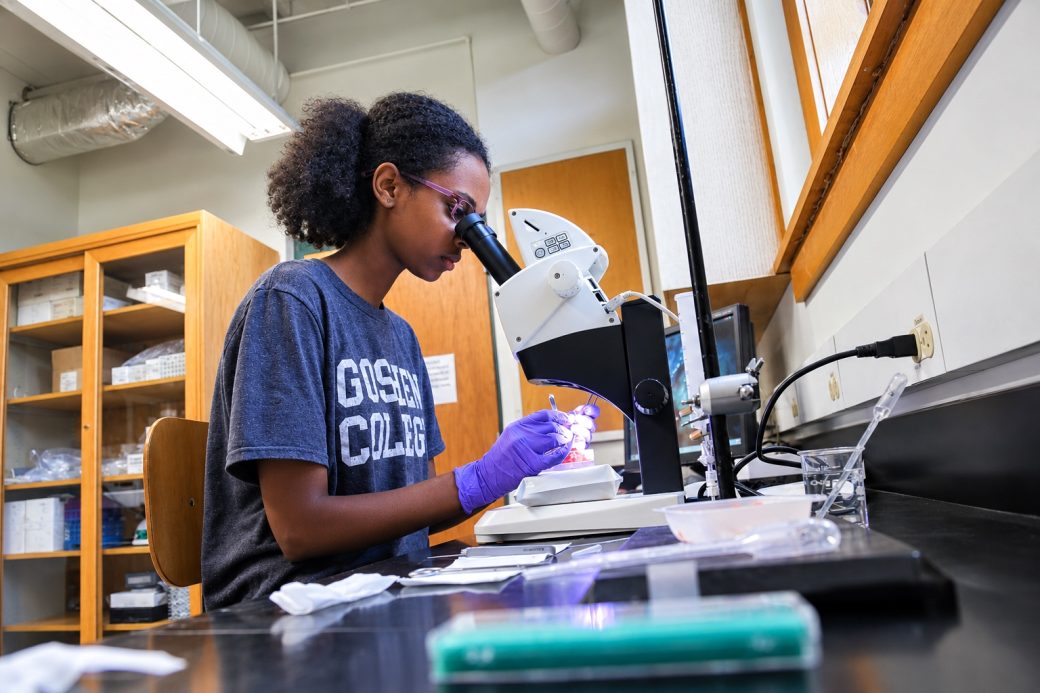
The summer’s schedule
Week one: arrival and mentor pairing. You move onto campus with the cohort and pair with your faculty mentor, who serves as both colleague and supervisor. Together you frame the question you will spend the summer on.
Weeks two through seven: independent research and Friday colloquiums. Every Friday the cohort gathers, each scholar presents the week’s work, and you answer the room’s questions, so you are never heads-down alone for long.
Week eight: the public presentation. The same work you have defended week by week is now presented to an audience beyond the cohort.
As a three-time Maple Scholar, I can attest to the world-class research that takes place at Goshen College each summer. While much of my work revolved around historical research resulting in narrative documentaries, I was always excited to join our Friday colloquiums to learn about topics like machine learning, antibacterial propolis, water sanitation, game theory and the history of the Spanish flu among the Amish Community. This well-resourced program pushes students to do the kind of research that would otherwise be impossible within a normal classroom setting.

Silas George Immanuel '25
AI / Content Producer at Goshen College
I am most looking forward to the actual collection of propolis. It’ll be interesting to see how propolis is gathered and used within the hive before bringing it into the lab.

Ashley Garcia Coto '26
Researched the medical benefits of propolis
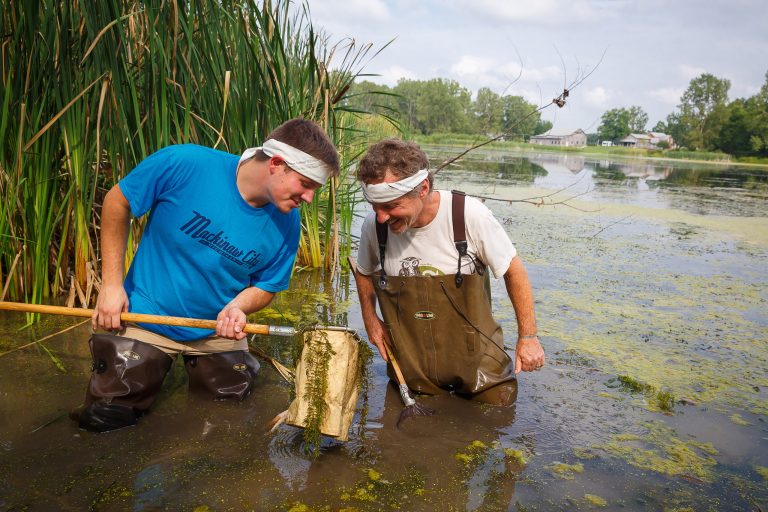
Hickory scholars: research at Merry Lea
Hickory scholars is the same idea in a different landscape. While maple scholars work on the Goshen College campus, Hickory scholars are based at Merry Lea Environmental Learning Center, the college’s 1,200-acre field station about 30 miles away, where prairie, wetland, forest and farmland sit within walking distance of the lab and the living room.
Scholars live on site in the sustainable housing of Rieth Village and eat from the Merry Lea teaching farm. Recent projects have included bird banding and ornithology planning, Blanding’s turtle research, grassland grazing, and playful learning on the land.
Common questions about Maple Scholars
Maple Scholars is a funded summer program, and scholars live in the same building on campus for the eight weeks. Goshen College supports undergraduate research through the Maple Scholars, Witmer and Miller endowments. Stipend and housing details are set year to year, so ask the program director for the figures for the coming summer.
Any project that a faculty member proposes and supervises. Maple Scholars have explored the relationship between mathematics and music, tested stress levels in drunk honeybees, and developed curriculum for a criminal justice course taught at the county jail. The program is not limited to laboratory science, or to the hard sciences at all.
Yes. Graduate and professional programs look for evidence that you can define a question, work at it without daily supervision, and defend what you found. Eight weeks with a faculty mentor produces exactly that, along with potential for a letter of recommendation from someone who watched you work closely instead of just grading your exams.
Not necessarily. Some scholars arrive with a question of their own within the research area that a mentor proposes, and others join a line of work a professor already has running. Both are normal. What matters is that you and your mentor agree on what the summer is for before the eight weeks start.
Your faculty mentor serves as both colleague and supervisor, which means the project is yours to run and theirs to push on. The Friday colloquiums add a second layer of accountability, because each week you explain your reasoning to the whole cohort of scholars and answer their questions.
Start with a conversation
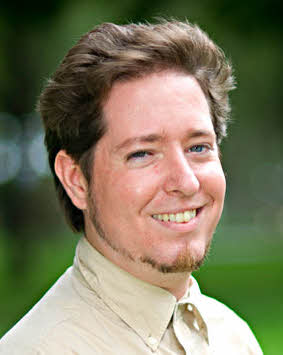
Andy Ammons, professor of biology at Goshen College, directs the Maple Scholars research program. He oversees the full slate of summer research projects, working with faculty and students across disciplines to shape each one. He also mentors a student research project of his own every summer, investigating topics like the antibacterial properties of propolis and mosquito genetics. He is available as a resource for students on campus who are interested in advanced research opportunities.
Hit the request information button to have him reach out to you.