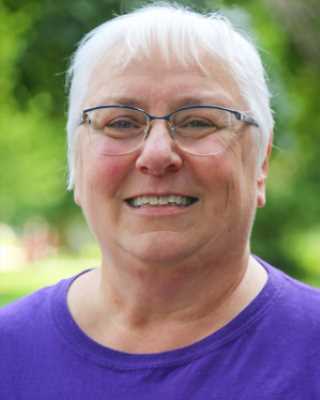
I would not trade the ASL department here for anything. The experience we get at GC is amazing: an internship, Study-Service Term and so many practice opportunities! The professors in the department are so educated in ASL that it makes them the perfect language models for us to learn from.
Bachelor of Arts
Sign Language Interpreting
Major
Interpret between two languages and two cultures
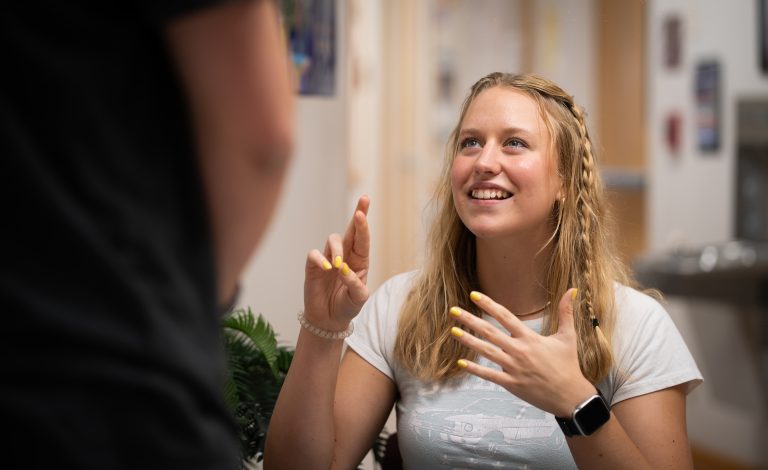
ASL and English are two languages, not one language in two forms. Each carries a culture with it. Interpreting means moving meaning between them in real time, in both directions — voice to sign and sign to voice.
The major is 54 credit hours and builds both sides at once. You’ll develop advanced proficiency in ASL, spoken English and signed English, study Deaf culture and history, and interact with the Deaf community as a course requirement rather than an optional add-on.
From there the coursework moves into practice: interpreting, transliterating, preparing for healthcare settings. Your senior year is a full-semester internship, followed by a seminar where you work through the ethical dilemmas you encountered on placement.

Is sign language interpreting right for you?
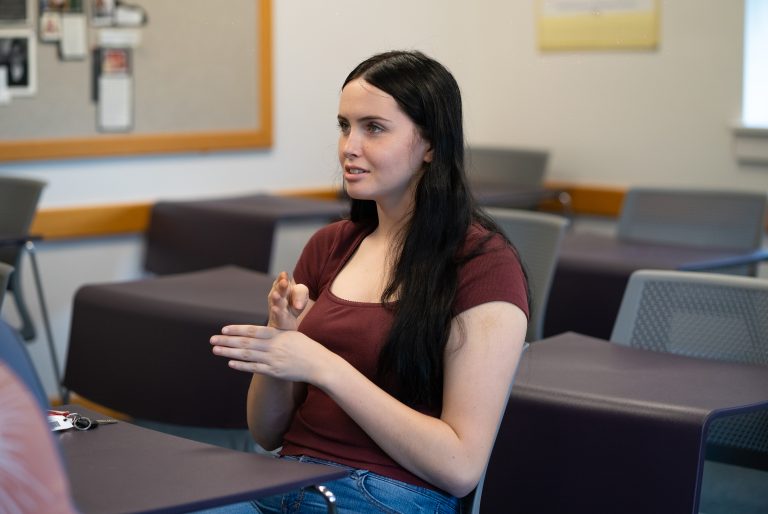
The major prepares you to interpret and transliterate in one-on-one and small-group settings with a variety of participants, applying professional standards, practices and ethics to your work. Graduates interpret in educational settings from K–12 through post-secondary, in medical and healthcare settings, in business settings and through video relay services. Specialization comes with experience — this degree gives you the foundation to build on.
View the complete program requirements in our catalog.

Real experience from year one
Interaction with the Deaf community is a course requirement, it’s built into your ASL coursework to develop both your language and your cultural knowledge.
You’ll develop interpreting skills through interactive video and out-of-class interpreting opportunities, beginning in Interpreting 1 and continuing with extensive practice in Interpreting 2. If you take Performance Interpreting, you’ll analyze scripts, translate dialogue and interpret live plays on campus and in collaboration with area theaters.
The semester-long interpreting internship is the capstone of the curriculum, placed in a school or through an interpreter referral agency. You’ll graduate with a portfolio containing a resume, a video sample, documentation of 100 hours of supervised work experience and a record of at least six professional development workshops.

Sam Heberling '15
American Sign Language (ASL) major
Paying for Goshen
Sign language interpreting students are eligible for a variety of Goshen College scholarships. To see your own price after aid, run the net price calculator, or explore your options at the financial aid and scholarships pages.
Common questions about sign language interpreting major
Graduates interpret in educational settings from K–12 through post-secondary, in medical and healthcare settings, in business settings and through video relay services. The major prepares you to demonstrate the skills needed for entry-level employment: a portfolio with a resume, a video sample and 100 documented hours of supervised work experience.
You enter the interpreting sequence with proficiency in ASL through ASL 3, then continue through American Sign Language 4 and 5 alongside Deaf Culture and History. From there the coursework is interpreting: Introduction to Interpreting, Interpreting 1, 2 and 3, Sign to Voice Interpreting, Transliterating, Introduction to Healthcare Interpreting and Interpreting Ethics, followed by the internship and Senior Seminar. The major is 54 credit hours and requires a C or above in every course. You can also add a certificate in educational, healthcare or performance interpreting.
Interaction with the Deaf community is required throughout your ASL coursework. You’ll practice interpreting using interactive video and out-of-class opportunities from Interpreting 1 onward. Your senior year includes a twelve-credit, semester-long internship — the capstone of the curriculum — placed in a school or through an interpreter referral agency. Senior Seminar follows, where you reflect on the ethical dilemmas and conflicts you encountered during the internship and set goals for your career.
Start your application at the Goshen College apply page, or request information first if you’d like to talk through fit, the internship, or careers in interpreting before committing. You can also schedule a visit to meet the faculty and see the interpreting labs.
Ready to get started?
Colleen Geier
Professor of ASL Interpreting
Diana Boussom
Assistant Professor of American Sign Language