The best part of the Sustainability Leadership Semester canoe trip has been getting immersed in a region that most don’t explore all that often. The river may seem lifeless to some, but once you spend some time in the area, there is much life to be found.
Bachelor of Arts
Sustainability
Major | Minor
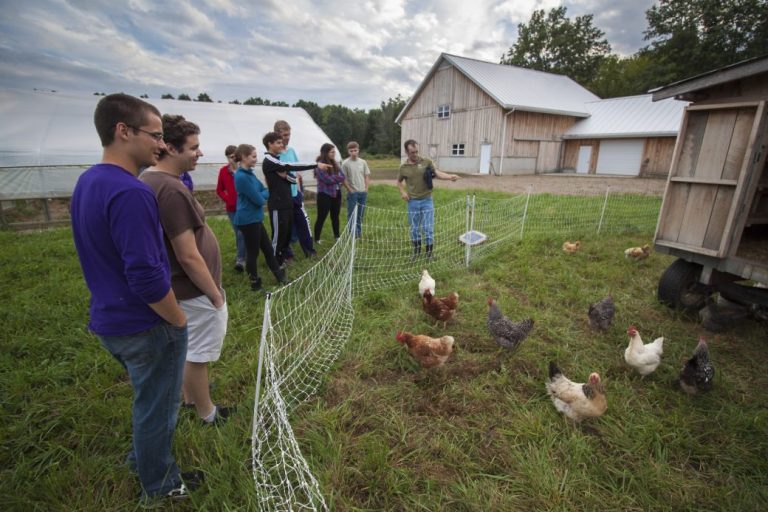
Study the systems, not just the symptoms
The hard problems of climate and justice don’t arrive as single subjects, so you won’t study them that way.
Goshen College’s sustainability program is a four-year bachelor’s degree that draws on biology, environmental science, peace studies and sociology to prepare you for careers and graduate study in climate policy, conservation and environmental education.
You’ll work on real problems, not just read about them. Study it as a major to build your whole degree around it, or add it as a minor to bring the credential to another field.

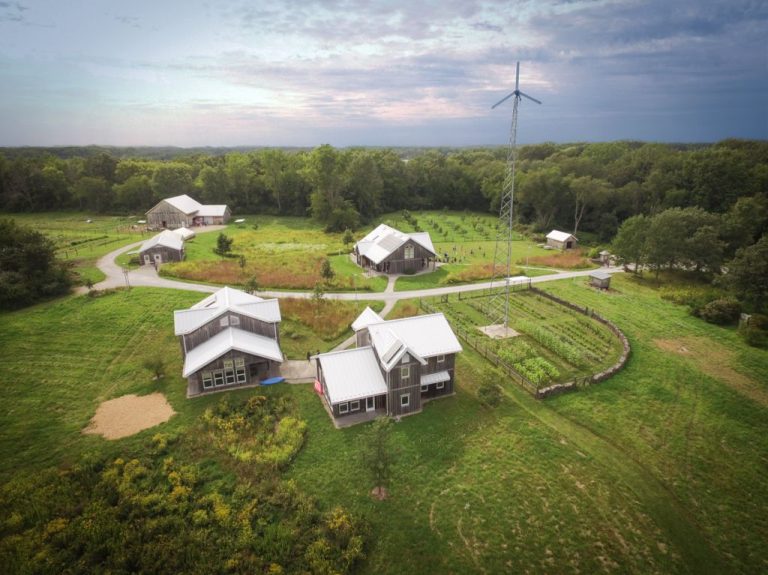
Learn where the work happens
At Goshen, biology is fieldwork. You’ll run experiments in the Schrock Science Labs, equipped for genetic, cellular, molecular and marine research, then walk to Witmer Woods, an 18-acre arboretum, to collect data between classes.
Thirty miles out, Merry Lea Environmental Learning Center holds 1,189 acres of peat bogs, prairie and wetland restorations — nearly every habitat in northeastern Indiana. You can visit for a course or live there, at the LEED Platinum-certified Rieth Village, and run a project on the land you’re sleeping on. Farther still, the J.N. Roth Marine Biology Station in the Florida Keys puts coral reefs and seagrass beds right outside your lab door as a May term opportunity.
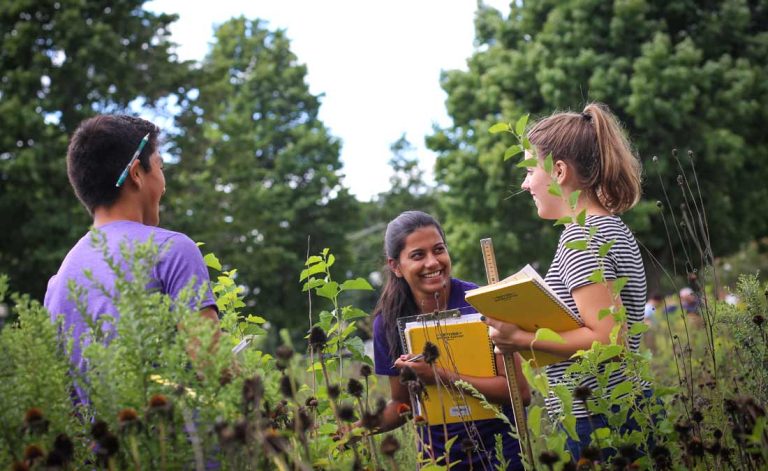
What the Sustainability Leadership Semester looks like
You’ll spend the fall semester in full-time residence at Merry Lea’s Rieth Village, living and studying alongside a small cohort. Together you’ll examine how societal and ecological systems function in the surrounding watershed, and how each one shapes the other.
The watershed becomes your classroom. You’ll travel through it often, learning from professionals and community members who work these landscapes every day. The high point is an eight-day canoe journey down the Elkhart and St. Joseph Rivers to Lake Michigan, following the water the whole way.
Back at Rieth Village, you and your cohort will weigh the choices you’re making together and test new patterns of sustainable living. The Merry Lea teaching farm runs through the whole semester. You’ll study it in your coursework and eat what you help grow. Working alongside people and institutions across the region, you’ll come at sustainability questions from angles you haven’t considered before.
What you’ll study, where it leads
Sustainability studies draw from biology, environmental science, peace studies, and sociology, and you personalize your focus with electives and off-campus experiences. Sample courses include Agroecology, Ecological Economics, Environmental Health, Environmental Policy, Global Climate Change, and Introduction to Sustainability.
Graduates go into climate policy, conservation, ecological restoration, environmental education, nonprofit advocacy, sustainable agriculture, and urban planning, and many pursue graduate study.
View the complete program requirements in our catalog.

José Chiquito
High School Spanish Teacher at DSST Public Schools
Paying for Goshen College
Goshen College financial aid packages average almost $26,000 per student. Many science students also earn paid research stipends through the Maple Scholars program.
Adding sustainability as a minor brings no separate tuition; it layers onto the degree you’re already paying for. To see your own price after aid, run the net price calculator and talk with a real person in the financial aid office.
Common questions about sustainability at Goshen College
Graduates work in climate policy, conservation, ecological restoration, environmental education, nonprofit advocacy, sustainable agriculture and urban planning, among many other fields. Others pursue graduate study in various fields, including environmental science or public policy.
It’s built to combine. Sustainability Studies draws on biology, environmental science, peace studies and sociology, so it layers onto what you’re already studying rather than replacing it. There’s even a course designed for this: Topics: Sustainability Seminar is open to students whether their major is sustainability or another field entirely, and exists so you can integrate what you’re learning across courses and hear from peers in related fields. It’s repeatable, so you can take it more than once.
Yes. This is place-based learning inside a values community that takes caring for the Earth and its people seriously. It’s a small program, so faculty know your name and your work.
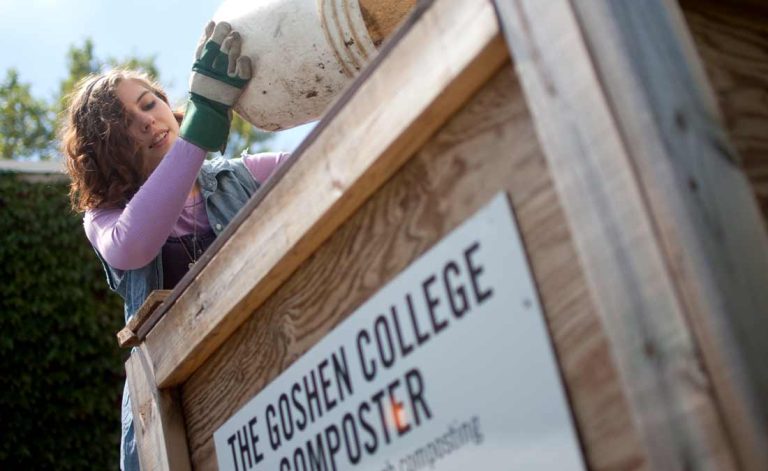
Much of the sustainability work on campus is student-run. Eco-PAX, the student environmental club, leads initiatives in ecological awareness, action and education, building connections on campus and across the city of Goshen. You can volunteer with the student-led composting program, plant trees, join the Algae Town research project, or help oversee controlled burns of the native prairies on campus.
Four courses are yours to choose. Beyond the core and the Sustainability Semester, you pick four from a list of ten, and that’s where the major bends toward what you care about. Pulled toward policy, there’s Climate Ethics & Climate Policy or Introduction to Public Policy. Toward design, Sustainability & the Built Environment. Toward data, Geographic Information Systems. Toward starting something of your own, Entrepreneurship. Toward the social side, Environmental Sociology.
Junior year takes you out of the classroom almost entirely: the Sustainability Semester in residence at Merry Lea in the fall, then Study-Service Term in the spring. You can also take Ecology & Sustainability in India, studying across the elevation gradient from the North Indian Plains to the Himalayas. Your senior internship is arranged individually with your instructor and built around your own interests, so no two look alike.
Your academic advisor helps you tailor the path toward the career or graduate program you want.
The Sustainability Capstone. You’ll write an individual thesis project — either a topical analysis or an applied community project — while reflecting on how sustainability works across socio-ecological systems. Your cohort also plans real sustainability programming for campus or the local community, so the year ends with something built, not just written.
Jonathon Schramm
Professor of Sustainability and Environmental Education
Department ChairPhil Allman
Professor of Marine Biology
Andy Ammons
Professor of Biology
Raquel Montanez Gonzalez
Associate Professor of Biology
Luke Kreider
Associate Professor of Religion and Sustainability