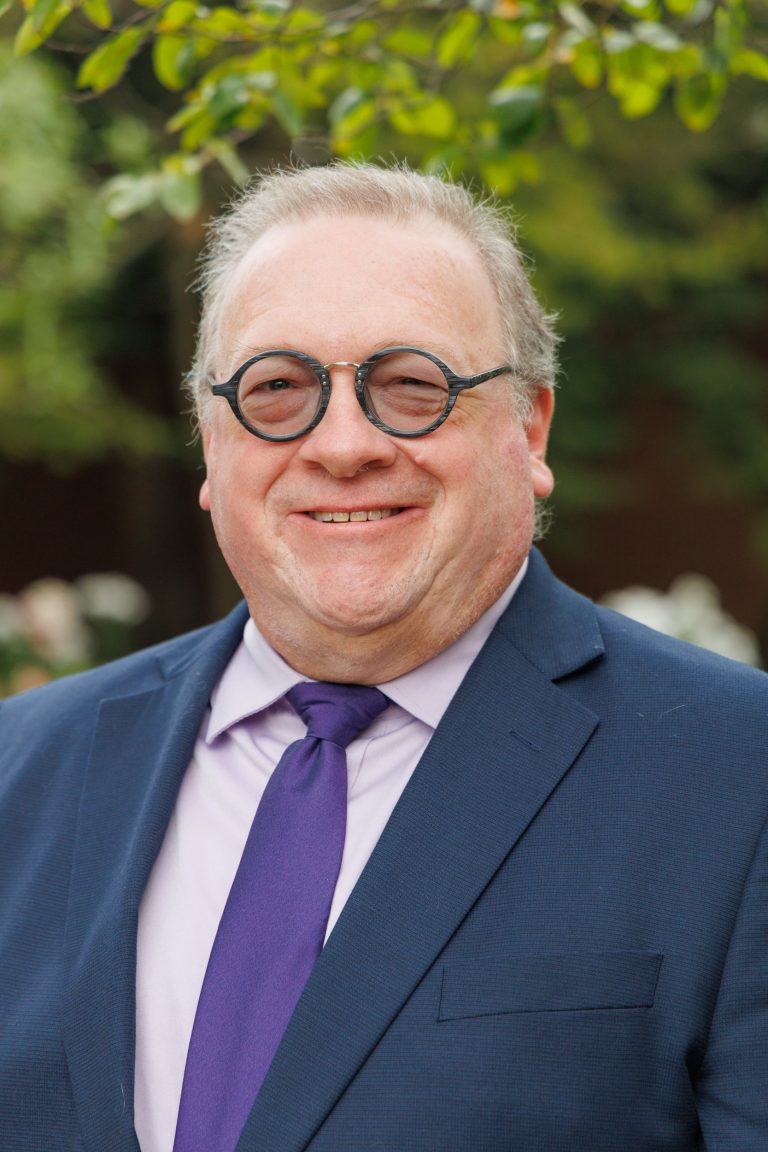
Goshen College’s approach to education creates students that are both well rounded in their ability to understand the world around them, and multifaceted in their ability to create. Courses in the communication department allowed me to write, film, edit and create websites that helped build my own portfolio. I graduated not just with the knowledge on how to use certain tools but also with the ability to learn new ones.

Multimedia Communication
Minor

Add Media Skills to Whatever You Study
A communication minor can help you get more out of your college degree
The multimedia communication minor at Goshen College is an undergraduate credential that equips students in any major with practical skills in journalism, digital media, film and public relations.
Courses include Digital Media Production, Digital Design, Typography, Journalism Essentials, Marketing Management, Creating for the Web and Motion Design. You’ll have access to the Center for Communication, where production suites, a TV studio and digital editing labs sit alongside the offices of three working student media organizations.

Learn to Build It Yourself
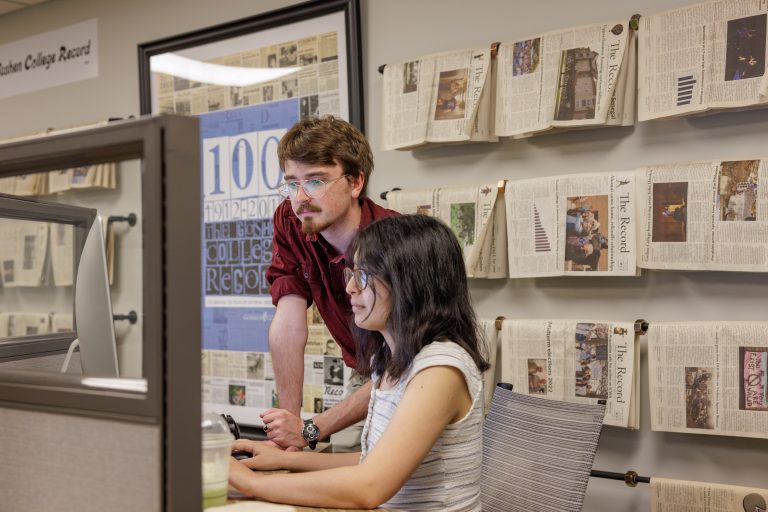
You’ll learn visual design in Adobe InDesign, Illustrator and Photoshop, then how to build a working web page with HTML and CSS, animate ideas in After Effects and turn raw numbers into a chart people understand. Two electives take you deeper into video production, journalism, typography or marketing.
The point is that these skills connect: you’ll be able to carry a project from rough idea to finished piece without handing it off. Whatever your major, you’ll leave with a portfolio of work you actually made. View the complete program requirements in our catalog.
Work in Real Media, Starting Now
The equipment is professional. The deadlines are real. The bylines are yours. Students with a minor in multimedia communication plug into four working media organizations in the Center for Communication:
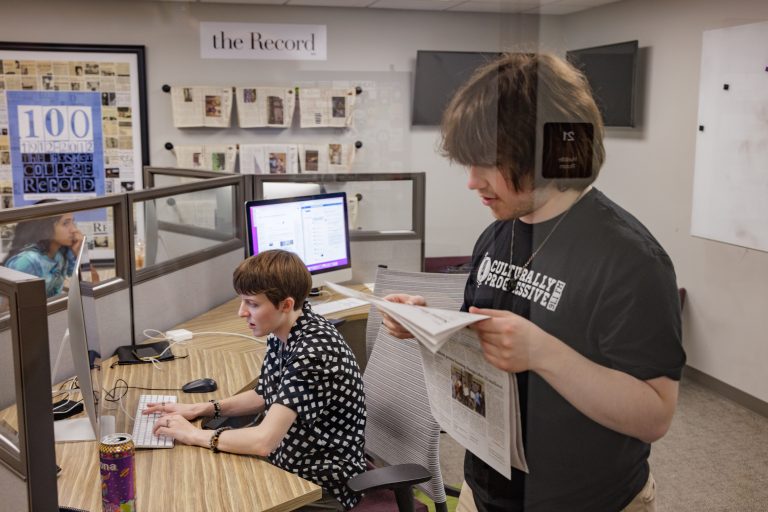
- The Record — Goshen’s independent student newspaper.
- 91.1 The Globe / WGCS — named Best College Radio Station in the Nation five times and Best in Indiana eleven times.
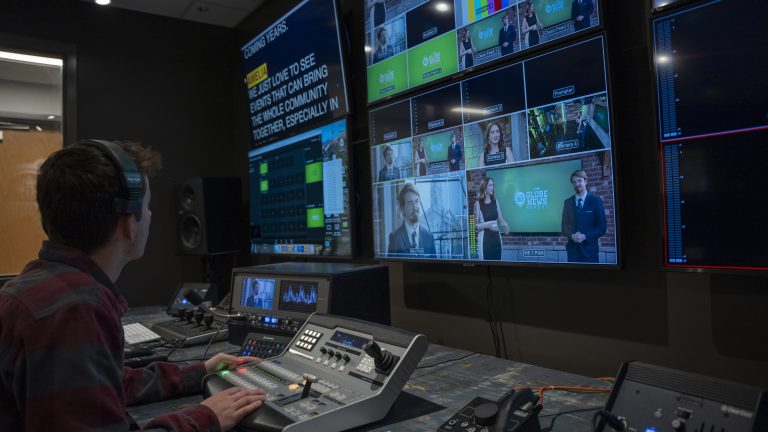
- Globe TV — a campus broadcast studio producing original video content.
- FiveCore Media — a student-staffed professional video production company serving real clients.
When you produce a story for The Record or shoot for FiveCore Media, that work appears in the world.

Silas Immanuel '25
AI / Content Producer at Goshen College
Paying For Goshen
Every traditional student receives financial aid, and the Communication Department adds to that. Each year it awards more than $50,000 in scholarships, with individual awards from $500 to $2,000. You can also apply for the Communication and Media Scholarship, given to students with strong potential in media-related fields. The experience can pay you back directly. FiveCore Media, the student-staffed production company, offers paid video work right on campus. To see your own price after aid, run the net price calculator, or explore your options at the financial aid and scholarships pages.
Common Questions About the Multimedia Communication Minor
The minor draws from courses including Digital Media Production, Digital Design, Typography, Creating for the Web, Marketing Management, Journalism Essentials, and Motion Design. For the full list of required and elective credits, see the Multimedia Communication catalog page.
The minor complements almost any major. Business, Nonprofit Leadership, Music, English, Peace Studies, and Social Work students frequently add it to sharpen their communication output. Science and pre-professional students use it for science-communication and advocacy. The focus areas, Journalism, Film/Video, and Broadcasting, travel across fields.
Yes. The Communication Department awards more than $50,000 annually through the Geigley, Gorsline, Smith, and Joel Kauffmann scholarships. These are available to Communication majors and, in some cases, minor students with demonstrated involvement in the department. Talk to your advisor or visit Financial Aid for details.
Goshen Communication alumni work in news media and journalism, film and video production, public relations and marketing, radio and podcasting, social media management, and nonprofit and faith-based communications. The minor gives you a practical portfolio alongside your primary degree, which matters to employers across nearly every sector.
It’s one of the more flexible minors to add for exactly that reason — the point is that it works with whatever your major is. Courses are scheduled to complement, not compete with, science and pre-professional course loads, and an advisor can help you sequence it around labs and clinicals.
Kyle Hufford
Professor of Communication
Department ChairAnna Groff
Associate Professor of Communication
Tony Krabill
General Manager of 91.1 The Globe
Jason Samuel
Manager at 91.1 The Globe
Head Disc Golf Coach