

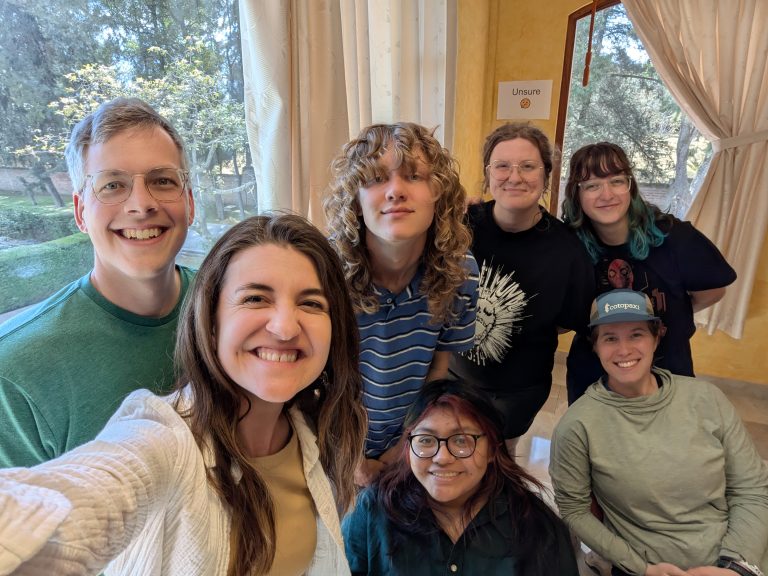
By Hillary Harder On Sunday, July 26, our students returned to Quito from their service communities and we began our final retreat together! The afternoon was full of joyful reunions as each student arrived at our Quito home, la Casa…
News
Making Hot Chocolate in San Juan del Obispo
May 19 2026
By Millie Liddell
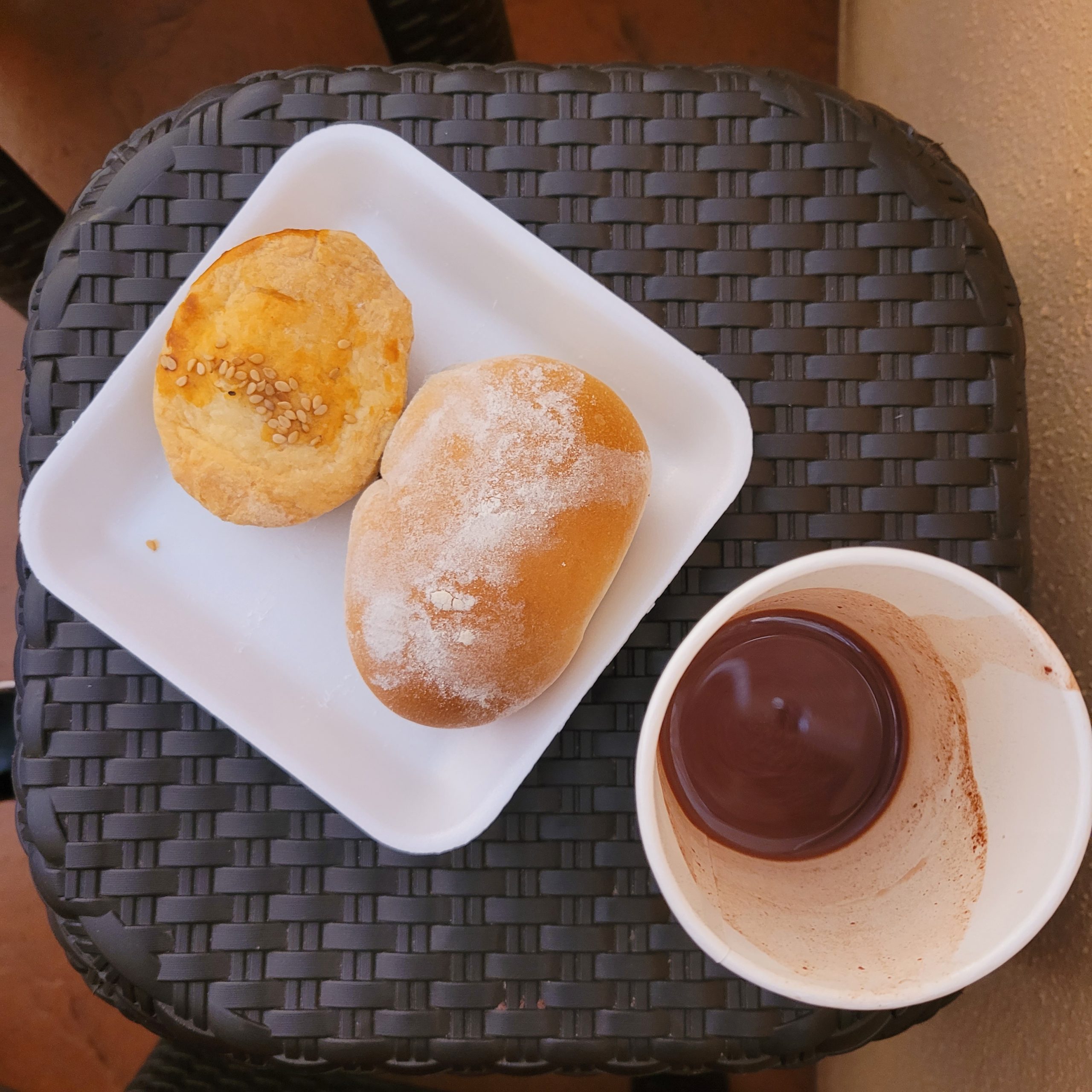
Yesterday we had the wonderful opportunity to visit Chocolate del Obispo in the town of San Juan del Obispo. We learned about this family-run business and how they incorporate traditional and modern methods to produce chocolate; it was part history lesson and part cooking class. The entire group enjoyed taking part in each step of making chocolate. We first tried the fruit of the red cacao pods, which some class members said tasted like mango. Then we learned the very hands-on process of roasting, shelling, and crushing the cacao beans. After the beans are crushed and mixed with sugar, vanilla, or cinnamon, they are shaped by hand into tablets. We ended our experience drinking hot chocolate while eating bread with strawberries, which is a tradition in the town of San Juan del Obispo. Our entire group was all smiles and laughter while being able to immerse ourselves in this process.
Traditional Hot Chocolate Recipe
1 chocolate tablet: 2 cups of water
- Boil the water.
- Break the tablets into pieces and add to the hot water.
- Stir using a molinillo or whisk until mixture is frothy and chocolate is dissolved.
- Serve hot with bread with strawberries.
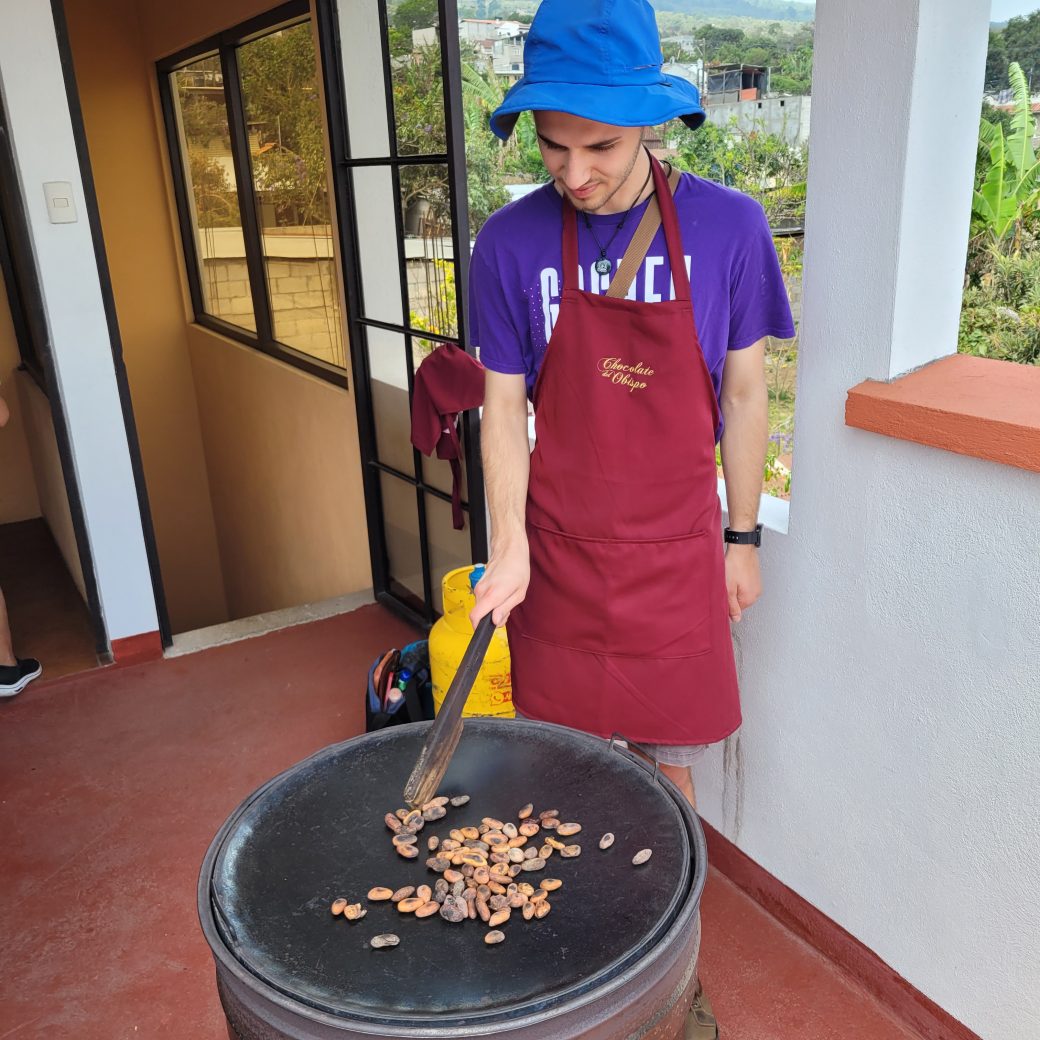
Our group had the opportunity to make chocolate the traditional way, using artisanal methods.
First, the cacao beans are roasted.
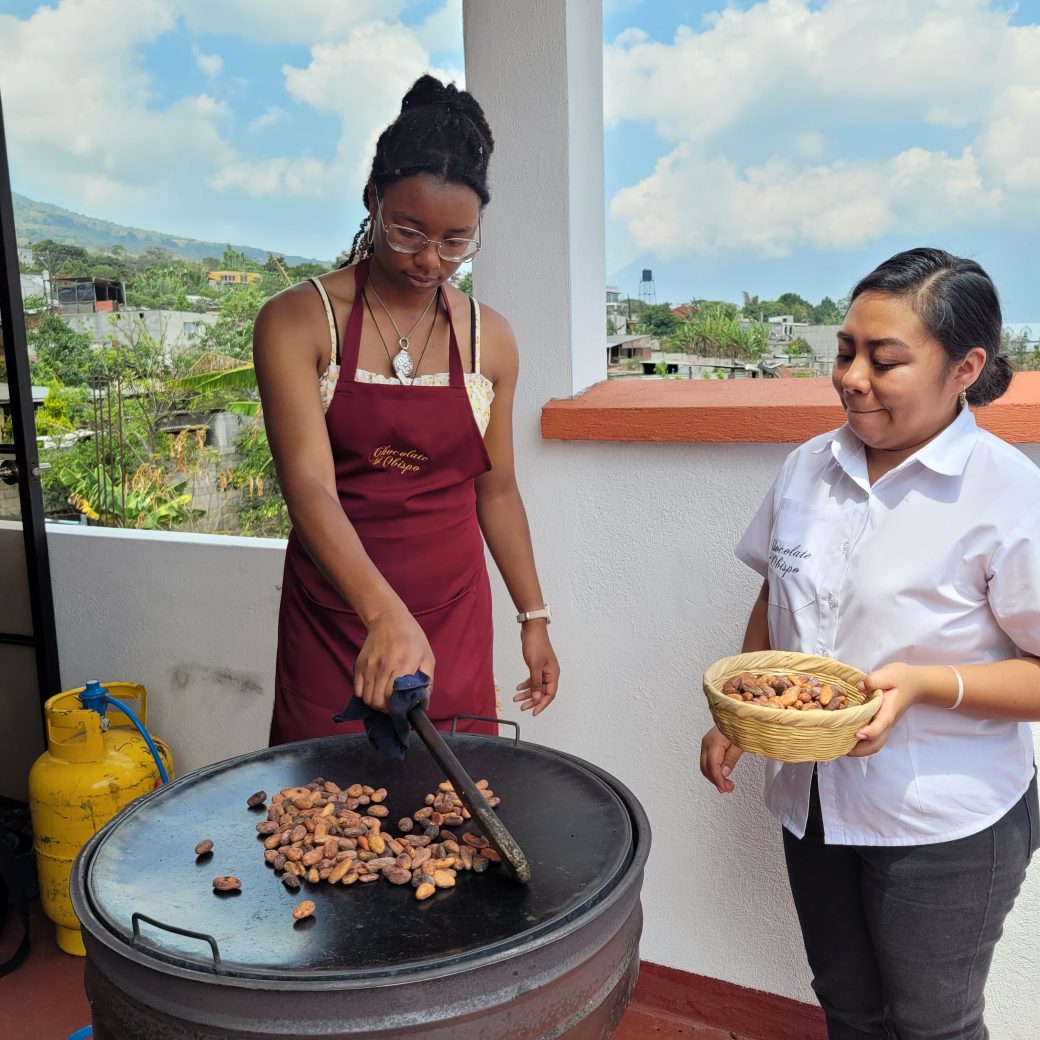
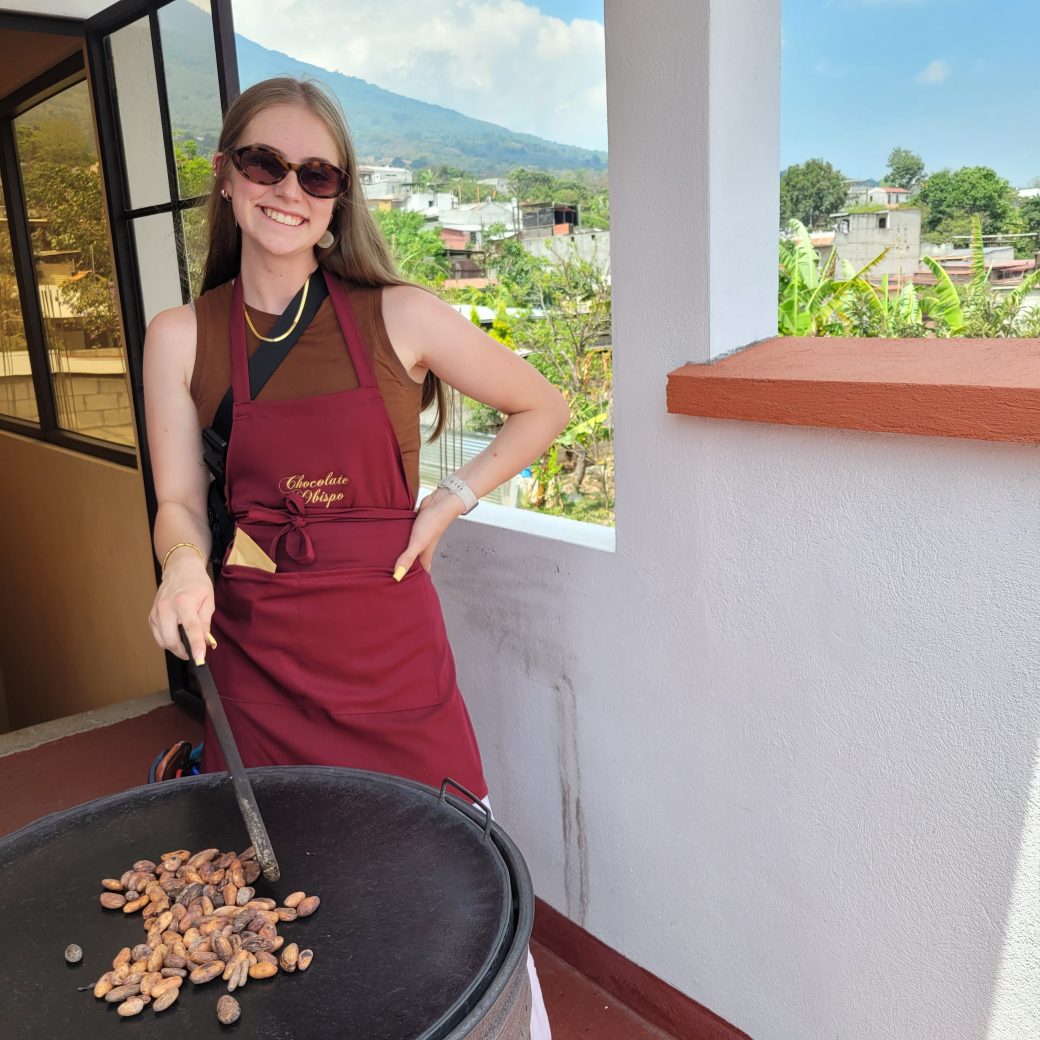
The pan is very hot, so you have to be careful while stirring the beans.
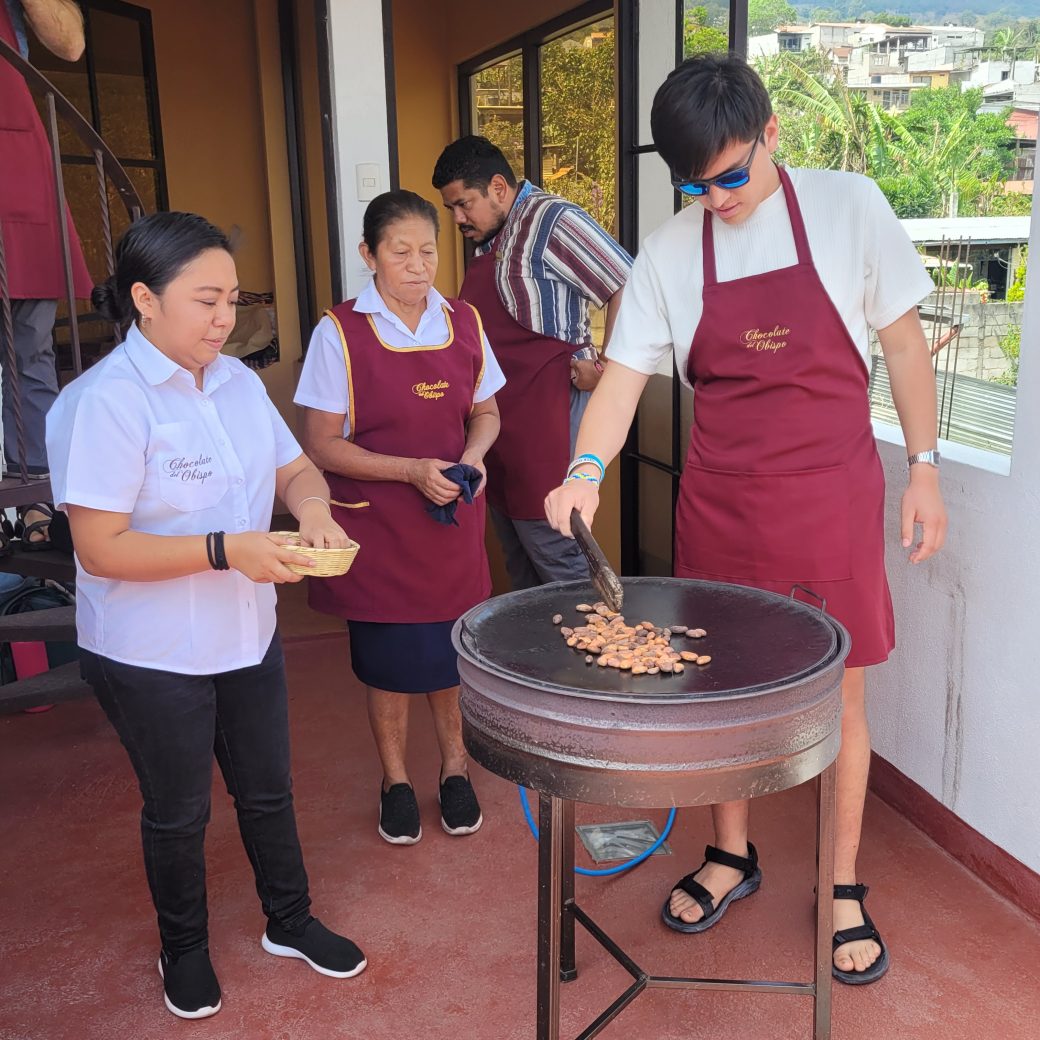
"I'm trying not to burn it!"
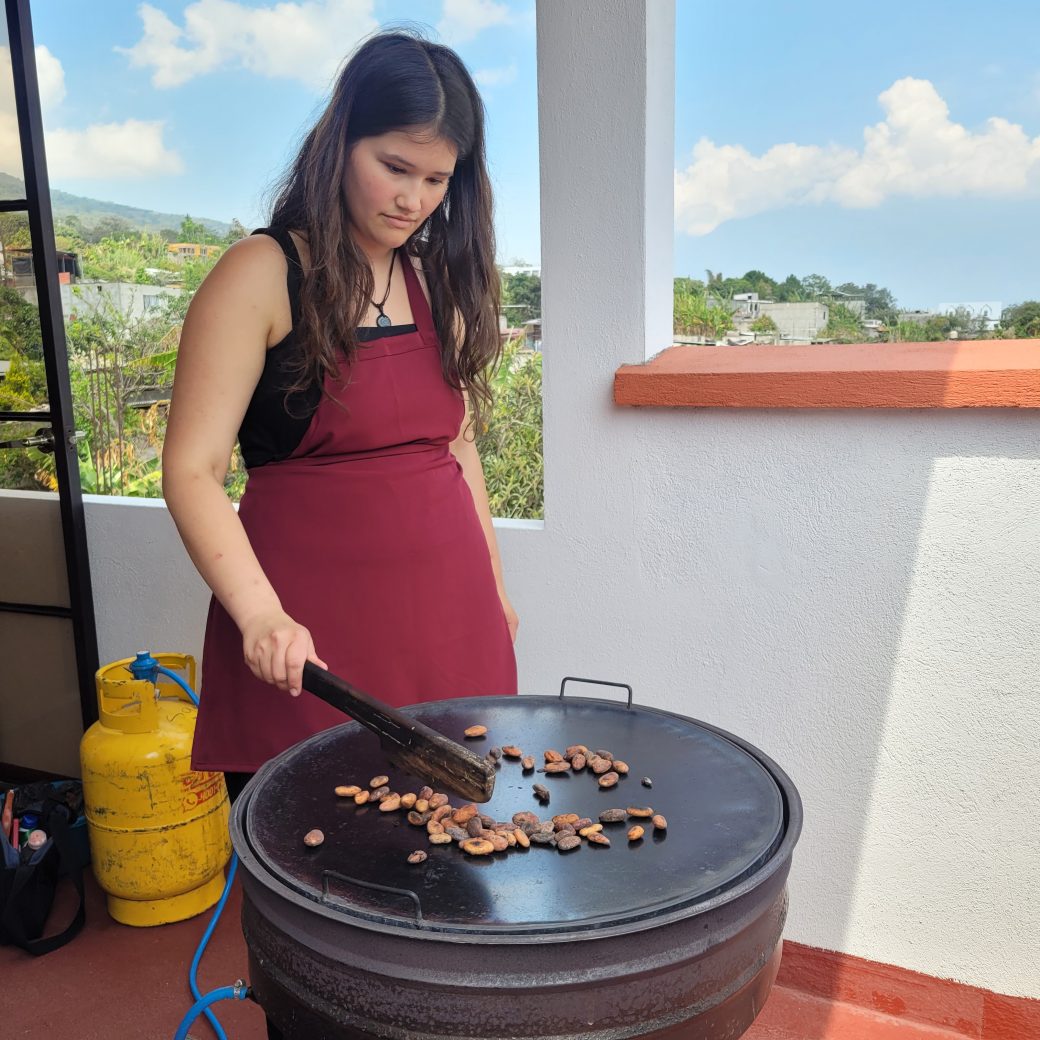
Stir some more!
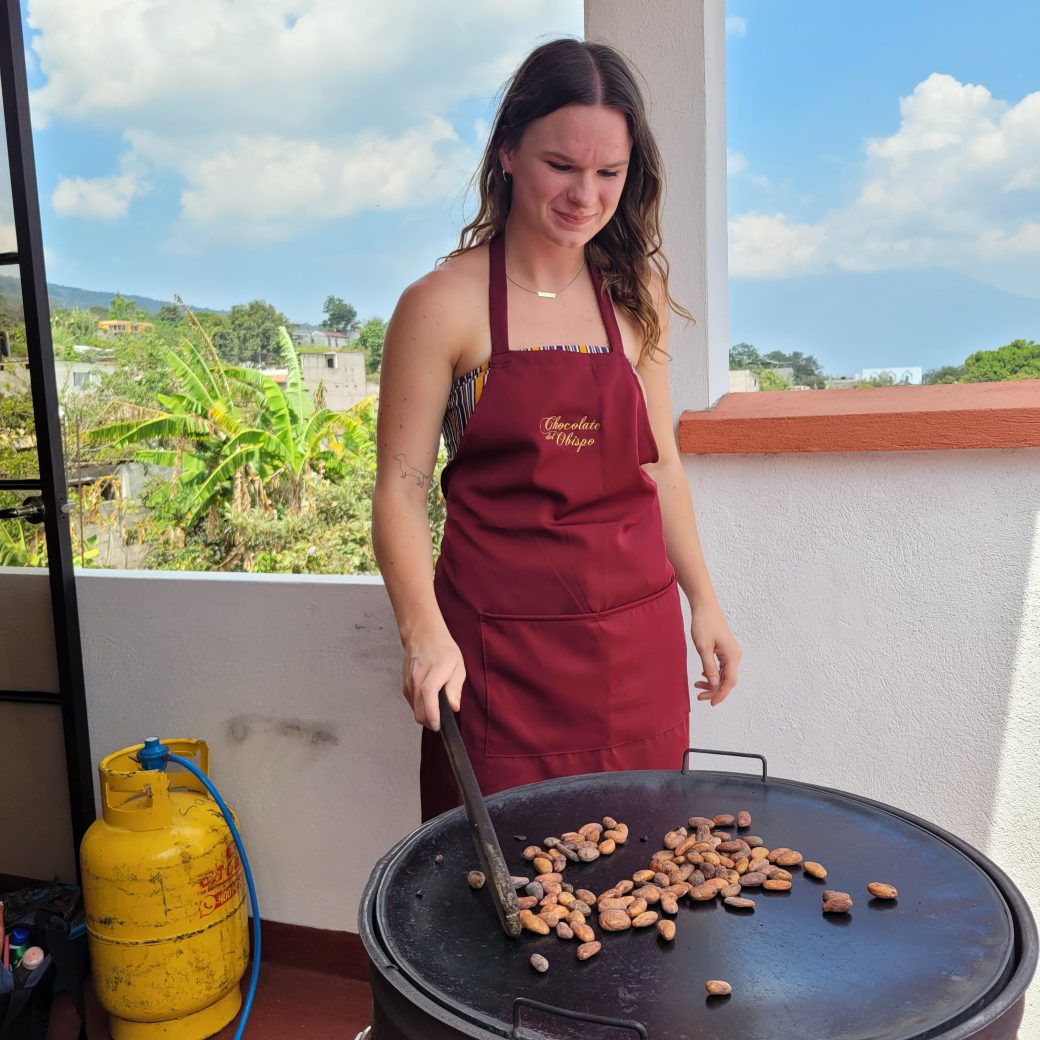
Little by little, the shells will start to toast and darken.
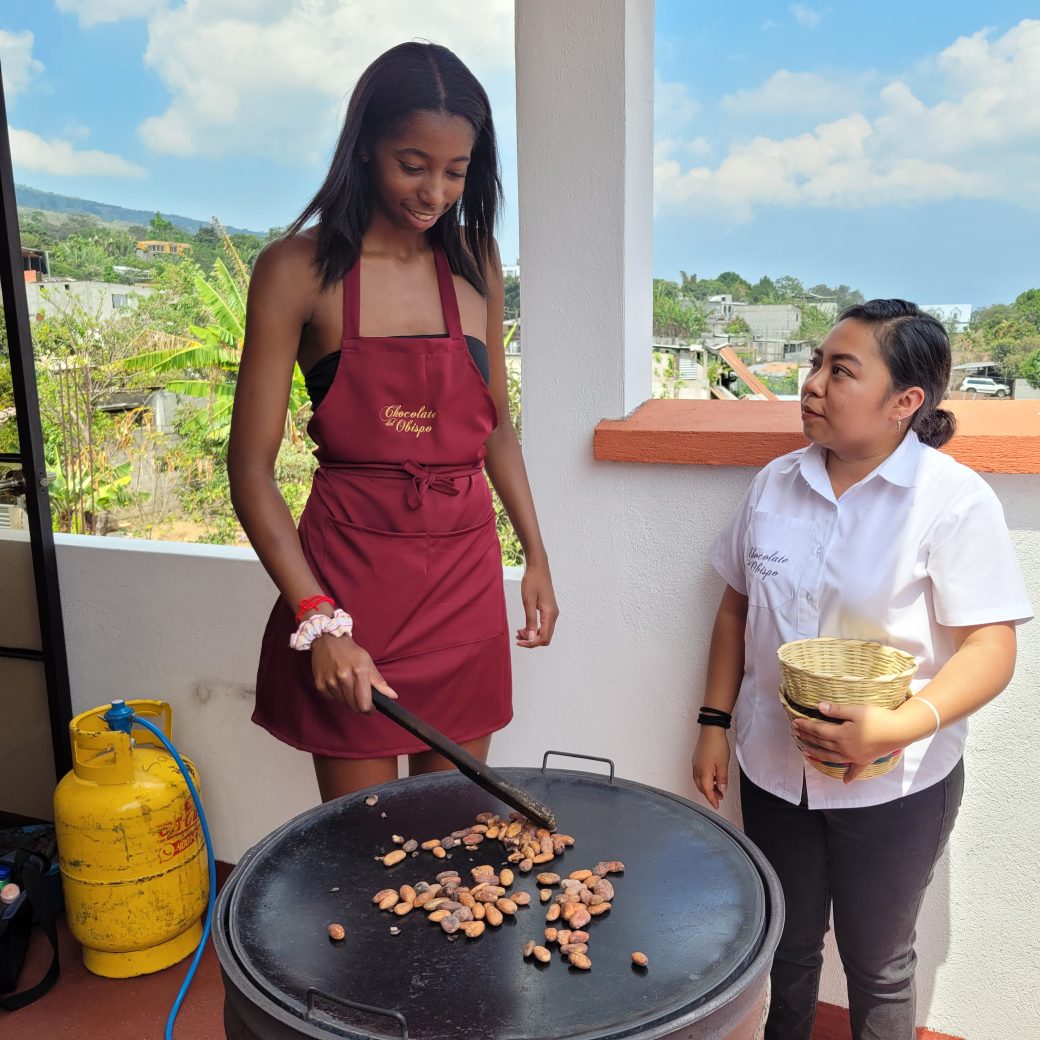
When the moisture inside the beans expands, it produces a loud cracking noise.
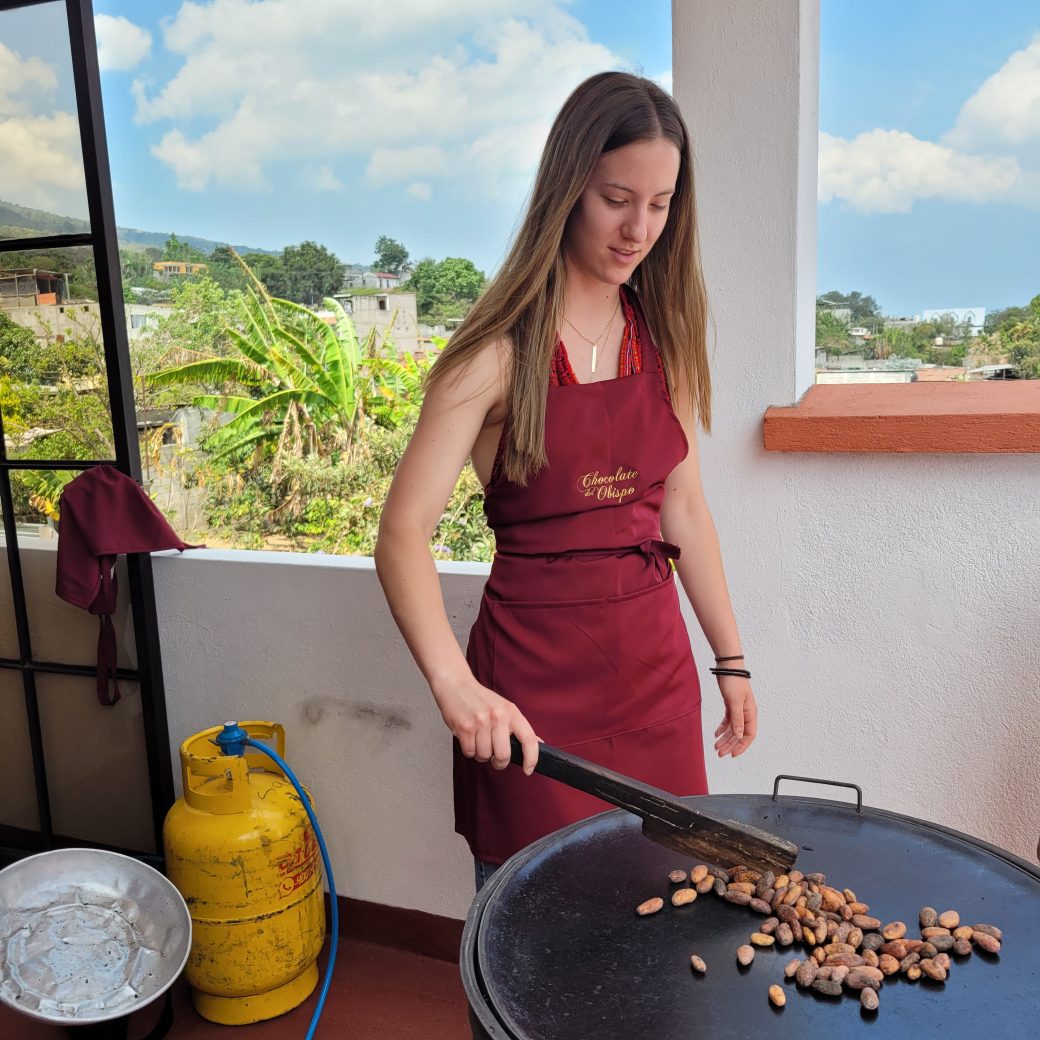
Just keep stirring!
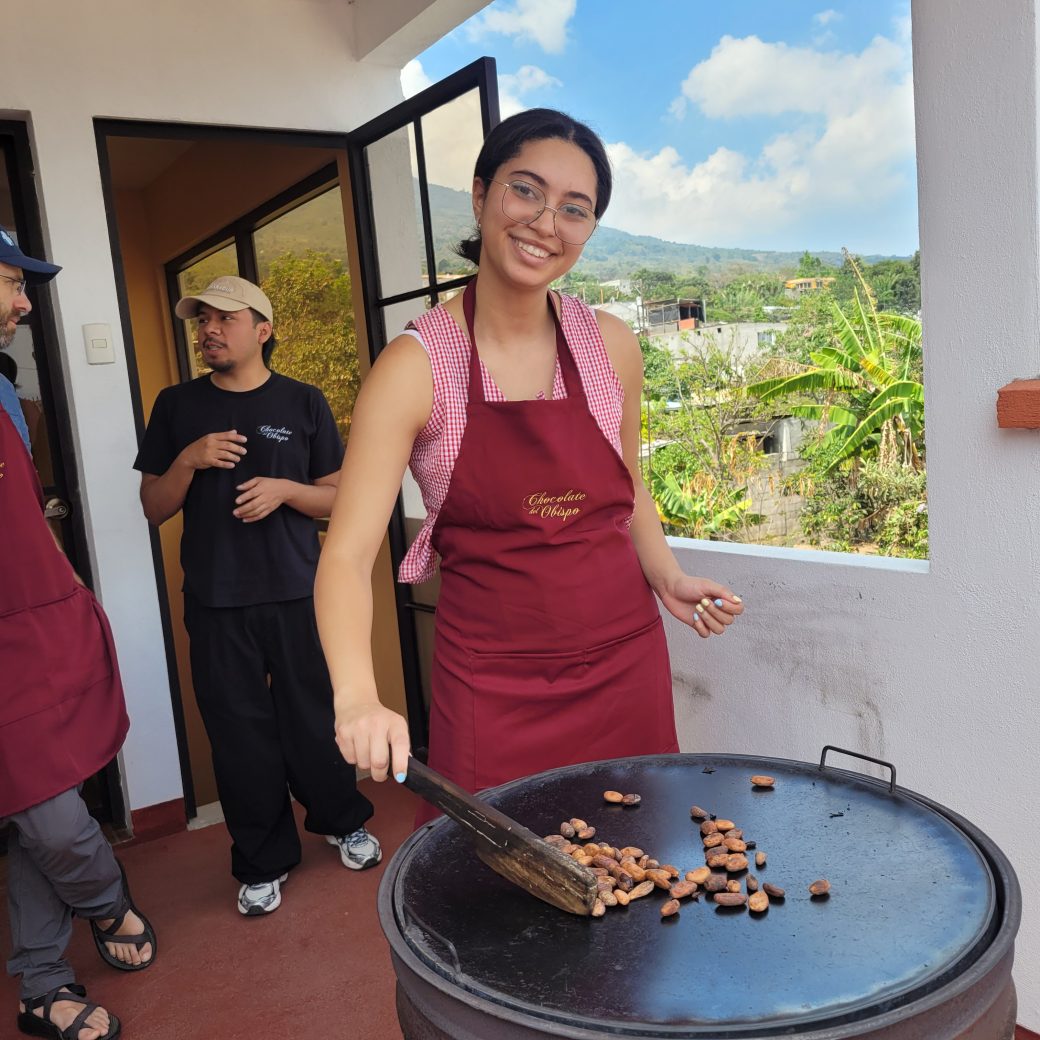
Once the shells of the beans rub off easily, they are fully roasted.
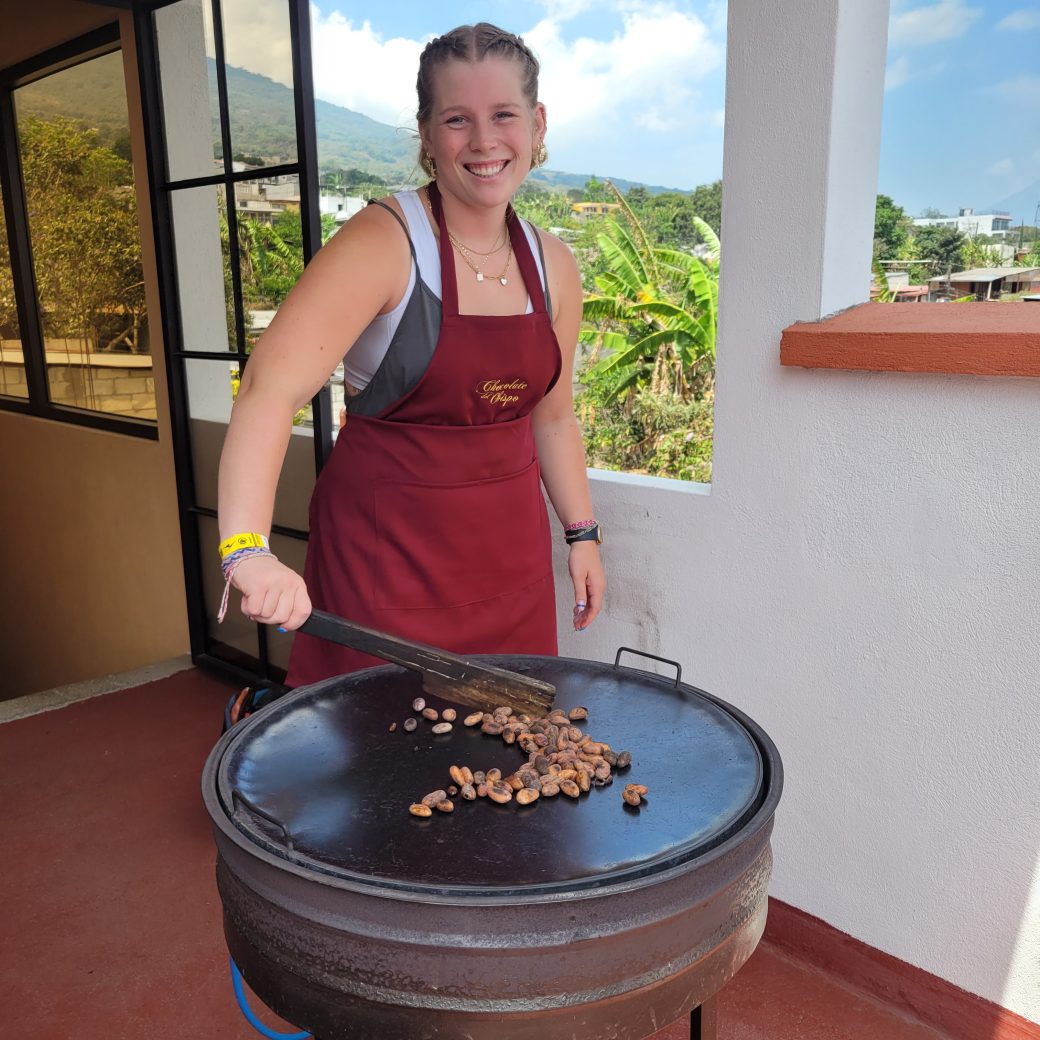
Now quickly remove the beans from the hot pan, before they burn.
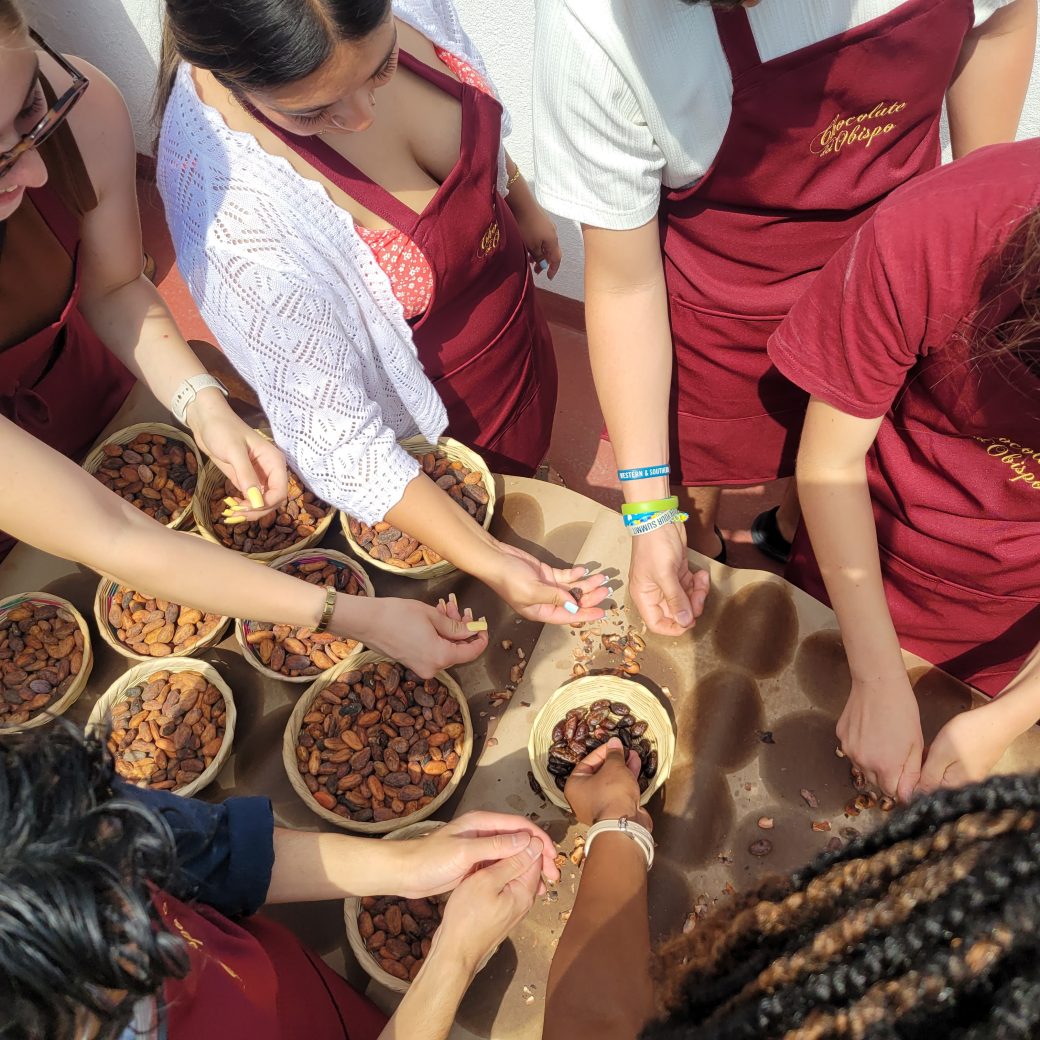
Wait for the beans to cool to the touch, then remove their shells.
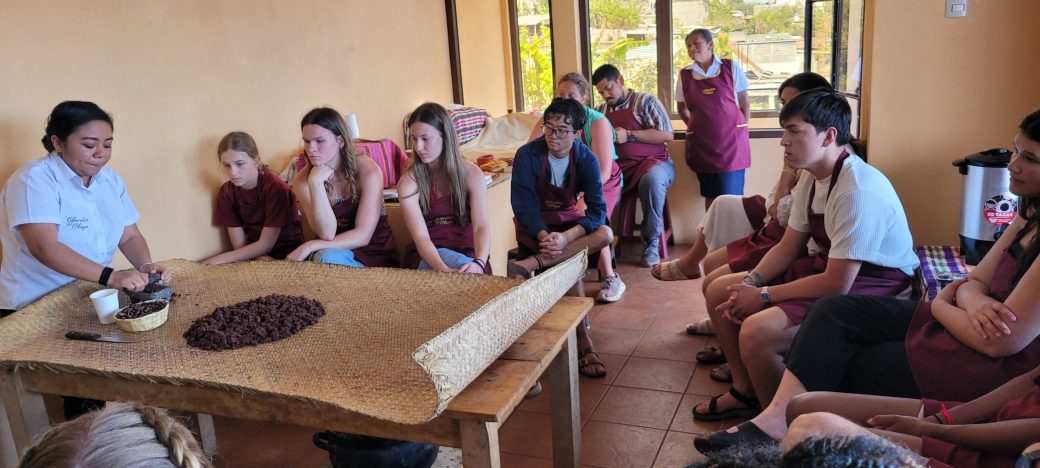
After the beans are roasted and cooled, they are ground into a paste with sugar and other flavorings.
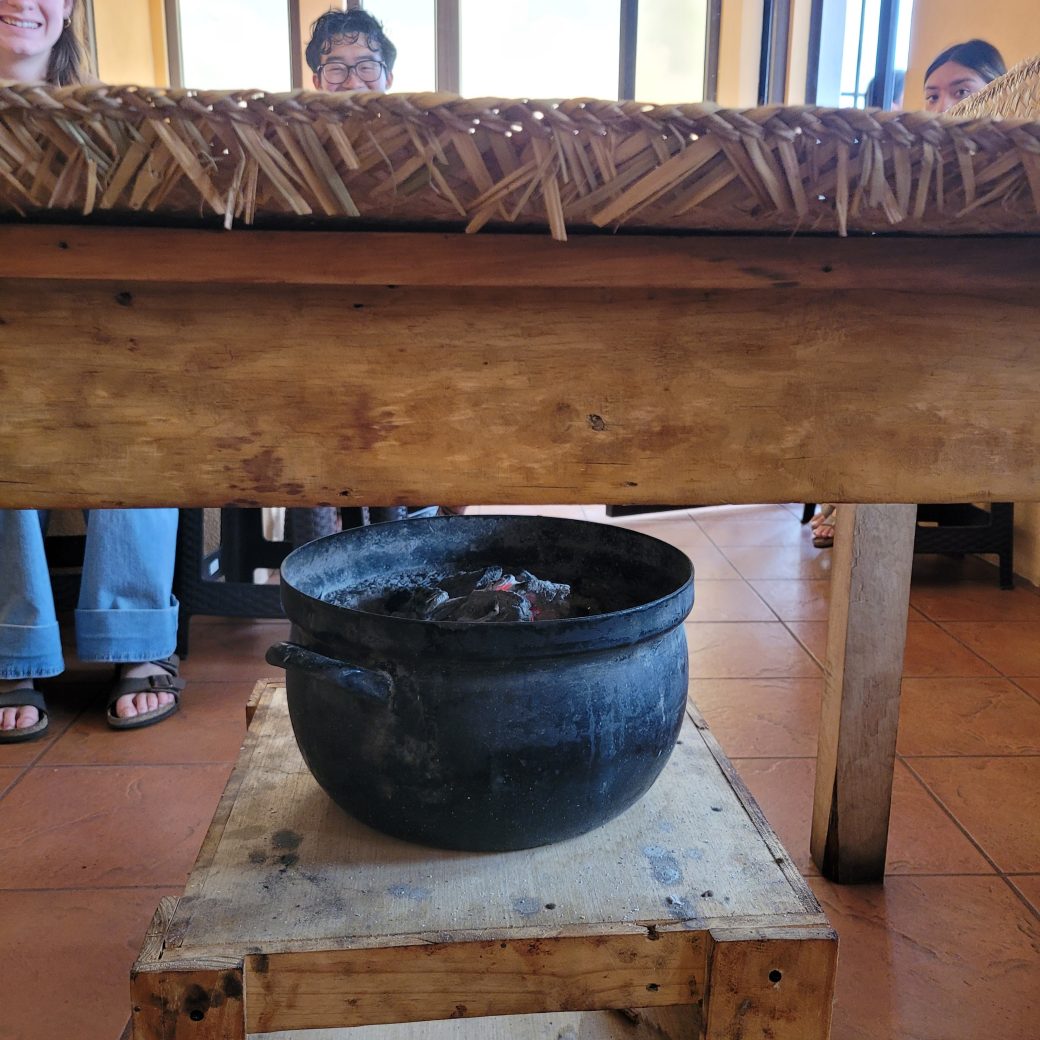
A pot of hot coals gently warms the table from underneath, keeping the chocolate paste maleable.
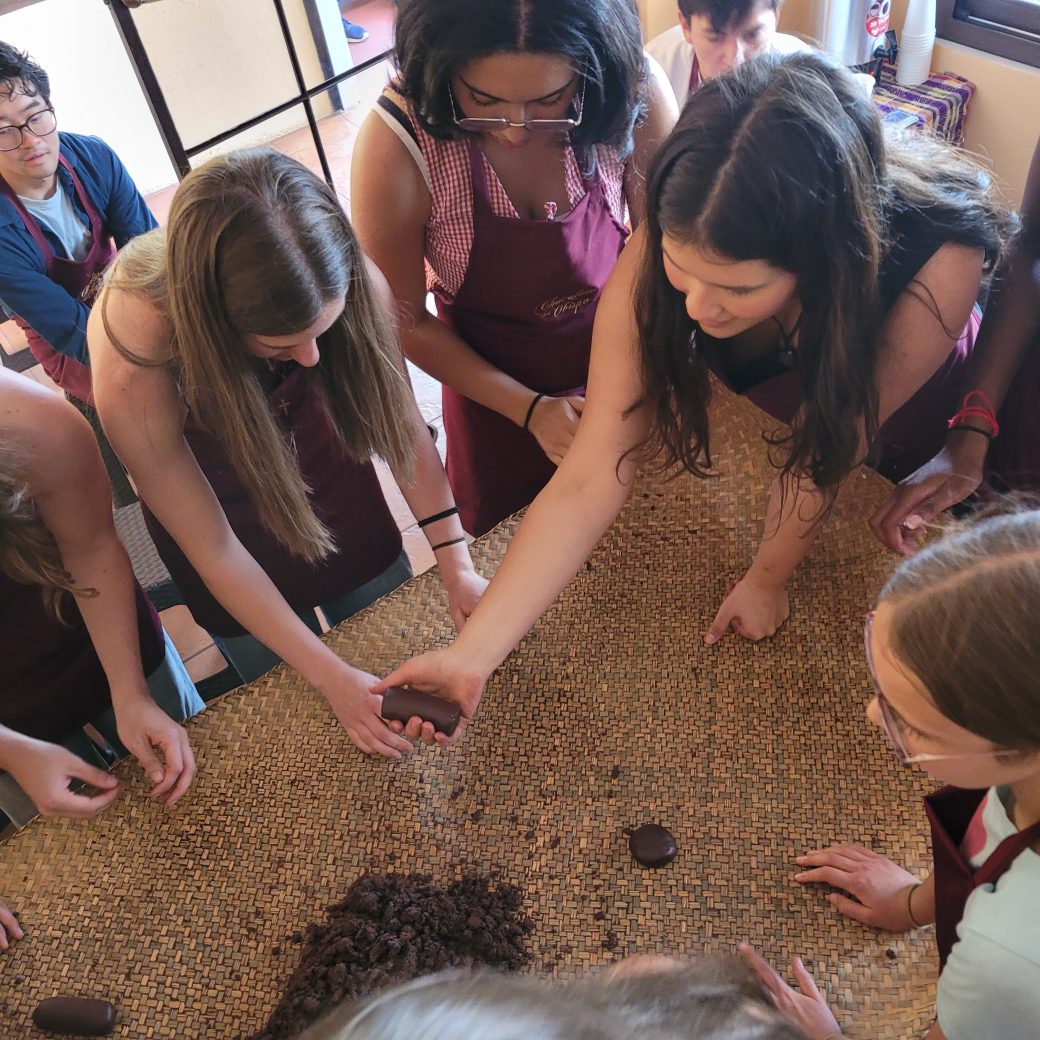
The next stage of the process is to shape the chocolate paste into small, compact portions.
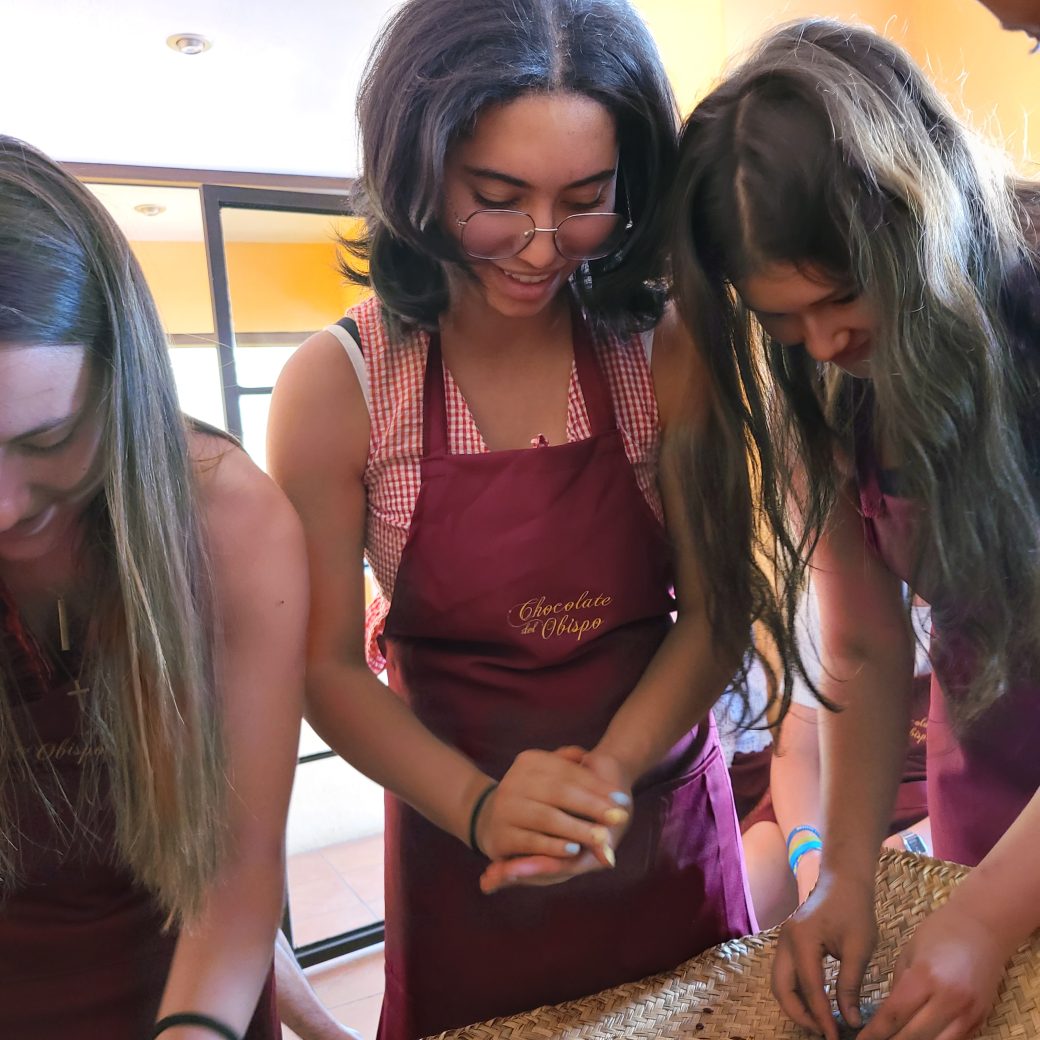
This is harder than it looks! Our resident ceramics student had better success than many of us.
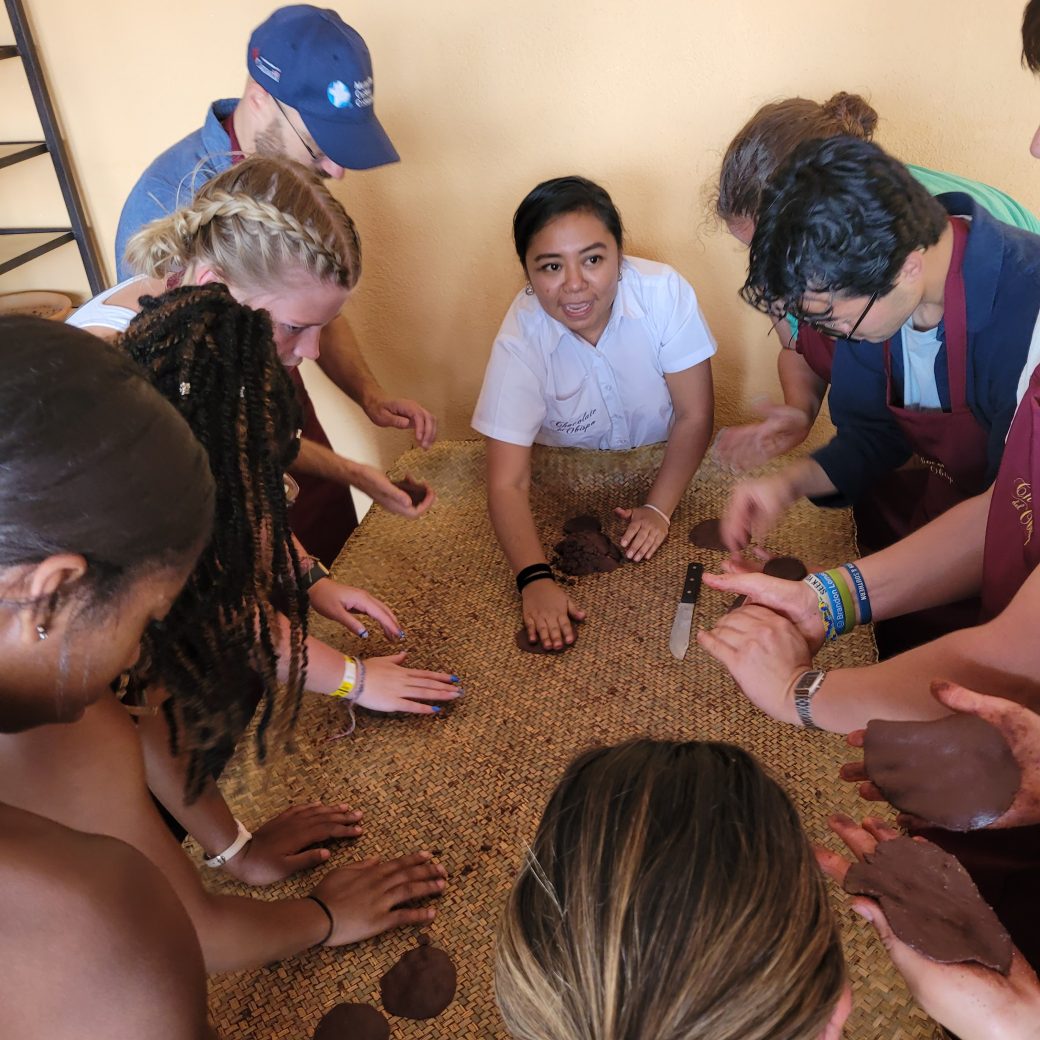
The final step is to flatten the portions into flat tablets for curing.
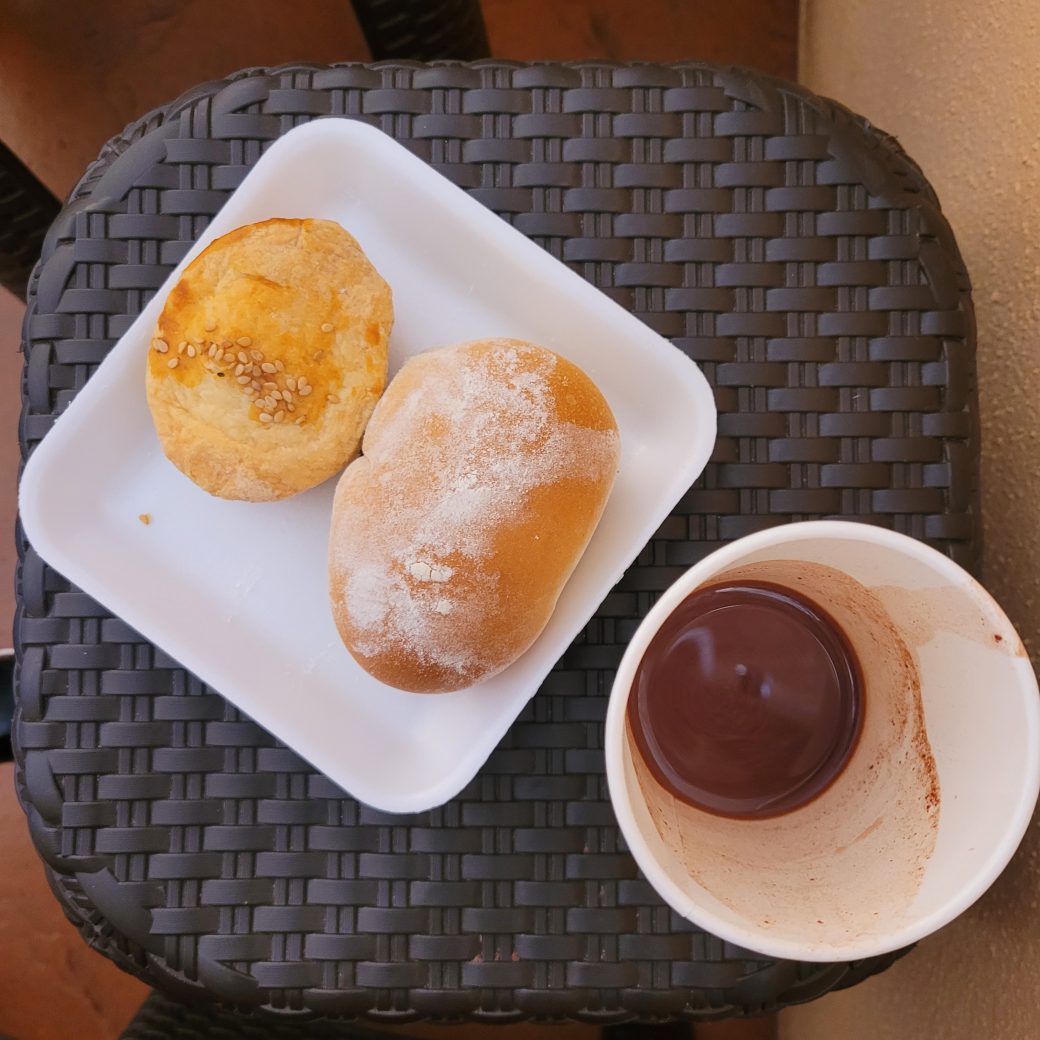
Enjoying hot chocolate, shecas (strawberry bread), and chicken vol-au-vents.
 Global Education
Final retreat in Ecuador
 Global Education
Life on the ward
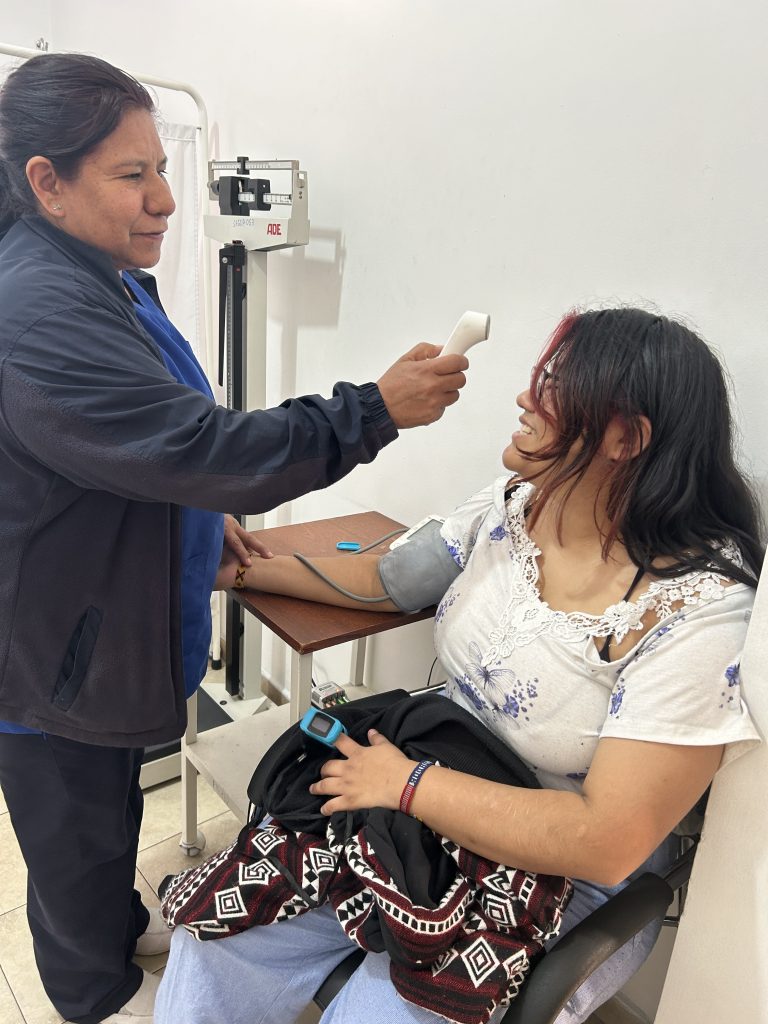
By Dayanara Aguirre-Mulato During my service placement at the municipal Centro Médico in Riobamba, I had the privilege to be able to work alongside other nurses. Day to day each patient comes in to register for their appointment and I…
 Global Education
Service visits: opportunities for connection in Ecuador’s “provincias”
By Hillary Harder During the Service term, leaders have the privilege of traveling to visit each student at the home and volunteer assignment where they are spending their time during the second half of SST. For us, that meant traveling…