

This presidential column originally appeared in the Spring/Summer 2026 issue of Bulletin
News
What more can a prof do?
Jun 01 2026
This article originally appeared in the Spring/Summer 2026 issue of Bulletin.
by Eric Bradley, head librarian, Mennonite Historical Library
No single course may better define Goshen College’s commitment to liberal arts education than Mary Oyer’s Fine Arts class, first introduced in 1945. Originally offered as two separate second-year general education courses on art and music, Oyer combined them in 1949 into a yearlong course “about both the study of music and painting.”
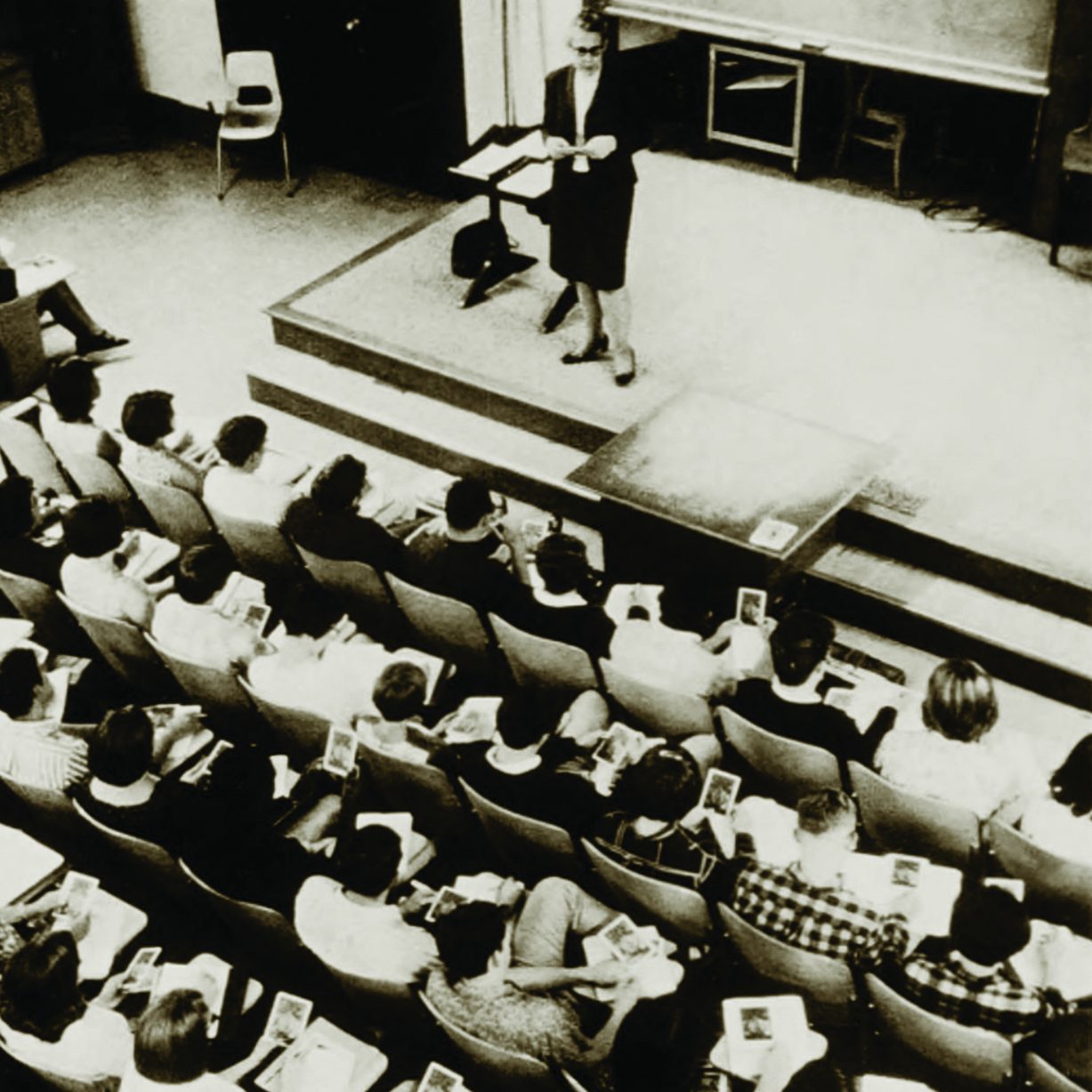
Often meeting in Assembly Hall (Administration Building, Room 28), Fine Arts class introduced GC students to classical art and music, included field trips to visit the Art Institute of Chicago and performances by the Chicago Symphony Orchestra, and featured tests demanding enough to require “a bottle of aspirin at term paper time.”
The late Owen Gingerich ’51 recalled in a 1994 Record article that, in the course’s earliest years, Oyer “had a mixed audience, from those eager to open a new window onto the culture of Western civilization to those shocked by the undraped human bodies of Renaissance paintings.”
Even so, students across generations hailed the course as “legendary,” “matchless,” and “one of the best any college offers.” Reactions to Oyer’s teaching and liberal arts content varied — one writer in Menno Pause, GC’s underground newspaper, found her perspectives inspiring:
“[Oyer] refuses to shut out the artistic avant-garde, whether it be John Cage’s noises and silences, [Alberto] Giacometti’s twisted sculptures, or mixed-media happenings. She attended Backdoormen [Goshen’s first blues band] concerts and tried to understand them. She listened, she listens, talks, watches, responds. What more can a prof do?”
Oyer also regularly invited other faculty colleagues into classrooms, creating space for a diversity of voices. In 1968, the same year the first Study-Service Terms were launched, the course expanded its focus to include African music along with other forms of non-Western art forms, helping establish a lasting tradition of global music at Goshen College.
The Fine Arts class led many to careers in the arts and broadened the artistic appreciation of generations of Goshen College students.
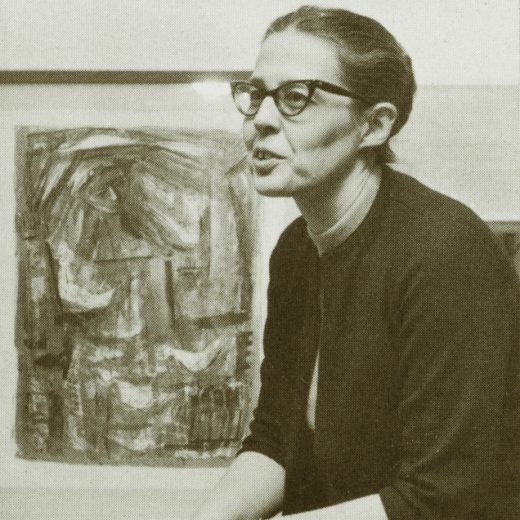
Mary Oyer's 1963 Maple Leaf yearbook portrait
Assembly Hall in the 1960s with Fine Arts class in session
“More than a mind factory”
Till we meet again
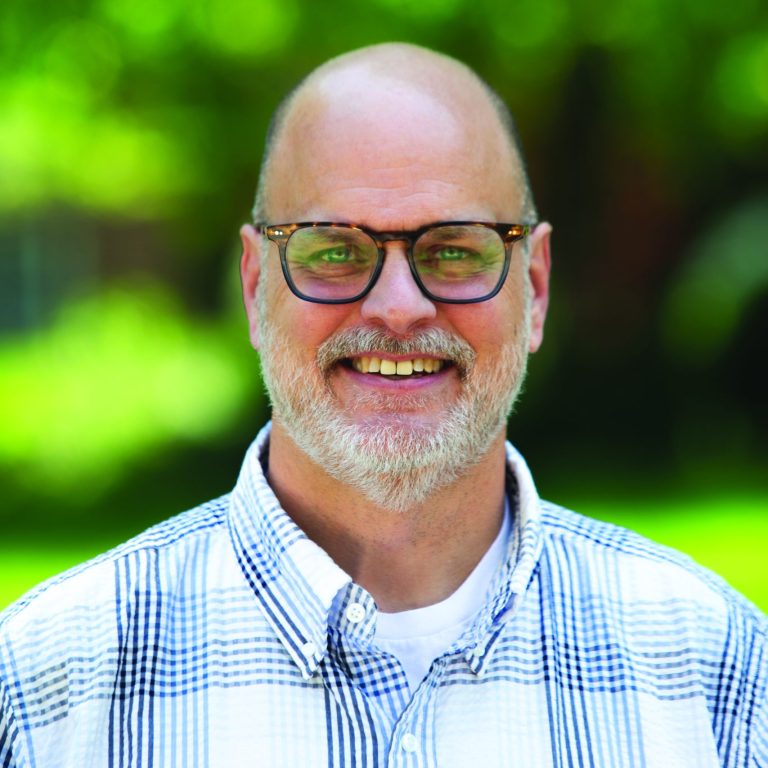
My professional connection to Goshen College began in 1988, when Sociology Professor Emeritus J. Howard Kauffman hired me as a research assistant for his work on North American Mennonite beliefs and social patterns.
Learning to live well
The six alumni featured here followed very different paths after graduation. Yet, each points back to a common foundation: an education that paired intellectual rigor with real-world experience and a commitment to loving God and neighbor. Their stories, told in their own words, show how that foundation continues to unfold across careers, communities and calling