

This presidential column originally appeared in the Spring/Summer 2026 issue of Bulletin

News
Learning to live well
Jun 01 2026
This article originally appeared in the Spring/Summer 2026 issue of Bulletin
by Barbara Showalter Josenhans ’96, Jim Gunden ’80, Sally Hunsberger ’86, Raj Biyani ’92, and Joelle Friesen ’17, M.D.
What does it mean to be formed as a courageous, creative and compassionate leader?
At Goshen College, that formation begins in the liberal arts — in classrooms, communities and experiences that challenge students to think deeply, act with purpose and serve others. The six alumni featured here followed very different paths after graduation. Yet, each points back to a common foundation: an education that paired intellectual rigor with real-world experience and a commitment to loving God and neighbor. Their stories, told in their own words, show how that foundation continues to unfold across careers, communities and callings.
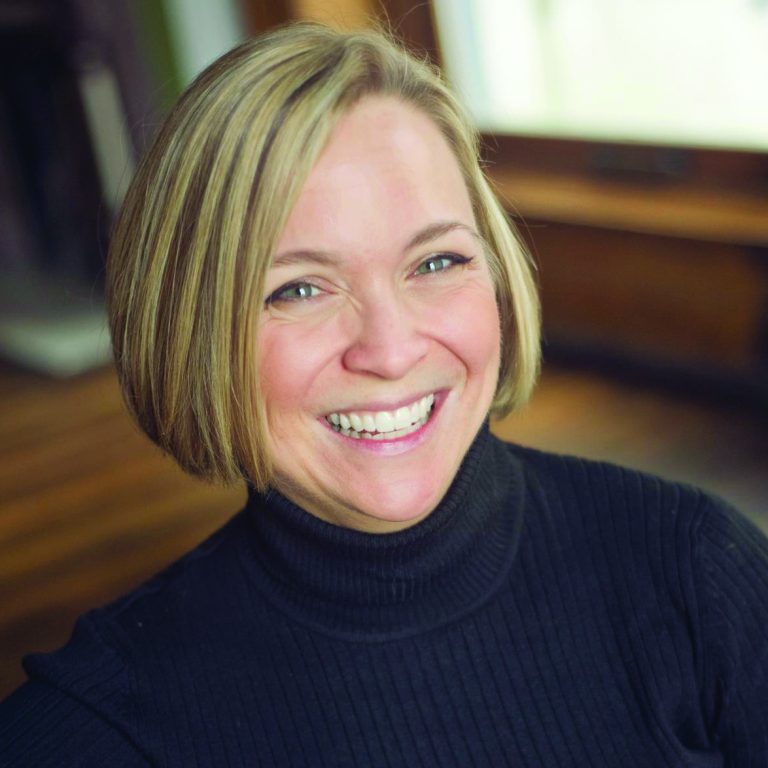
Learning to navigate, not just perform
by Barbara Showalter Josenhaus ’96 – senior writer and associate director of university relations, University of Notre Dame
When I left Goshen College, I thought the only thing that mattered was the diploma in my hand. The truth is that Goshen gave me far more. My time as a Maple Leaf taught me lessons that were less about the intricacies of music, my chosen major, and more to do with bigger ideas about the world, myself, and how to live a life of learning, connection and alignment. Friends taught me how to laugh. The community taught me how to sing. Professors challenged me to think, speak with conviction, and become the kind of person who brings integrity, courage and love into the world.
I spent a lot of time on Arts 3rd, where the music professors (David Mosley, Doyle Preheim, Lon Sherer, Marvin Blickenstaff and others) supported my performing endeavors while never letting me sacrifice my personal development. After graduation, I arrived at music school overwhelmed by what I didn’t know, but realized my liberal arts experience had given me the resilience to easily catch up to my conservatory-trained peers. Thanks to the Biblical Literature papers I wrote for Don Blosser ’59, I had the critical thinking skills needed to navigate new materials. The lessons I learned in Anabaptist History with John D. Roth ’81 kept me grounded in who I was in the midst of getting lost in the competition of auditions and performance standards. I had to be comfortable with discomfort, vulnerable enough to ask for help, and ready to serve others in my community — all lessons I learned on Study-Service Term.
As my professional life began, I leaned into other wisdom from Goshen: Dan Hess taught me effective communication and how to “come home” to myself, while Jo-Ann Brant’s Feminist Theology class gave me a love of words and the courage of conviction. Because of Goshen, I was more than able to navigate the curvy road of adulthood that I had not initially anticipated in my naïveté as a young alum. When it was time to make a professional pivot, I was able to lean into my Goshen education to manage, sell, market and write.
Upon landing my current role, it became clear that Goshen and the experiences it set in motion had prepared me for this chapter. I ended up at a place that values the same balance of spirituality and intellect I found at Goshen, where my voice, values and impact align.
Goshen College didn’t prepare me for a single career, it prepared me to navigate an ever-changing world filled with a variety of people who are infinitely different from me. Knowing myself, thinking critically, trusting my instincts, taking chances, learning new things, operating with integrity and helping people find resonance have enabled me to empower those around me to be their own best advocates and be a little braver.
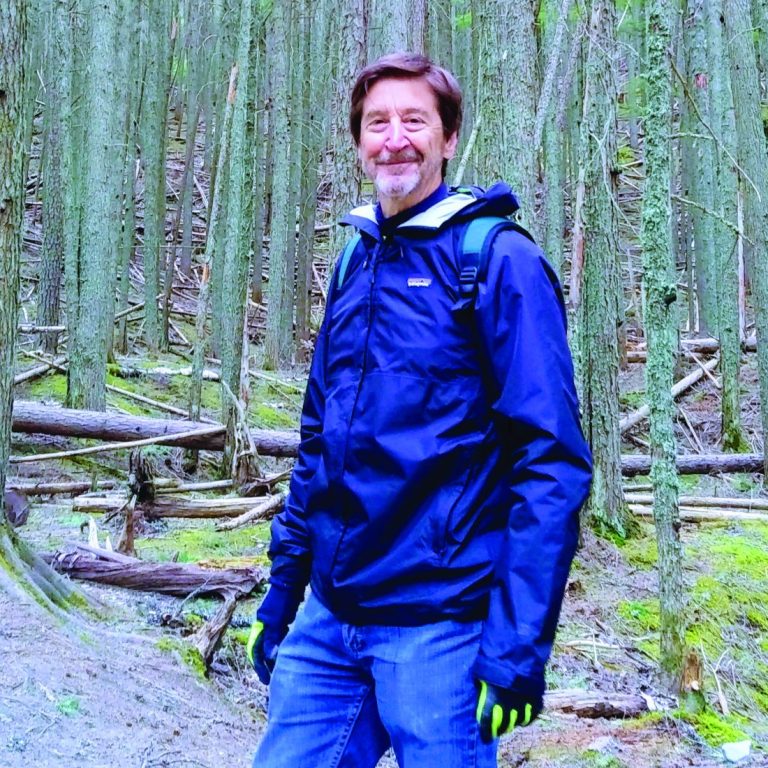
Learning to see differently
by Jim Gunden ’80 – retired IT executive, Aetna, founder of Precision Solutions Delivery
There were many parts of my Goshen College education that shaped me — some expected, others not — but together they formed how I approach both my work and my life of service.
One of the most formative was inductive Bible study. This Anabaptist-friendly approach to making sense of scripture was liberating to me. It taught me that people can read the same translations and come away with very different conclusions regarding meaning and application to life today.
We learned biblical numbers have other meanings and biblical connections. This knowledge helps to understand that others take numbers in scripture literally, contrasting my view that numbers convey meanings, but not necessarily mathematical accuracy. This lesson stayed with me. It gave me the framework for working with people who see the world differently — not to dismiss those differences, but to understand and respect them. This has helped me in board service with my church, Anabaptist Mennonite Biblical Seminary, Mennonite Central Committee and Dock Mennonite Academy (formerly Christopher Dock).
Goshen’s motto, “Culture for Service,” also left a lasting impression. Seeing these words, as they circled the book and lamp on the seal, became a quiet call to action. Especially in my later years, when I’ve been invited to be a part of a group that helps or serves others, I try to say yes. Seeing a need where I can help is a call for me to engage. Helping and saying yes has been enriching and given purpose to my life.
My Study-Service Term experience deepened that formation, providing many growth experiences and appreciation for other cultures. Living with people in a different country, understanding their life experiences and challenges, was life-changing. Seeing the impact of U.S. culture and influence while living in a developing country was enlightening.
As I grew in my career, I had the opportunity to work in beautiful Puerto Rico and enjoyed new friendships and appreciated differences in family and workplace culture. Further along in my career, I worked with teams in India, Sri Lanka and other countries, encountering some collaborative challenges that required more than technical solutions. We had conflicts because our work schedule called for offshore people to work several important holidays on their calendars. Respecting their culture, we explained to our U.S. staff that asking these people to work those days was like U.S. employers demanding us to work on Christmas. We figured out a way to honor their culture, yet get the work done.
Looking back, I see that my Goshen education didn’t just prepare me for a career. It has given me many deep, lifelong friendships and connections with many people I respect in church circles, and strong, lasting relationships with Goshen College faculty and associates.
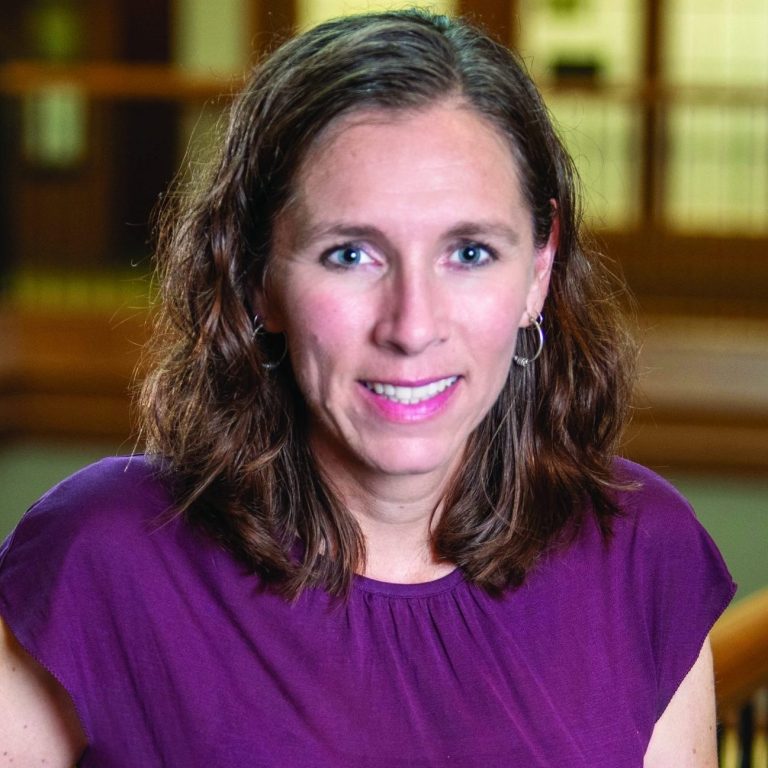
The lessons that stayed
by Lisa Koop ’99 – director of legal services, National Immigration Justice Center
The most important question I learned to ask is… does the evidence support the conclusion? Put another way, are we doing things because that’s how they’ve always been done? Or because that is the current trend? Or because we are nervous about rocking the boat? We have to be ready to question and ready to adjust, but also prepared to stand by positions that may cut against the grain.
The first time I had to lead with courage, I remembered… you know what is right. Take a deep breath and make the words come out. This challenge is about something so much bigger than you.
Studying psychology seemed unrelated to my career until… just kidding, Professor Victor Koop was and remains my most formative teacher. My psychology and English majors were excellent foundations for a career in immigration law. I could talk about this for days.
Leadership is less about authority and more about… building a community of people equipped to do the work and carry forward the mission, who support each other and hold each other accountable. Find your community and treasure it.
When I face conflict, I try to remember… It’s okay — and sometimes necessary — to address conflict head-on. It’s not okay to stay in a place of conflict. Say the hard things, but find a way forward.
The habit that most shapes my decisions today is… writing. When I was young and stuck, my mom told me to just start writing. When I need to sort out my thoughts and find a direction, I write.
What I didn’t understand at 20 was… the future would be beautiful and terrible. A mentor told me to “keep putting the good out there” and that simple guidance has been my north star.
My liberal arts education prepared me to lead by teaching me to… feel deeply, fail spectacularly, love my community, question everything, trust my training.
EDITORIAL NOTE: This alumna chose to reflect on her Goshen College experience differently: Through the lessons that have stayed with her.
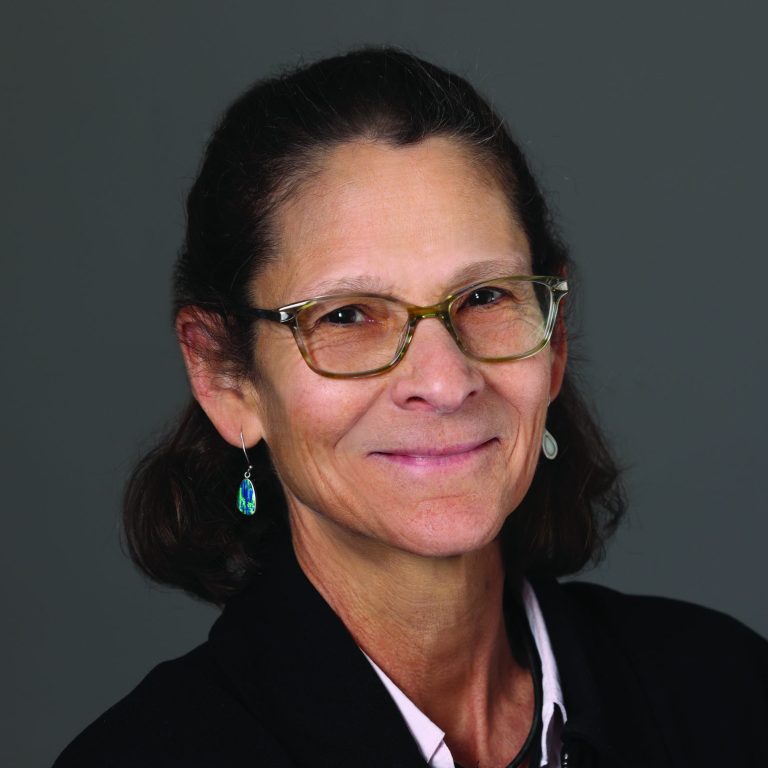
Leadership is less about authority and more about… honesty, curiosity and learning
by Sally Hunsberger ’86 – acting director, Office of Biostatistics for the National Institute of Allergy and Infectious Disease
During the COVID-19 pandemic, I was asked to lead a study of the COVID-19 vaccines across seven countries: the Democratic Republic of the Congo, Mali, Guinea, Liberia, Mongolia, Indonesia and Mexico. These countries had not been included in the original studies demonstrating vaccine effectiveness, yet they would soon begin rolling out the vaccines. Leaders in these countries wanted to understand how the vaccines performed in their own populations.
My initial reaction was confusion. As a statistician, I was usually a supporting member of a study team, not the principal investigator. I asked my director if he was sure I was the right person for the role, explaining that I had little experience managing all the components of a study and didn’t even know what all the pieces were. He simply said, “I’m sure. Don’t worry — I’ll give you a team to work with.” So I jumped in.
What I discovered was that honesty and curiosity were powerful leadership tools. When I openly acknowledged what I didn’t know and asked questions to better understand the process, it allowed others to step forward and lead in their areas of expertise. Together, the project came together in an incredible way.
One priority for me was ensuring that the people doing the work and who knew the study best received recognition for their contributions. When we developed the publication policy, we required that anyone listed as a primary author attend all study meetings. We also made sure that at least three representatives from each country participated in the calls. In the end, this approach allowed many junior investigators to engage in the process in ways they had never experienced before.
People often told me they had never had so much fun working on a study. At our weekly meetings — late on Friday afternoons — I would randomly ask someone to close us out with a word or thought. The laughter and reflections that followed were a welcome release after long and challenging weeks.
Saying yes to this project surprised me and ultimately set me on a different path than the one I had been on. I am deeply grateful for the opportunity to lead and learn from the remarkable team that made the study possible.
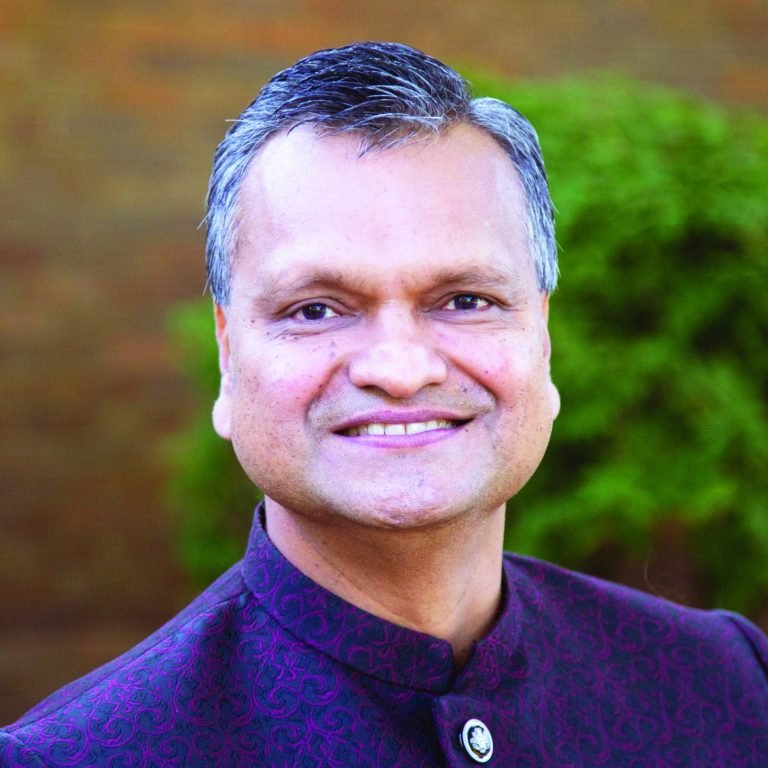
The classroom across the street
by Raj Biyani ’92 – chief innovation officer, Goshen College
The white house across from Newcomer Center was the home of Mary Bender, a retired professor of French. When I arrived at Goshen College in 1988 as an international student from the bustling city of Calcutta, India — alone and nervous — Mary welcomed me and two classmates, GB Basnet ’92 from Kathmandu and Avinash Kessop ’92 from Calcutta, into her home and treated us like family. During the four years we lived there, we became known on campus as the “Bender Boys.”
Only months earlier, my parents and I had been sitting around the dining table in our home in Calcutta when we opened the Goshen College information packet. As we read about the school’s values, my mother smiled and said something I will never forget: “Raj, Goshen College looks like a good Hindu college!” She meant that the values she saw — a nurturing community, grounded in spirituality, deep hospitality, humility — felt familiar.
Living in Mary Bender’s home became one of the greatest gifts of my college years. It was where I first learned what it means to belong and where a lifelong journey of learning began. .
During my first weeks on campus, Professor Del Good ’62 told me, “At Goshen College, you will learn how to learn.” To be honest, I couldn’t understand what that meant. In the classroom, Professor Shirley Showalter taught me how to think carefully and write clearly. And Stuart Showalter, The Record’s advisor, sharpened my writing with his meticulous feedback — often delivered in red ink across my articles.
Outside the classroom, Russ Liechty ’53, director of counseling, became a kind of father figure. Russ and Marge Liechty ’53 were always there with encouragement and a steady shoulder to lean on. Whenever homesickness struck — as it inevitably does for an international student far from home — Associate Academic Dean John Nyce ’59 and Dorothy Yoder Nyce ’60 offered a comforting reminder of home, inviting us for home-cooked Hindustani khana and cups of steaming garam chai: small gestures that made Indiana feel a little more like home.
But at the center of that circle of care was Mary Bender. She quietly modeled it every day. Her empathy, kindness, intellectual curiosity and generosity toward others — with no expectations in return — were lessons no classroom could teach. Only years later did I fully appreciate something remarkable: here was a Mennonite Christian who embodied the very virtues described in the Bhagavad Gita — humility, seeing the divine in every human being, compassion and selfless service.
Looking back, I realize that those years at Goshen were shaping not just my education, but the way I would approach life and leadership. Decades later, I finally understand what my professors meant by “you will learn how to learn.”
Over a 35-year career, I have moved through multiple roles: technology inventor, product manager, general manager, CEO, author, investor, mentor and AI strategist. The most valuable skill my Goshen education gave me was not expertise in a narrow field, but the confidence to keep learning.
That mindset shaped a pivotal moment in my career. After 12 years at Microsoft’s headquarters in Redmond, Wash., I relocated to India with my family to lead Microsoft’s largest engineering center outside the United States — an organization far larger than any I had previously led.
The lesson I had absorbed at Goshen — keep learning, grow together — guided how I built teams, encouraged experimentation, and helped people grow. At Microsoft India, employee engagement rose from 51% to 99%. We also launched the Microsoft IT Garage in Hyderabad to foster grassroots innovation. The transformation of Microsoft India has since been studied in case discussions at Harvard Business School, the Indian Institute of Management and Singapore Management University. Today, as I mentor leaders and study the Bhagavad Gita as part of my spiritual journey, I still see the same thread running through my life.
Mary Bender — who recently celebrated her 99th birthday — is no longer just the retired professor who welcomed three homesick international students. Over the years, she has become part of my family in India. My parents embraced her as one of their own. My brother Rohit knows her stories. My wife Aarti and our children, Garima and Rohan, know her as someone who helped shape my life.
What began as hospitality became something deeper: family. And when I trace that thread back to where it began, I see it clearly — the white house across from Newcomer Center, where three homesick international students first learned what it means to belong: 1901 South Main Street.
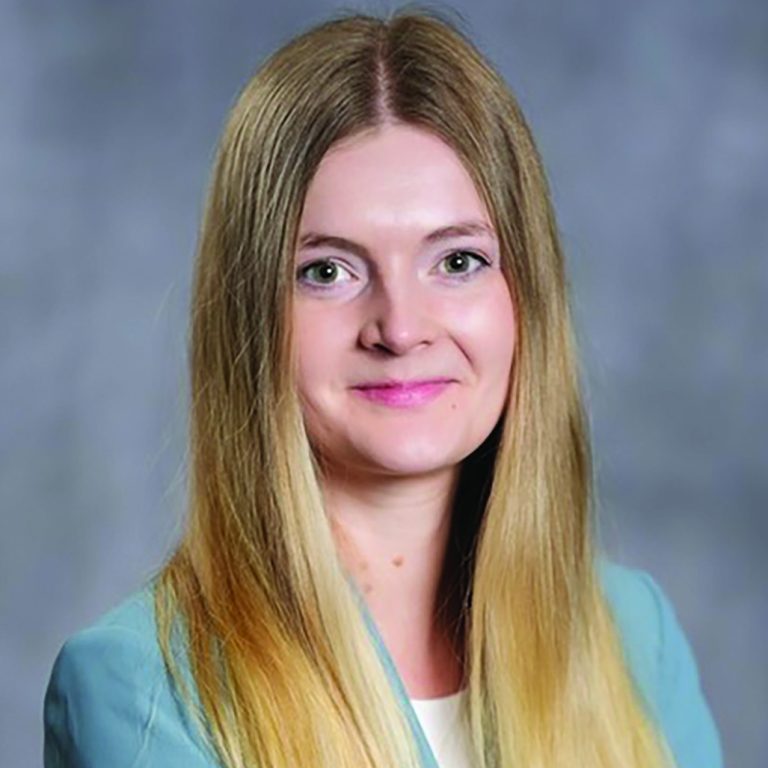
Healing the world, peace by peace
by Joelle Friesen ’17, M.D. – internal medicine chief resident physician, Mayo Clinic
Peace by peace
As I prepare to place a central line for a woman with sepsis, I pause for a brief centering moment: In, out/deep, slow/calm, ease/smile, release. I hear the echoes of Deb Detwiler’s ’79 voice and the collective breaths of Women’s World Music Choir.
Peace by peace
“Salam alaikum,” I greet my clinic patient. His shoulders visibly relax as he smiles and returns the greeting. When he asks how I know an Arabic greeting, we discover a connection: Morocco, where I studied during Dean Rhodes’ ’72 May Term. We reminisce about the beauty of his country, and when the conversation turns to his lung cancer diagnosis, he speaks openly about his hopes and fears for the future.
Peace by peace
During rounds, an intern begins explaining the plan for a 70-year-old patient when her daughter angrily interrupts. Keith Graber Miller’s Liberation Theology teachings come back to me: God is on the side of the suffering. This family is suffering — from fear, grief, and uncertainty — and I am called to walk alongside them. I ask the team to pull up chairs and invite the patient and her daughter to share more about themselves and what matters most to them. The conversation that follows includes tears and the development of a shared goal: to help her return home comfortably to say goodbye to her family.
Peace by peace
The transfer team rushes a young man struggling to breathe into the ICU, where he is intubated for what is believed to be pneumonia, yet something doesn’t quite fit. I am reminded of David Lind ’97 and Kendra Yoder’s refrain to our Senegal SST group: “There is danger in a single story.” I seek out his wife, who hesitantly shares her concerns about his relapse into injection drug use. With the broader understanding from this story, our team recognizes the signs of wound botulism and obtains antitoxin from the CDC, on Thanksgiving of all days. I give thanks with his wife as he recovers.
During my time at Goshen College, I realized my calling might involve living out the college’s motto quite literally through my work as a physician. My liberal arts education nurtured curiosity, compassion, humility, critical thinking and the courage to stand up for peace and justice. The settings may have changed — from choir rehearsal rooms, biochemistry labs, and classrooms to clinics and intensive care units — but the calling remains the same: healing the world, peace by peace.
“More than a mind factory”
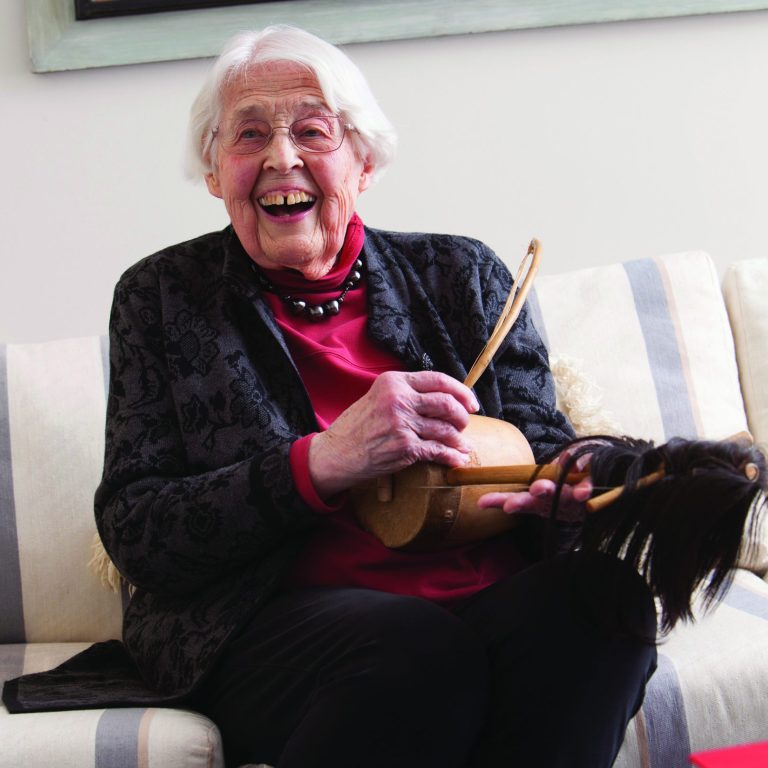
What more can a prof do?
No single course may better define Goshen College’s commitment to liberal arts education than Mary Oyer’s Fine Arts class, first introduced in 1945.
Till we meet again
My professional connection to Goshen College began in 1988, when Sociology Professor Emeritus J. Howard Kauffman hired me as a research assistant for his work on North American Mennonite beliefs and social patterns.