

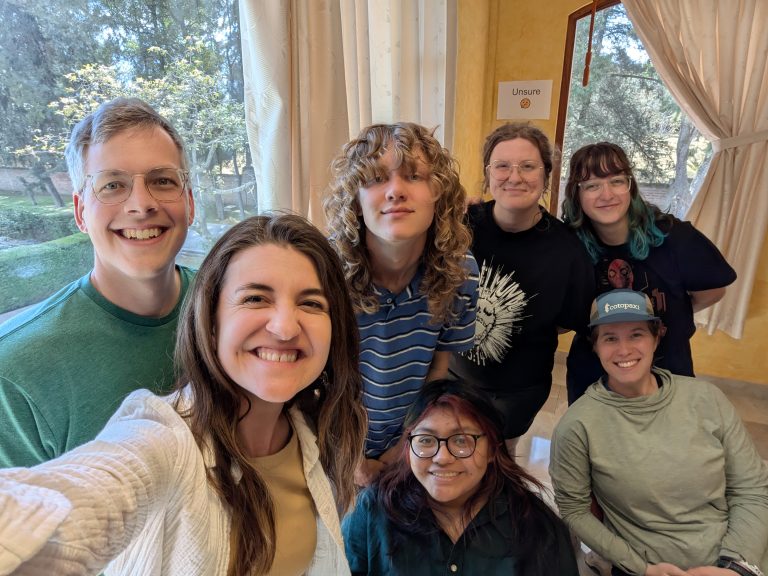
By Hillary Harder On Sunday, July 26, our students returned to Quito from their service communities and we began our final retreat together! The afternoon was full of joyful reunions as each student arrived at our Quito home, la Casa…
News
Culture, tradition, and innovation in Santiago Atitlán
May 09 2026
By Brandon Lomas
On the last day of our first week in Guatemala we visited the town of Santiago Atitlán, which is on the southwestern shore of Lake Atitlán. While in Santiago we had the opportunity to stay the night with a Tz’utujil family. That night was one of the most unique experiences that we have had. Tz’utujil people are descendants of the Maya civilization, and many do not speak Spanish as their first language.
While we eating chicken soup for dinner that night, we communicated more easily with the family members that did speak Spanish. One of the best moments was when we actually watched our host mother make dinner on the outdoor woodfire stove. After seeing the hard work she put in to make us a nice dinner, we were even more appreciative of the meal.
Our host father also explained to us that he worked two different jobs: one in agriculture, and the second making textile fabric for skirts and shirts. We were able to see the loom that he worked with to make this fabric. He explained to us that a single five-by-five foot garment takes him over a week to finish, showing the hard work required for what seems like a simple cloth.
We also played soccer with our host brother, Valentín, for most of the night. Our host father explained to us that although most of Valentín’s schooling was in Spanish, he takes one class in Tz’utujil, keeping the Tz’utujil language alive in Santiago. Our host family was very hospitable towards us, even though we were strangers entering their home and we did not always understand each other. This experience has made us more open to trying new things and accepting that we are not always going to be in our comfort zone.
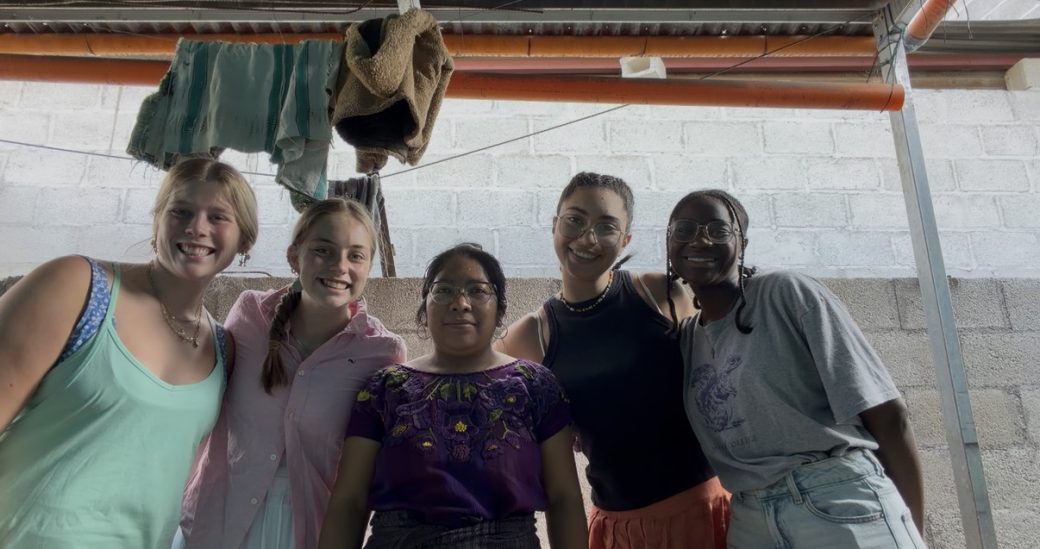
Four Goshen College students with their host mother in Santiago Atitlán.
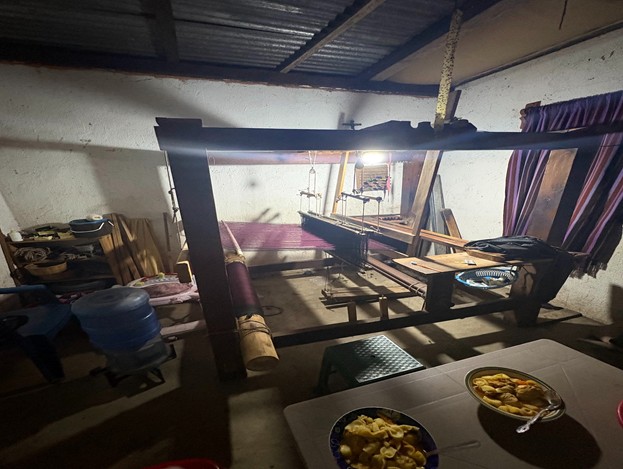
The weaving loom in the home where Brandon Lomas stayed in Santiago Atitlán.
By Celeste Gutierrez
While in Santiago Atitlán, we had the chance to visit ANADESA. ANADESA is an organization that uplifts and strengthens the local Tz’utujil community through two major community programs: an educational program and an economic empowerment program. The overall goal of these programs is to work with children and families through education, workshops, and hands-on skills to better their community. The educational program works with young children and adolescents to ensure they receive sufficient educational support that will open doors for future opportunities, as they become adults.
The economic empowerment program works mostly with women. Women face many challenges, and this program allows them to find a voice in their community and to make financial and other decisions in their household. ANADESA also works with men in an effort to break gendered stereotypes and patterns, helping them to be a more engaged father and spouse. They hold workshops that teach men how to cut hair, do electrical work, and other basic skills in hopes they can pursue a future career. These programs can allow adults to open up a business and or find a job, while being financially supported throughout the whole process.
Beyond the programs themselves, we had the opportunity to learn about the history and traditions of Santiago Atitlán. Before the Spanish invaded the Tz’utujil in 1524, Tz’utujil ancestors were settled, living a normal life with all the resources that were available to them. For example, since they were close to the lake they prioritized fishing, and they also grew beans and corn.
Even after the Spanish invaded, however, the Maya traditions and practices have not been forgotten. A ceremony that is still done today gives thanks to the many creators for the resources provided to them. For example, they burn incense and give thanks to the sun, earth, moon, and rain for giving them the resources they need in order to continue their cycle of life. While they believe in one God, they also believe that there are many creators, which is why they give thanks to everything for the supply of resources.
Our visit to ANADESA gave us a greater appreciation for Tz’utjil history, traditions, and language and for the importance of preserving culture and tradition through generations.
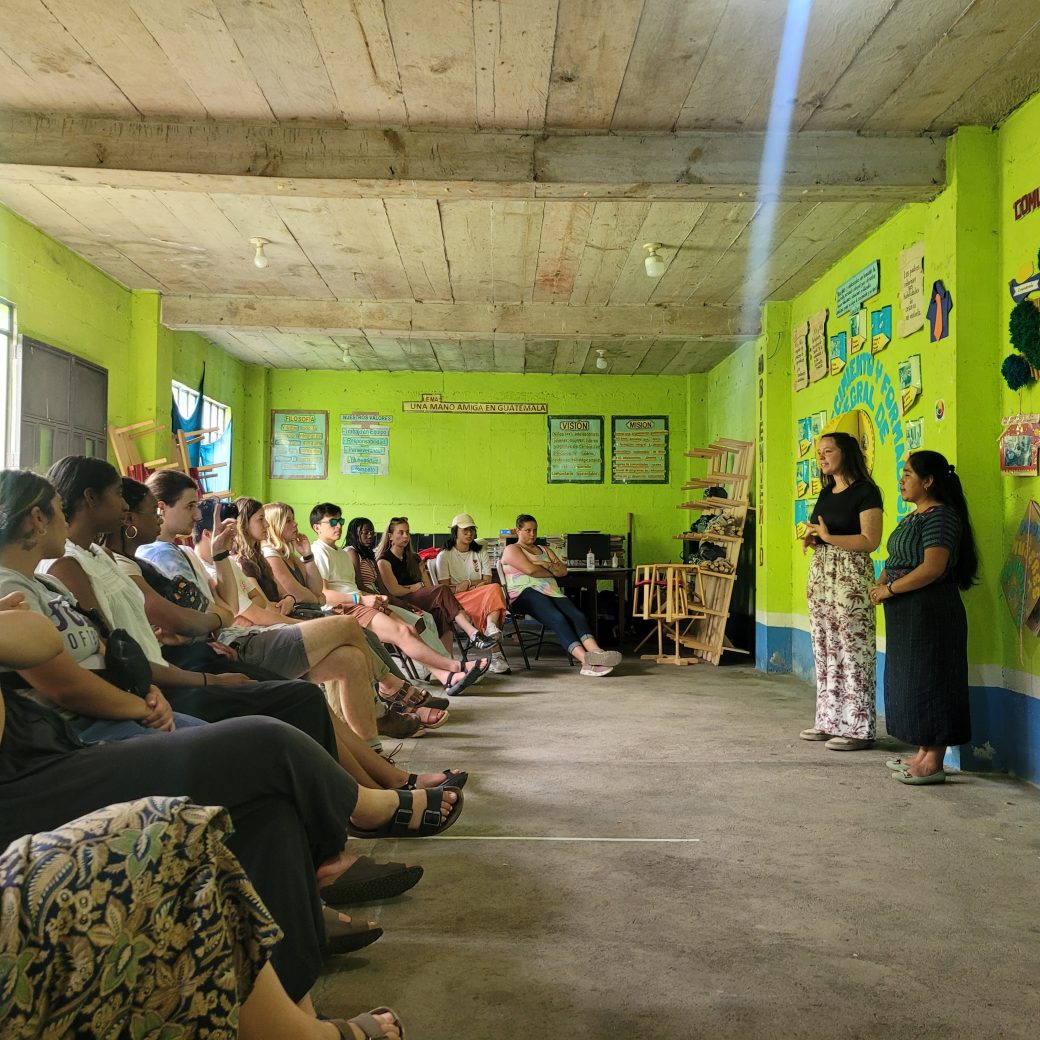
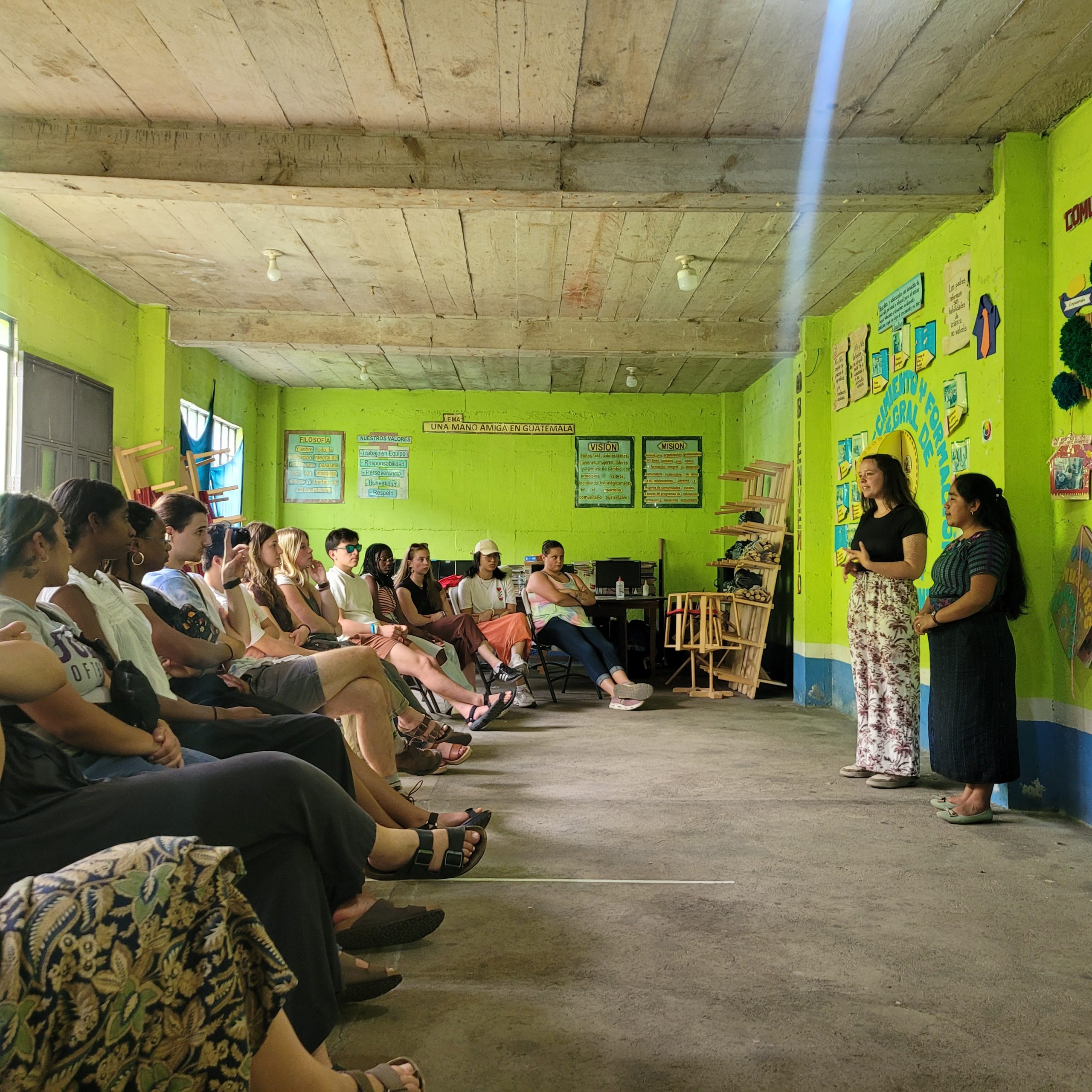
Learning about the education and economic empowerment programs at ANADESA.
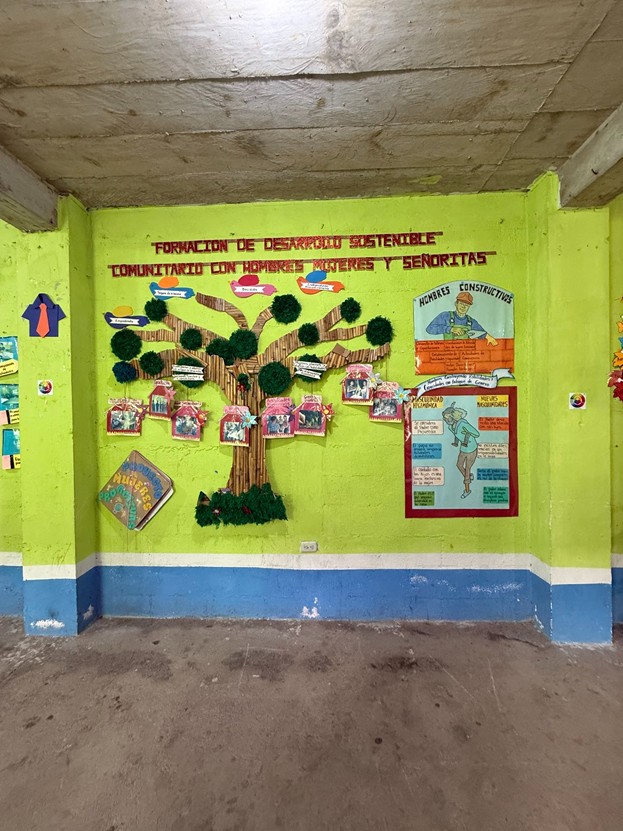
A display of the economic empowerment and new masculinities projects at ANADESA.
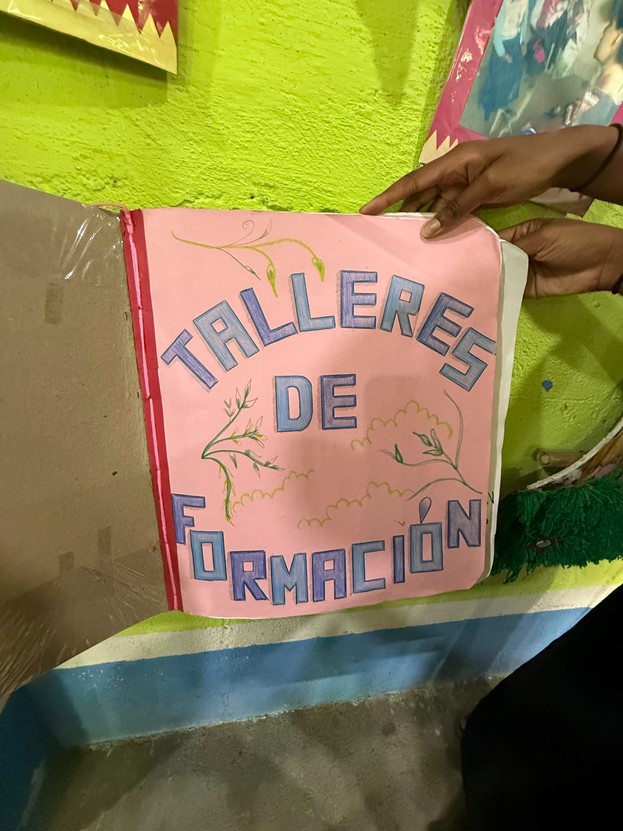
One of ANADESA's workbooks for the economic empowerment project.
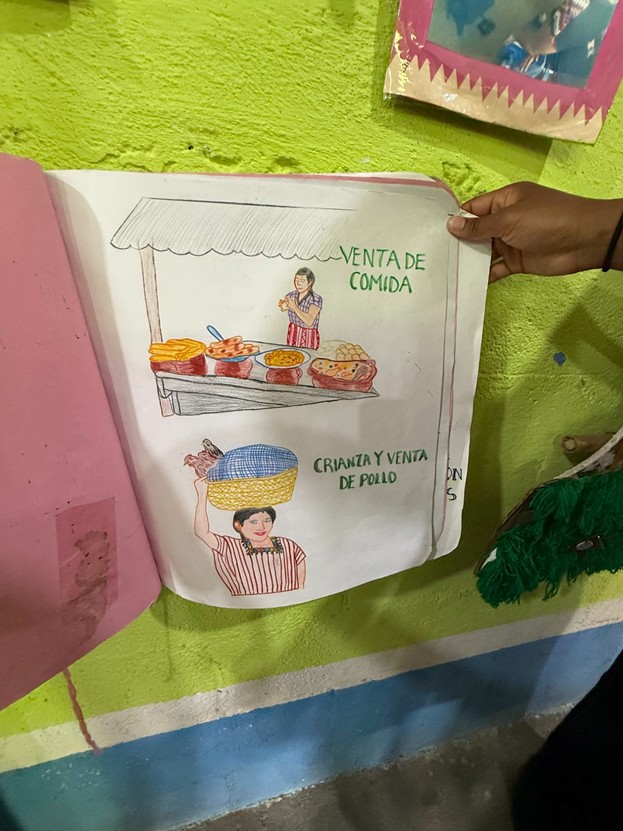
One of ANADESA's workbooks for the economic empowerment project.
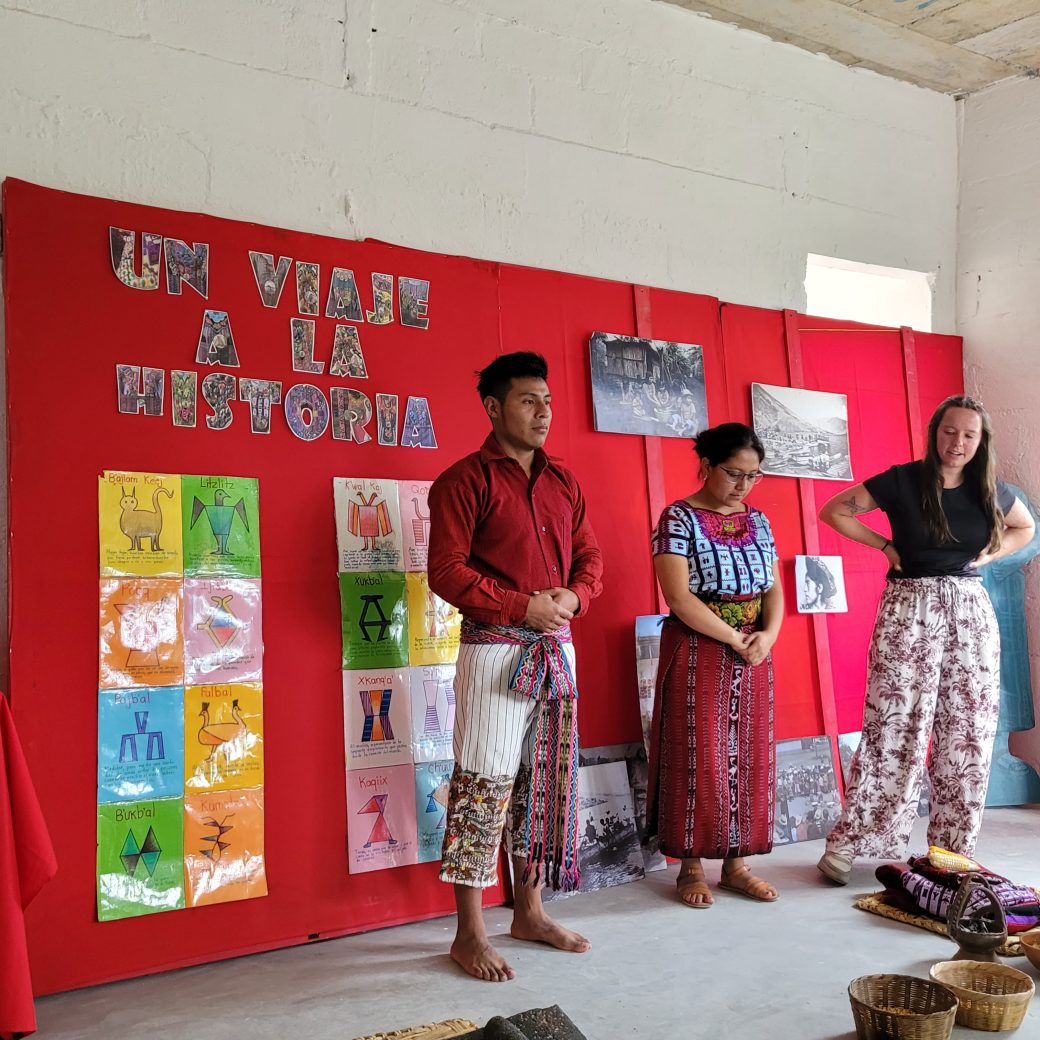
Our guides and hosts at ANADESA.
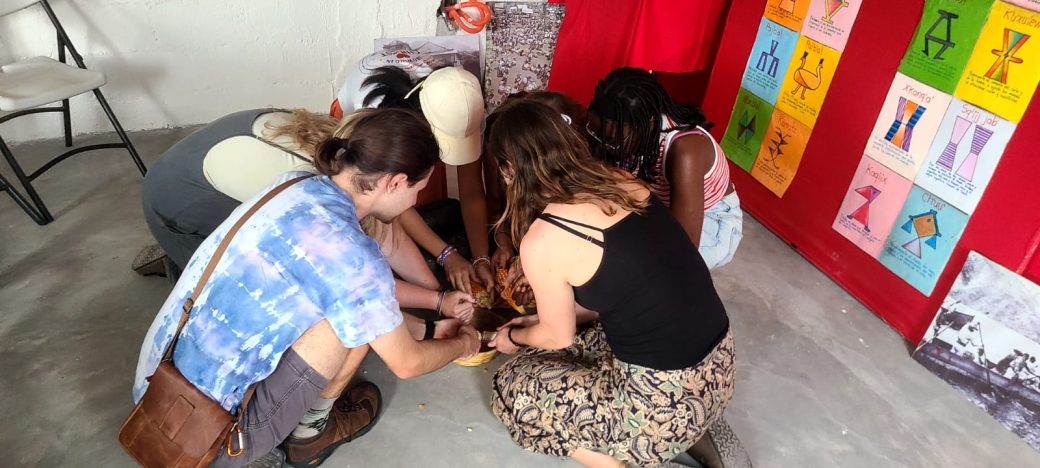
Students competing to shell corn as quickly as possible.
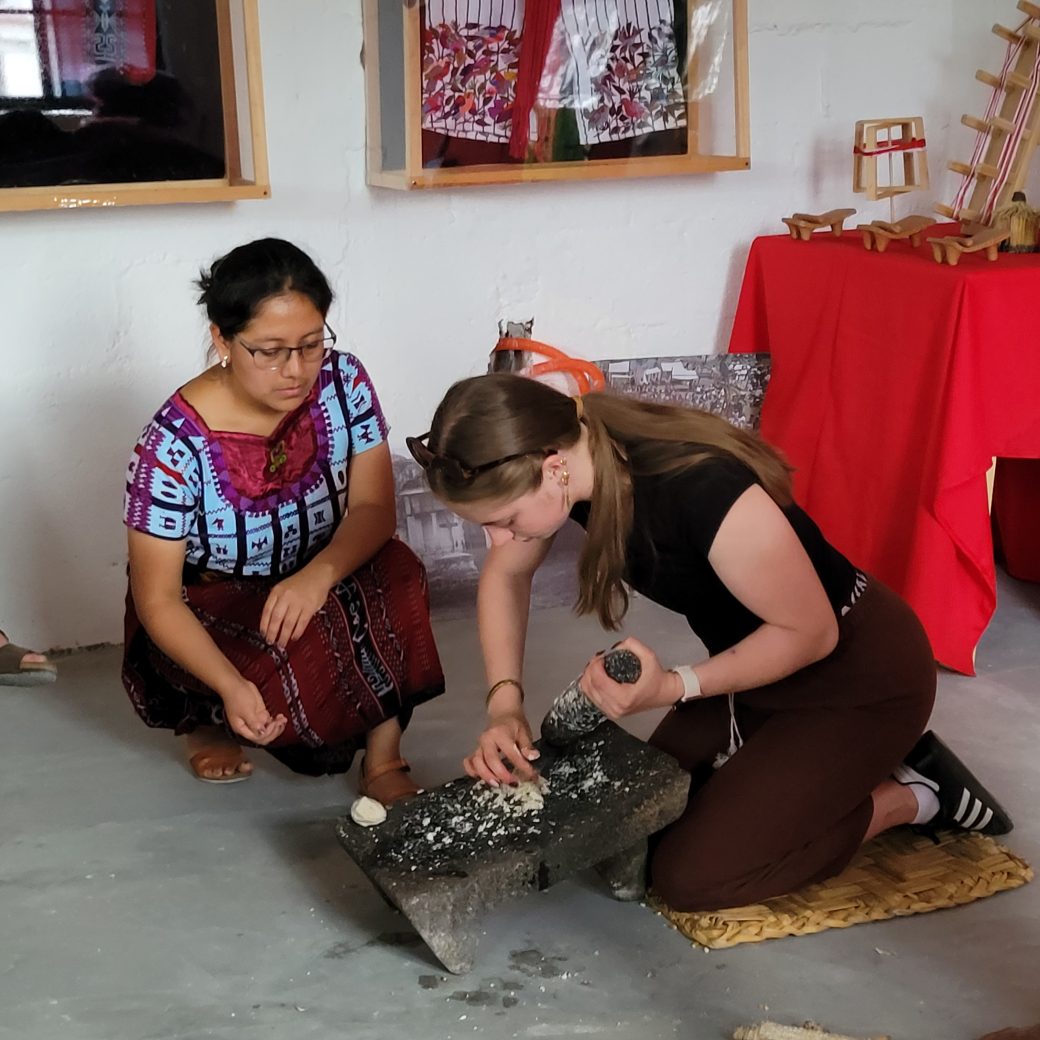
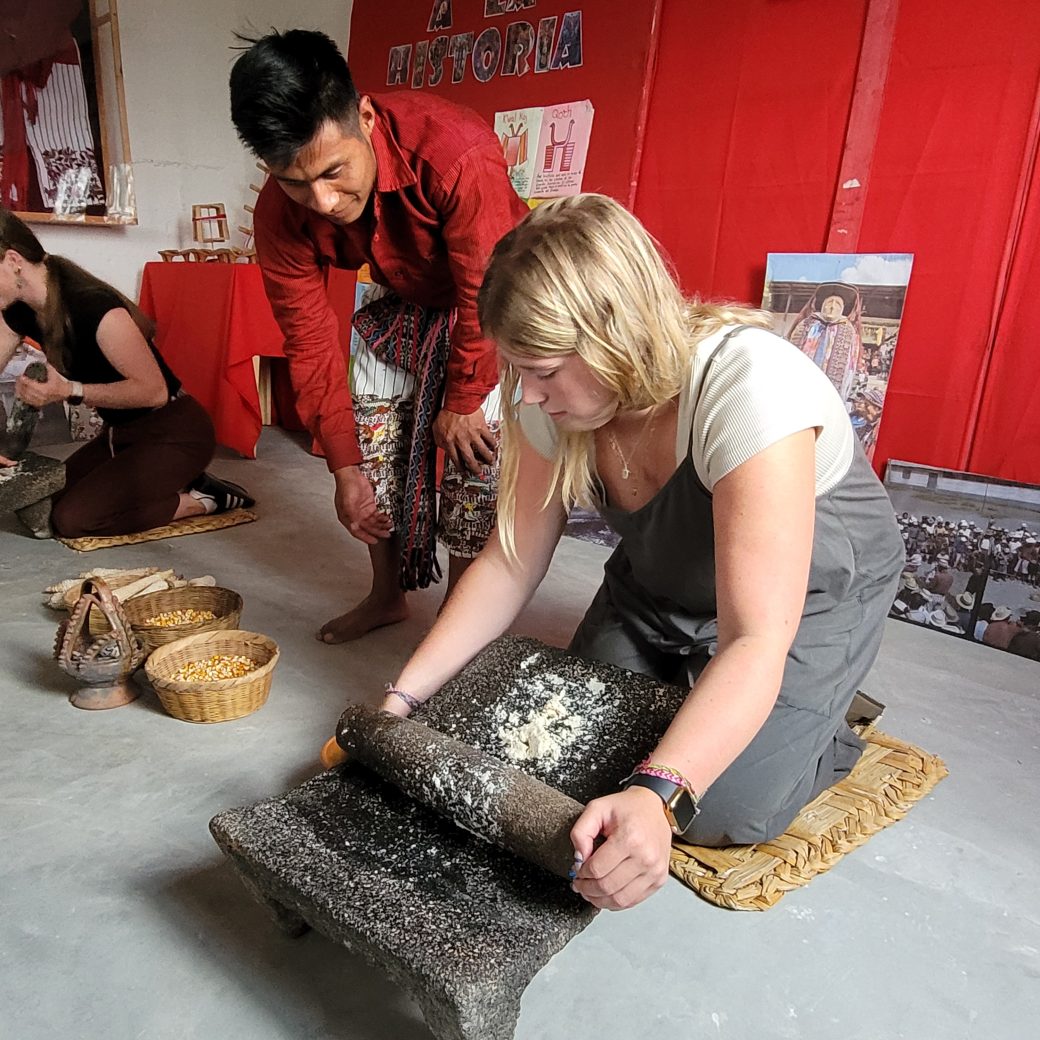
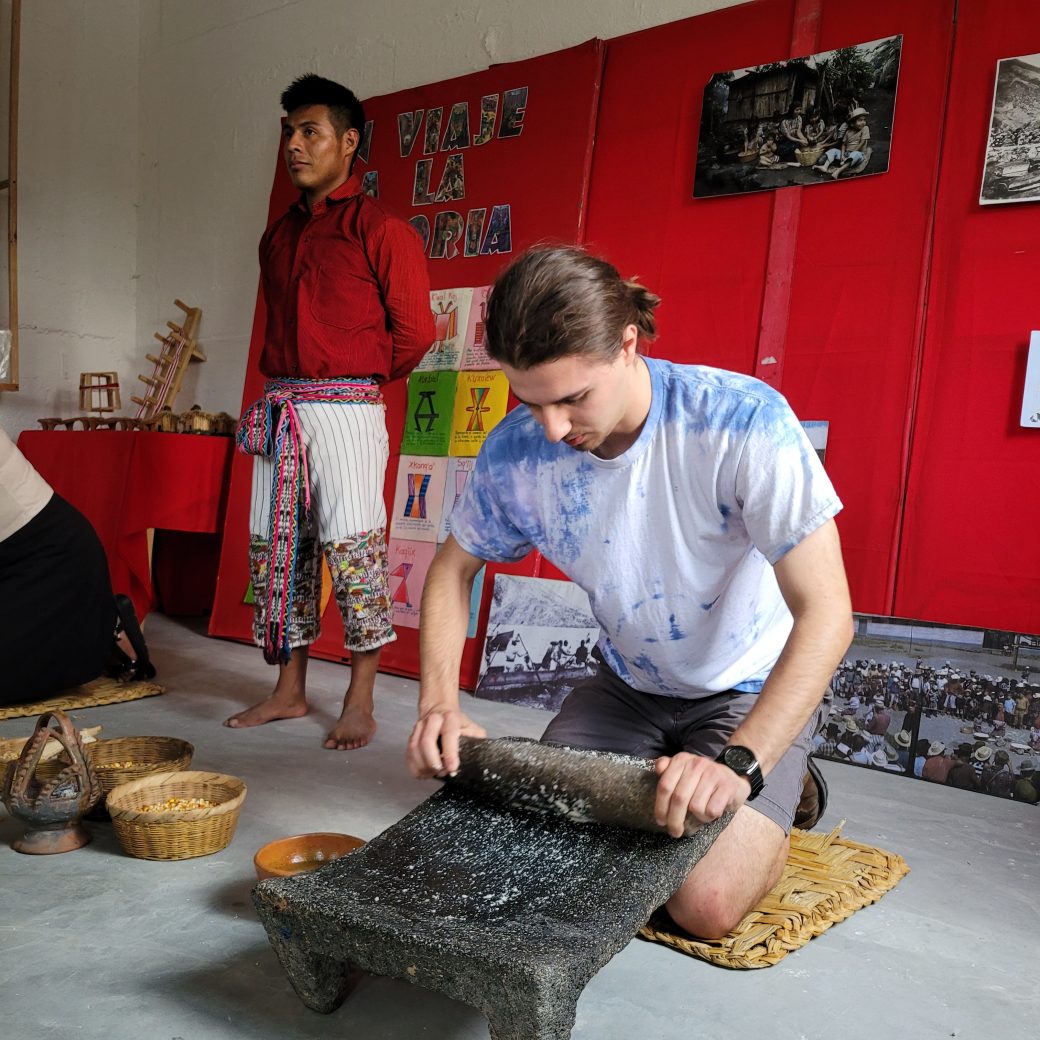
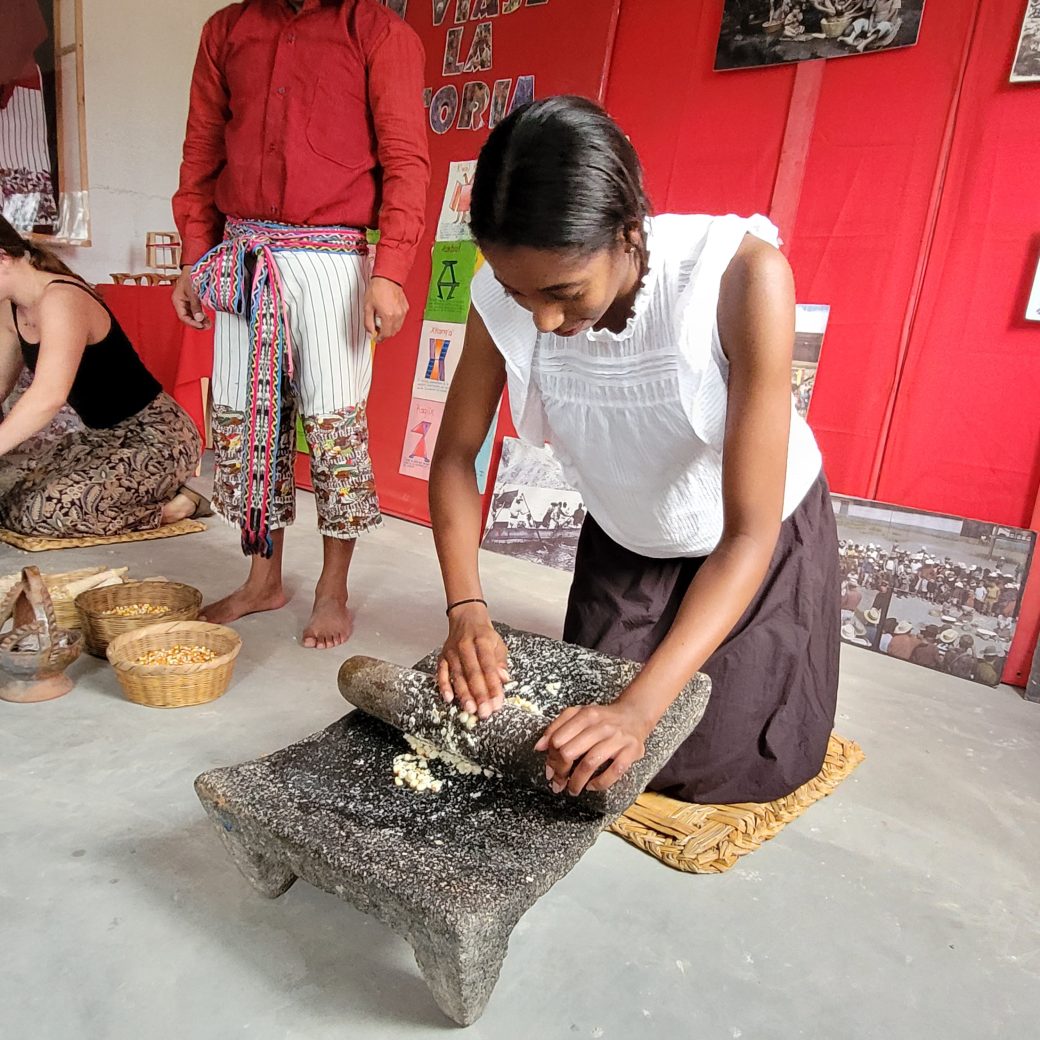
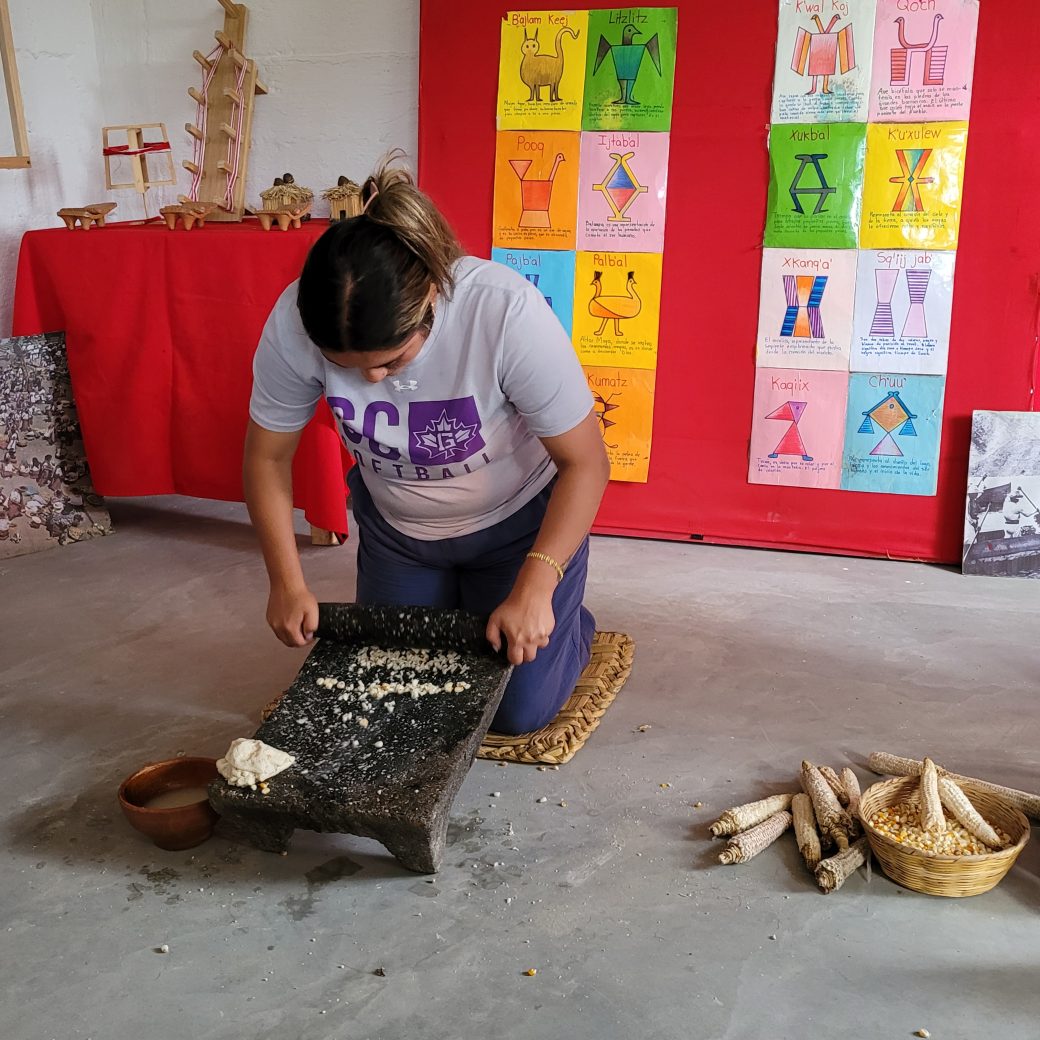
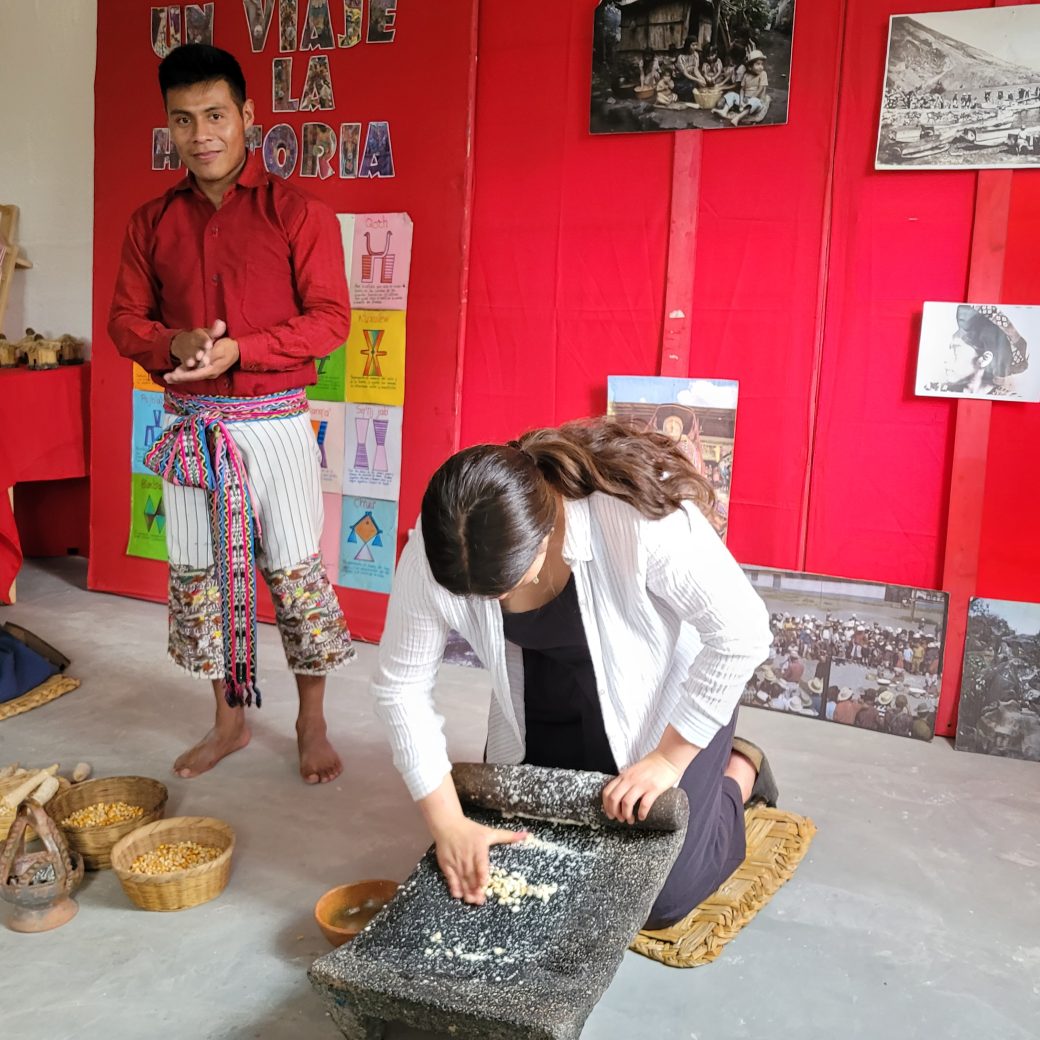
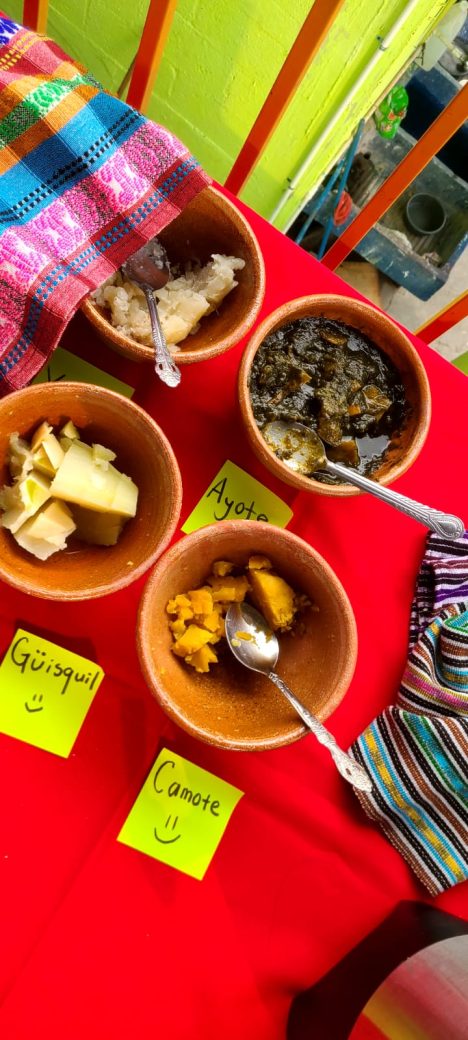
Traditional foods in Santiago Atitlán.
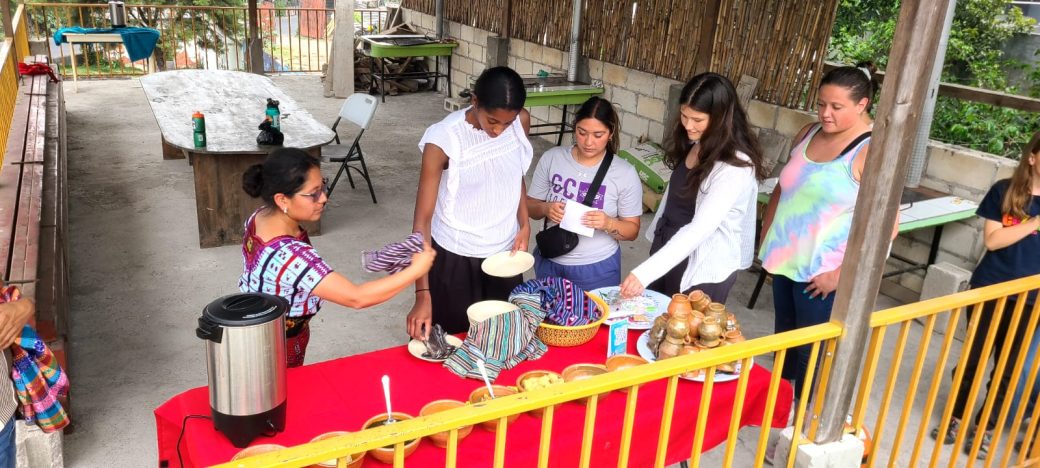
Enjoying some traditional foods from Santiago Atitlán, while visiting ANADESA.
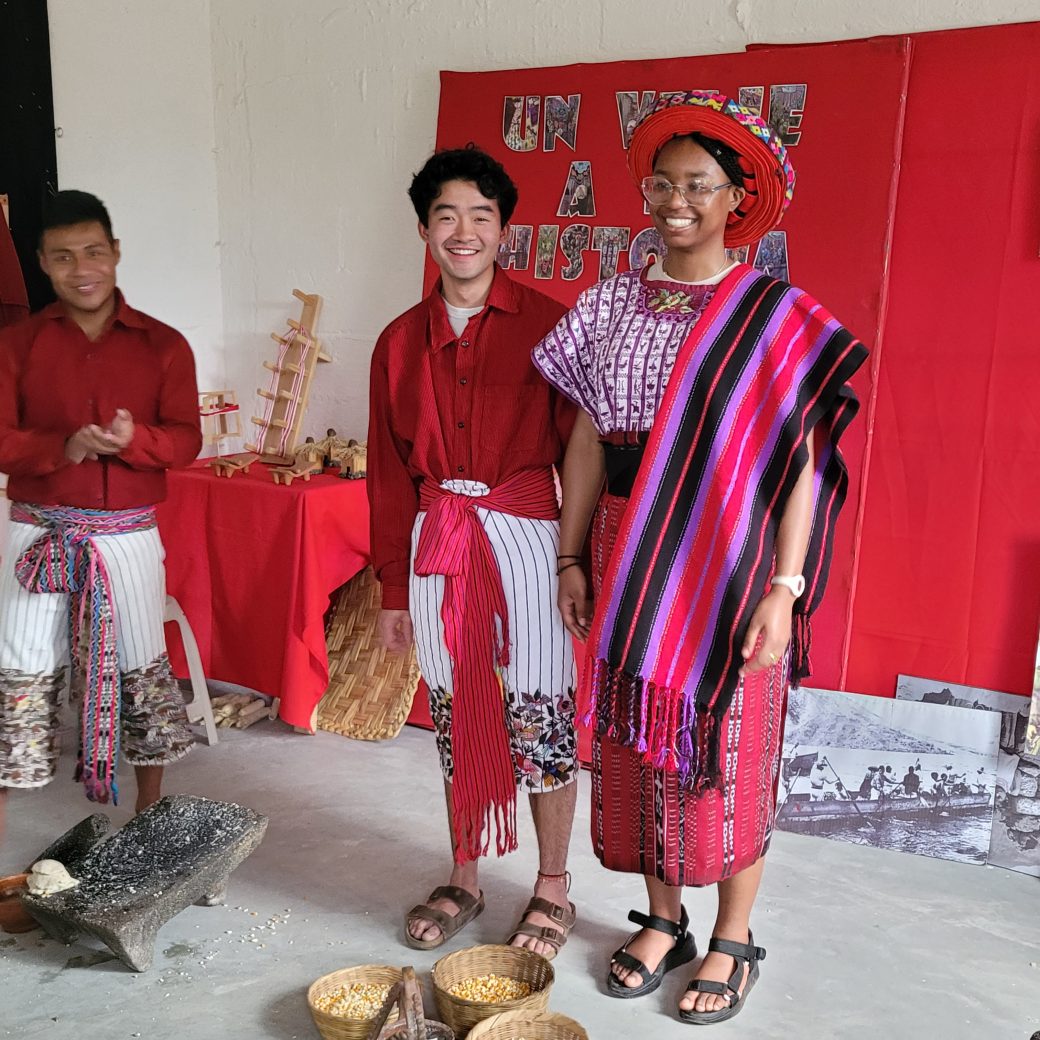
Students model the indumentaria (or traditional clothing) of Santiago Atitlán, during a cultural workshop at ANADESA.
 Global Education
Final retreat in Ecuador
 Global Education
Life on the ward
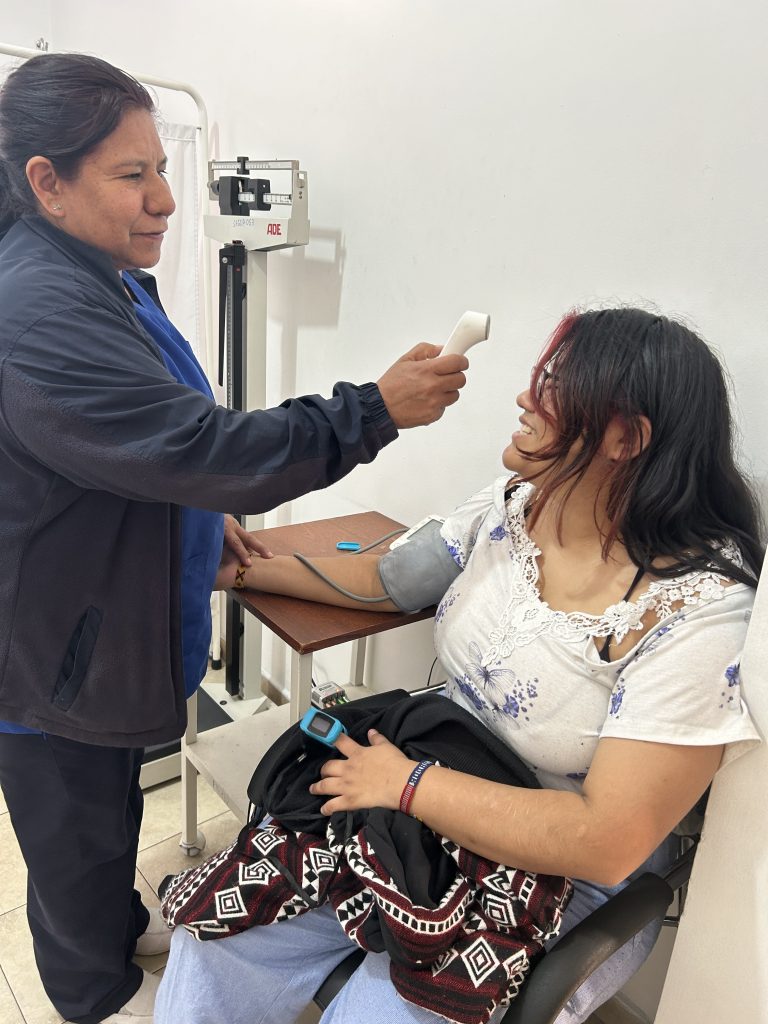
By Dayanara Aguirre-Mulato During my service placement at the municipal Centro Médico in Riobamba, I had the privilege to be able to work alongside other nurses. Day to day each patient comes in to register for their appointment and I…
 Global Education
Service visits: opportunities for connection in Ecuador’s “provincias”
By Hillary Harder During the Service term, leaders have the privilege of traveling to visit each student at the home and volunteer assignment where they are spending their time during the second half of SST. For us, that meant traveling…