

This presidential column originally appeared in the Spring/Summer 2026 issue of Bulletin

News
Duane Stoltzfus: Research on conscientious objectors
Jun 12 2024
This article originally appeared in the Spring/Summer 2024 issue of The Bulletin.
WITH 14 WORDS, the U.S. Bureau of Naturalization recast the terms of citizenship in the United States after World War I, in effect declaring pacifists the new enemy, according to Duane Stoltzfus ’81, professor of communication and director of adult and graduate programs at Goshen College.

Duane Stoltzfus
In 2023, after extensive research on the topic, Stoltzfus delivered the C. Henry Smith Peace Lecture, “Love of Country Distilled to a Question: When Pacifism Becomes a Litmus Test for Citizenship,” at both Goshen College and Bluffton (OH) University.
If necessary, the government wanted to know, are you willing to take up arms in defense of this country? For hundreds of people, men and women, regardless of age, with deep religious convictions or no faith ties at all, taking up arms became the pivotal question on which their naturalization would turn. Dozens of conscientious objectors – including Mennonites with ties to both Goshen College and Bluffton University – soon found their pathway to citizenship blocked because of their steadfast convictions against killing.
Stoltzfus, who is currently writing a book about this chapter in citizenship history, told the stories of conscientious objectors who were, at least for a time, denied citizenship.
“Through the voices and stories of these conscientious objectors who sought citizenship, we understand more fully that America at its best is a nation that respects and honors freedom of conscience,” said Stoltzfus.
This research followed up his book “Pacifists in Chains: The Persecution of Hutterites During the Great War” (The Johns Hopkins University Press, 2013) on the story of four Hutterite pacifists imprisoned for their beliefs during World War I.
By Gunnar Sadowey
“More than a mind factory”
What more can a prof do?
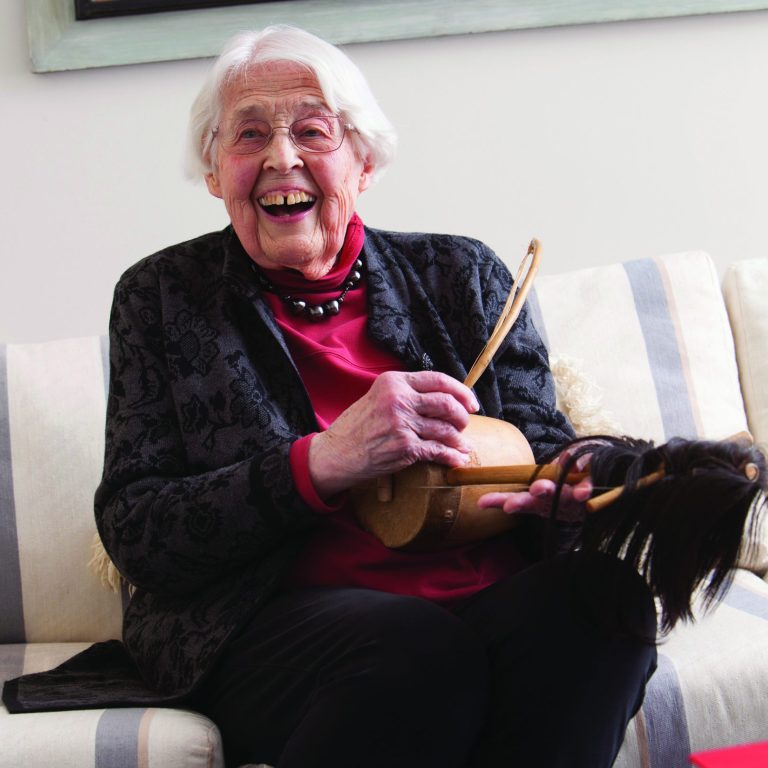
No single course may better define Goshen College’s commitment to liberal arts education than Mary Oyer’s Fine Arts class, first introduced in 1945.
Till we meet again
My professional connection to Goshen College began in 1988, when Sociology Professor Emeritus J. Howard Kauffman hired me as a research assistant for his work on North American Mennonite beliefs and social patterns.