

We are in a big social experiment with technological replacements for real human service. I waver on the emotional knife edge, and sometimes I add to the inhumanity. But I realize that there is another choice. What if each time I encounter technology replacing human customer service, I would choose to create a new and positive interaction with someone?
News
The beautiful part is the in-between
Oct 27 2026
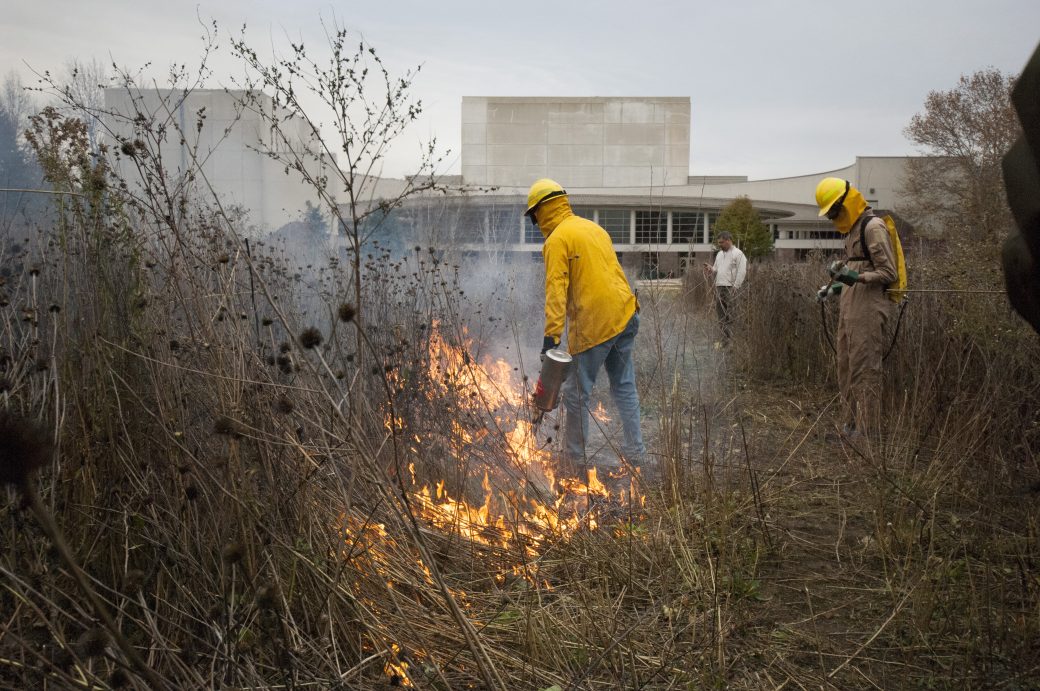
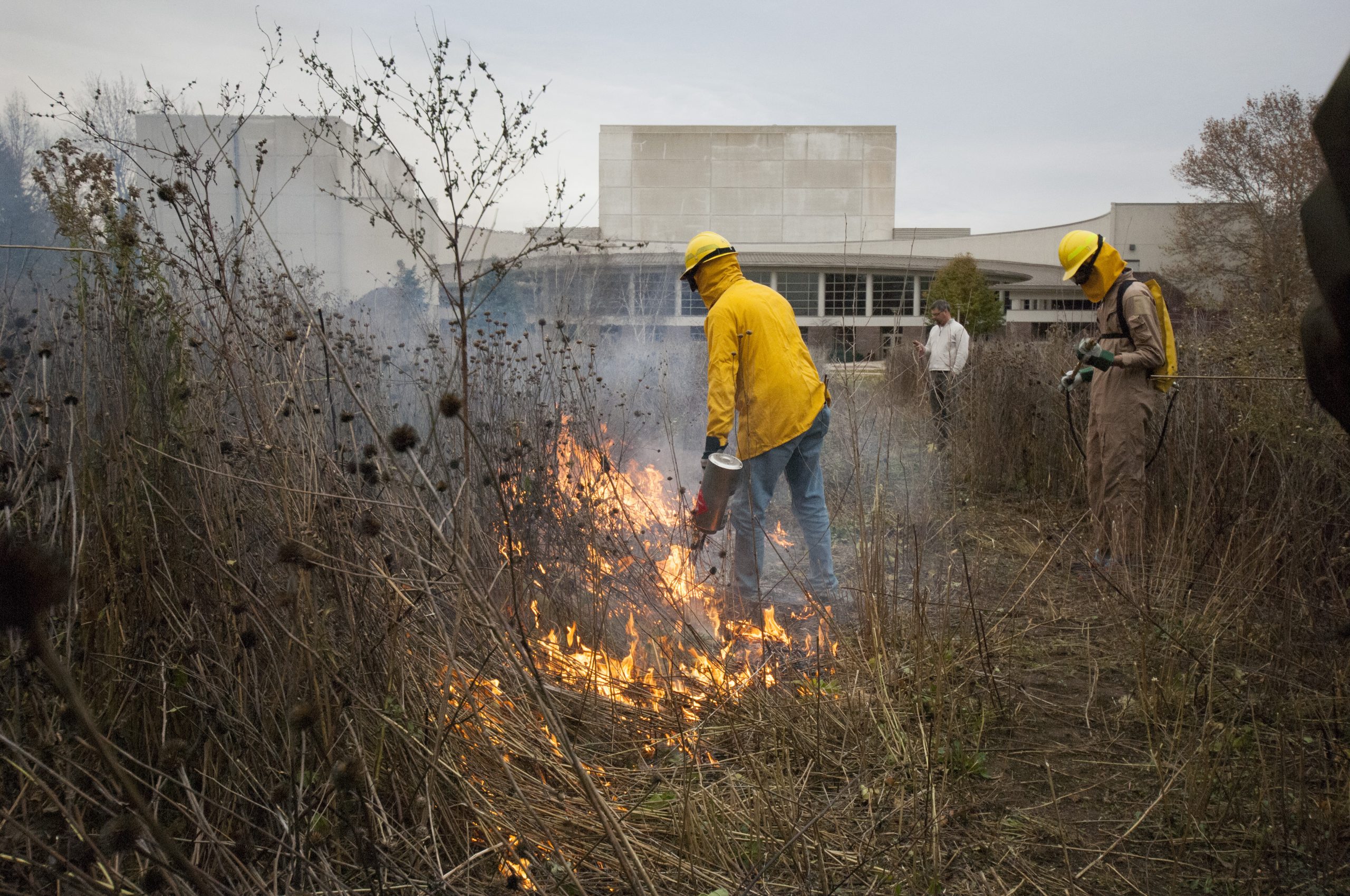
A controlled prairie burn on campus in front of the Music Center assists in maintaining ecosystem health, suppressing invasive species and stimulating native plant growth. (Photo by Brian Yoder Schlabach/Goshen College Communications and Marketing Office)
By Rebecca Stoltzfus, president, for “President’s Blog: Distinctively Goshen”
A number of years ago, I had a close colleague and mentor who brought deep values, curiosity and imagination to academic administration. She built new structures, recruited fresh talent, and gave those people room to grow themselves and the university. I was one of the people she helped to recruit into administration. It was an exciting time and I felt part of a movement that mattered.
And then a new president came along who wanted to take things in a different direction and abruptly terminated her role. My colleague phoned me at home at the end of the day to tell me that she had vacated her office as of 5 p.m.
I remember sitting on our back patio, by myself, and reading the Book of Ecclesiastes.
It was the best medicine I could find.
“Vanity! All is vanity! What do people gain from all the toil at which they toil under the sun?” (Ecclesiastes 1:2-3)
It is a vivid memory. I felt deep comfort in the companionship and sympathy of an ancient wisdom teacher in a moment when it seemed that all of our work had vaporized.
Ecclesiastes has been coming at me again these days. On Sunday, my pastor, Talashia Keim Yoder, preached on this text, emphasizing that even our moments when everything is falling apart are part of the abundant life that God offers us.
Those of us who are not Old Testament scholars may be grateful to the folk artists who planted Ecclesiastes 3:1-8 in our imaginations – to Pete Seeger, who wrote the folk song “Turn! Turn! Turn!” in the 1950s and to The Byrds, who produced the 1965 version of the song that soared to #1 on the music charts in 1965, as the Vietnam War raged.
Today, things that we believe to be purposeful and lasting are being vaporized. For example, in August, AI solved one of the seven “millennial problems” in mathematics – problems that have oriented the identity and purpose of the math community around the world. Last week, the prominent mathematician Steven Strogatz was interviewed about what it means to him when AI can do math better than any living human. Watch this clip and witness the power of ancient wisdom:
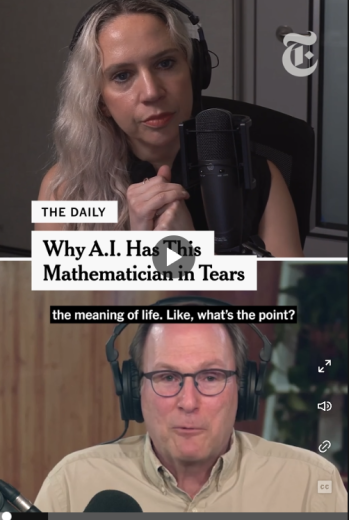
Life is humbling, sometimes crushing. We feel this in new ways, but the experience and the wisdom around it are ancient. Our lives are short; ashes to ashes, dust to dust. As Strogatz said, “The beautiful part is the in-between.”
I wish you (and me) abundant life in the in-between.
 President's Blog
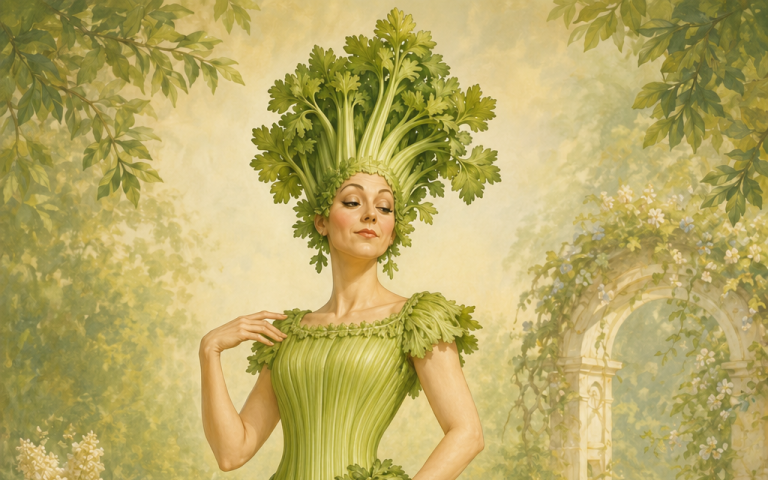
The Celery Lady tries to be a better human
 President's Blog
My word for 2026
I am learning eagerly and rapidly about AI and how it might change our work at Goshen College for the good. At the same time, I want to bring into clear focus what it means to be human. At GC, we are followers of the way of Jesus, who was God expressed in human form: born into a body, living among us and experiencing physical death. My word for the year is human.