

Ultimately, SST has shaped my view of responsibility. What I most want to carry forward is the awareness that my choices ripple outward into broader systems of justice and inclusion. Whether it is how I spend my money, how I engage in my career, or how I show up in relationships, I want to continue asking better questions, such as: Who will benefit? Who will not? What does it mean to act with integrity and care? Social responsibility is not an abstract ideal; it is lived in the choices we make to honor others’ voices, to share resources equitably, and to stand alongside communities in their struggles, but more importantly, their strengths. Social responsibility, I have learned, is not a checklist, but a posture of attentiveness.
News
Thank you, Ecuador
Apr 06 2026
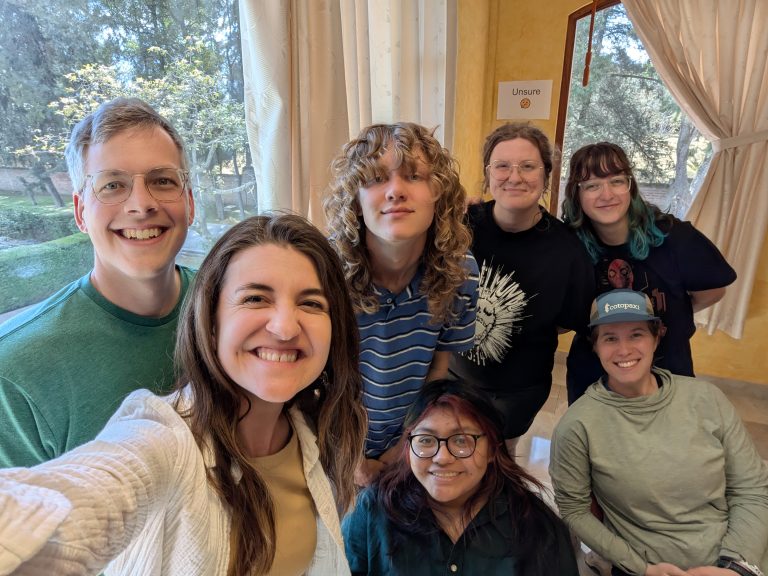
On Wednesday, everyone returned to Quito, and we were reunited! It was a joy to spend four precious days together sharing stories from service, laughing and singing together, and processing who we want to be when we return home. The students reflected on how they have grown and will carry the themes of identity and social responsibility with them. Their words beautifully capture the growth, challenges, and transformational experiences with which they are now grappling.


When I started to buy things here, they would either not allow me to use large bills or I would end up with a lot of pocket change. I started to get mildly annoyed with how much change I accumulated during the day. But I began to realise that for some people, that same “inconvenient” change represented a portion of their daily wages or livelihood here. To have received that change at the store, someone came in before me and purchased something from the money they had worked for at their job, wanting to buy something important to them. Once I go back to the U.S., I will probably change out the coins at the bank, but I also want to keep a few to add to my foreign coin collection to remember what those coins actually mean to people here.
I have always been very connected to nature and felt a sense of peace when I took time to appreciate it. However, I was never paying much attention to how much my actions affected the environment and how we are harming the environment through climate change. Since living here, I have been much more conscious about my water use, my electricity use, my car use, etc. Before, I was careless with my use of things that harm the environment, and I never gave back to her. However, coming to a part of the world full of diverse nature (such as the mountains, various plants, flowers, numerous trees, animals, etc.) made me realize how privileged we are to have nature around us. Every day, the environment gives us numerous blessings that we may not even think twice about. With this new sense of responsibility, I feel much more obligated to give my time and efforts to volunteer programs that focus on caring for the earth as it cares for us.

I think even if you have a sense of different cultures that exist in the world through education or research, seeing it in person for yourself gives you an overall better understanding. In that sense, I really learned more about Ecuadorian indigenous cultures like the Cofán, Shuar, Tsáchila, and so on. If it weren’t for being here, I would not have gotten to know more about the different cultures and indigenous groups within Ecuador.

This experience showed me that you can feel at home anywhere. Home is not linked to objects or wealth, but rather the people that you are surrounded by and how you all decide you want to be in community.
Before coming to Ecuador, when I thought about giving back in the context of service, I thought of something with labor or financial value. Here I learned that it is not the only way. Time, presence, empathy, and contributing in even small ways are just as important.

By asking questions, we are led to deeper thinking and are also able to understand each other more fully across cultures. I was inspired by how the most innocent people of the population, children, are so in tune with what is going on around them and are not afraid to ask challenging questions. This encourages me to see everyone I meet as someone with an answer. I can learn so much about others by asking questions, and simply the idea that a stranger has the answer to a question reminds me of the hidden depth within each person.
There were many times when Ecuadorians would talk about and describe the United States as an amazing and perfect country. I would get a bit frustrated with this description, but then I remembered what my dad told me a while ago: as a US citizen, “You have access to the whole world.” Then I started to see and understand Ecuadorians, and why they had that perspective. They recognize I have access to everything, to the whole world.


I got used to the feeling of guilt during dinnertime conversations with my host family about life in the US. I didn’t expect to feel so overwhelmingly privileged by comparison. I had to face guilt, and discomfort, and anger for feeling those, and sadness for not feeling them more, all battling and contrasting each other and at various times taking priority within me. Such was life after those select dinners, and I’m more than glad I felt all that. Everyone should have to be uncomfortable with their place in the world. If nothing else — and hopefully far more — it is the very least that we owe to the people who don’t have any other choice.
My genuine connections and friendships in Ecuador influence my viewpoint by wanting to see the perspectives of others and accept new ideas. That includes allowing others to take the lead and accepting different ways of doing things, as well as trying new things that would typically be out of my comfort zone.

When we were living in Quito, I was really happy to see all the small stores that I would walk past every day. These small shops indicated to me that most people do not shop at large stores like Walmart for their daily needs. In the US, it can feel like we are beholden to large, powerful corporations that make decisions for us that we might not have made for ourselves. I would rather be able to shop at a place where I know the person who owns the store I am buying from. I hope that as I return to the US, I can do my part to support these kinds of small local businesses.
Before stepping foot in Ecuador, I thought of myself as someone who is often shy when first meeting new people. I sometimes used this as an excuse not to start conversations with people I didn’t know. After being in Ecuador for three months, I realized that connecting with people can sometimes be much simpler than I could have ever imagined. At times, I definitely struggled with keeping conversations going or knowing what to say; however, I began to realize that you don’t always have to know what to say to connect with someone.

I have really appreciated the close communities and kind people while living in Ecuador. I hope to bring some of the warm, welcoming energy back to the United States with me, because I loved even how small acts made me feel seen and cared for. Although I knew before SST that other countries are just as good as the US, I really want to be an advocate for how amazing Ecuador is, including the plants, animals, landscapes, and the wonderful people and cities. I think oftentimes there is a misconception about Latin American countries.


Working with women and kids in service put my privilege into the forefront of my mind. The women would constantly ask about my life in the United States. While at times I got frustrated with them thinking my life was so grand in the US, I have realized that, compared to the lives they live here, they view my life as their dream. Even the fact that I get to attend college and come on this SST experience shows so much privilege that some of these women will never get the chance to do.
I tend to go on autopilot and not pay much attention to the meaning of what I’m doing. Though I want to get work done fast, that’s not how the process on earth works. That made a connection to when I visited the Mariposario (butterfly house). The process of the caterpillar turning into a beautiful, flying butterfly has a lot of stages and can’t be rushed. Each stage is important and takes its own time. This made me also reflect on humans, how each of us is different and does things in our own ways and at our own time, which can be influenced by culture, genetics, or even disabilities.

As I prepare to return to life in the US, I will have a deep desire to share about how big the world is with those who have never had an SST experience. I know that it’s not possible to simply share this knowledge; it must be experienced as we did. I think there will be a desire and a sadness that not everyone has experienced this.
Since I was young, I have often thought of myself as being somewhat shy and often have to mentally encourage myself to speak up or start a conversation. While I like engaging with people, I also feel very comfortable being quiet and alone. In recent years, I’ve been realizing that in some ways, this behavior makes me more self-focused. I sometimes only take what I need from other people and then try to leave conversations. While there are pros and cons to taking care of my own needs and being self-reflective, I would like to seek out more conversations and relationships for the sake of connection and learning, even if I am sometimes uncomfortable. It was especially apparent to me during SST, where many people asked me questions, that it is important to show care for and interest in other people through conversation. When I was bold enough to start or participate in a conversation in Spanish, we talked so much more, I learned more, and I showed people that I was actually interested in them.

After my experience in Ecuador, I feel more driven to use my cultural awareness for positive change. Even though it’s an extremely complicated task, I want to work to combat capitalism. This means supporting small businesses, giving away my money to beneficial organizations, supporting leaders with strong social-welfare programs, and advocating for taxation of the rich. I also think it would be beneficial for me to bring my intercultural understanding to my hometown. A lot of my high school friends have never left the country and may have negative stereotypes about Latinos. I hope to offer them a different perspective through the stories I tell about the people here.

Most of all, the title of these 3 months would be “Why not?” I said that to myself every time I tried something new. Every day was something new. Why not try the food? Why not travel to Ecuador? Why not.
We are honored to have shared this experience with such conscientious, thoughtful, and compassionate students. Thanks to them, the future is bright.
Thank you, Ecuador, for the beautiful memories and formative experiences. Dios le pague.

 Global Education
Final retreat in Ecuador
By Hillary Harder On Sunday, July 26, our students returned to Quito from their service communities and we began our final retreat together! The afternoon was full of joyful reunions as each student arrived at our Quito home, la Casa…
 Global Education
Life on the ward
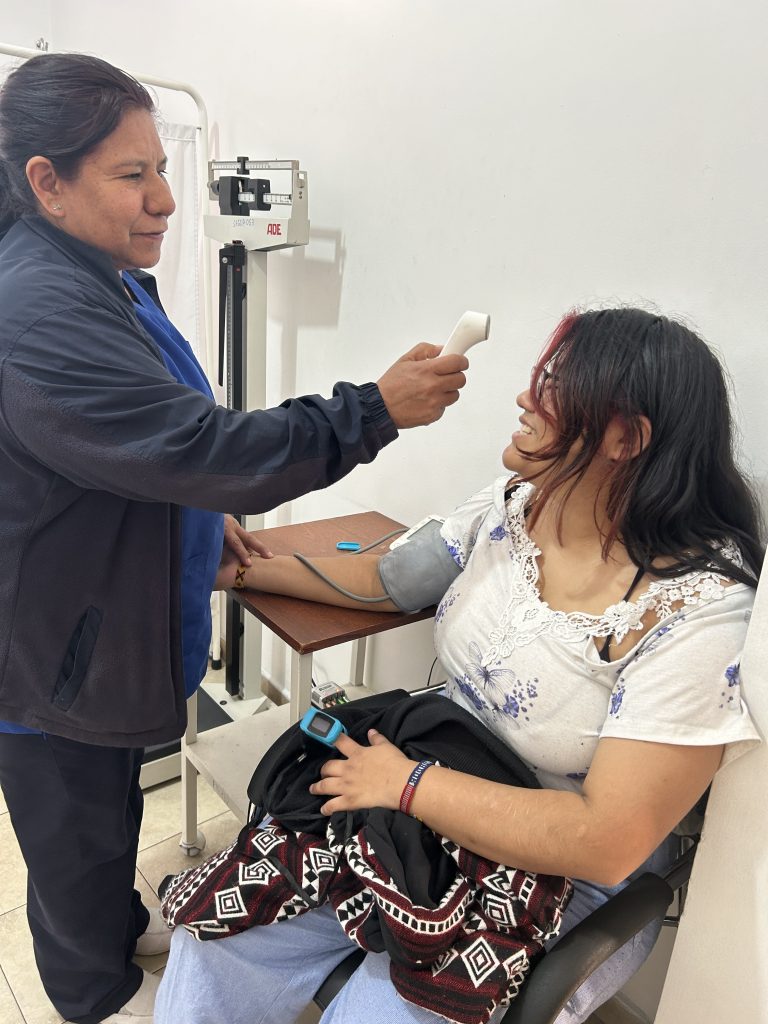
By Dayanara Aguirre-Mulato During my service placement at the municipal Centro Médico in Riobamba, I had the privilege to be able to work alongside other nurses. Day to day each patient comes in to register for their appointment and I…
 Global Education
Service visits: opportunities for connection in Ecuador’s “provincias”
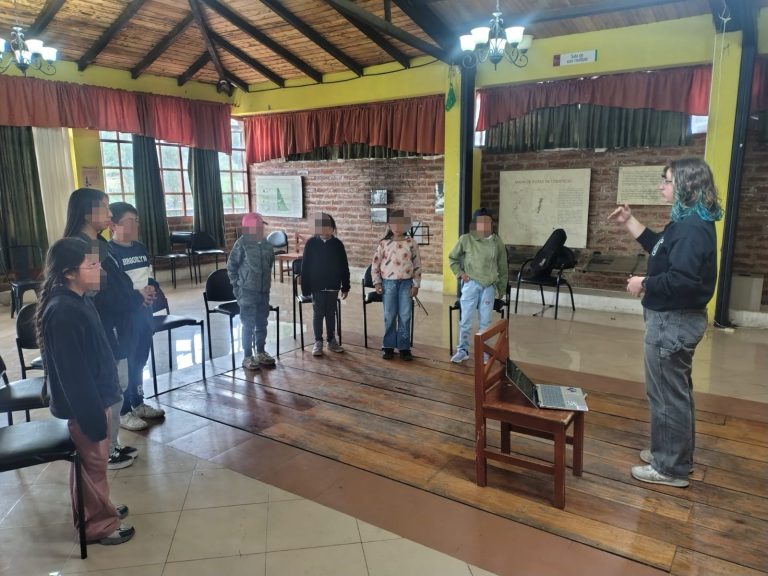
By Hillary Harder During the Service term, leaders have the privilege of traveling to visit each student at the home and volunteer assignment where they are spending their time during the second half of SST. For us, that meant traveling…