

Revisit the Class of 1975 50th Reunion Dinner during our 2025 Homecoming Weekend.

News
Rhizome – January 2026
Jan 13 2026
Reflections from the Director

I kicked off Anabaptism’s 500th anniversary year last January in Cusco, Peru, gathered with around 200 Anabaptist-Mennonites from across the Americas.
As part of a tradition that has prioritized communal discernment over a sanctioned doctrine, it is nearly inevitable that when 200 Anabaptists get together, there will be some disagreement. At one point, some of the participants almost left early, because they were so troubled by some of the theology that was shared. Others struggled to communicate the trauma they had experienced in their home communities.
It became clear over the course of the gathering that there were pressures, both internal and external, threatening to pull these churches apart, destabilize their identity and calling, and isolate them from one another.
At mealtimes and in worship spaces, however, participants sought to connect and converse across these differences. Repeatedly they asked one another:
- How can we stay connected, despite major theological and political differences?
- How do we live faithfully, as followers of Jesus, in contexts of uncertainty and violence? What is the Spirit calling us to?
- What resources can the Anabaptist tradition offer for this moment and this place? What does our experience contribute to Anabaptism?
I have carried these questions with me this anniversary year, holding both the schisms and fractures alongside the diversity of Anabaptist witness from 1525 to the present. As a historian, my reflections have primarily centered on stories.
The stories of 16th-century Anabaptists have long been conversation partners for North American Mennonites, one of the joys of being connected to a 500-year-old tradition is that we are not limited to the origin stories.
As we wrestle with how to live in our own time and place, we are connected to thousands of stories from across these 500 years. The ISGA, of course, is particularly interested in some of the stories that have emerged in the past 70 years.
From Latin America, we hold the stories of professors and students at the Mennonite seminary in Uruguay, who continued to carry out ministries with youth in marginalized neighborhoods, even though it was considered to be a Communist activity by the military dictatorship of the time. We have the stories of the Colombian Mennonite seminary, which was shut down by the military for leading conscientious objection workshops with young people. Eventually the Colombian seminary reopened, but the Uruguayan seminary was forced to close permanently.
In Africa, there are the stories of Ethiopian Mennonites who passed Bible study curriculum from house to house when the Derg government outlawed open worship in the 1980s. Church members continued subdividing into cell groups until 1992 when the restrictions were lifted and they realized their membership had grown ten-fold. From the Brethren in Christ in Zimbabwe, we hear the stories of how women adapted their traditional planting practices to both honor the soil and testify to their Christian faith.
In Asia, Indonesian Mennonites led tsunami relief efforts and peace education camps in coordination with Muslim leaders and neighbors, because they understood interreligious friendship to be at the very heart of Christian mission.
Although there are vast cultural and theological differences that distance these stories from each other and from each of us, their very diversity is a gift, offering us the opportunity to see our own context through the lens of other narratives. How do we stay connected? How do we live faithfully with such uncertainty? What resources does the Anabaptist tradition in all of its diversity offer to us in our own time and places?
On the 500th anniversary, I’m grateful for such an extensive canon of testimony that can enrich our reflection and discernment into the future.

New Schafer-Friesen Recipients Announced
Each year the Mennonite Historical Library and ISGA are able to support new research and publication in Anabaptism, thanks to the Schafer-Friesen Research Fellowship, made possible by a generous endowment gift from Abraham and Geraldine Schafer Friesen. This year, the Schafer-Friesen Research Fellowship supported two new books in Anabaptist-Mennonite history with a portion of their publication expenses:
CROISSANCE DE L’ŒUVRE MISSIONNAIRE ET ÉVANGÉLIQUE DANS LA COMMUNAUTÉ MENNONITE AU CONGO (CMCo)
Growth of Missionary and Evangelical Work in the Mennonite Church of Congo (CMCo) is written by Joly Birakara Ilowa, Ambroise Kabeya Kanda Mwana, Séraphin Kutumbana Mulu, Benoit Lumbimbo Shamukembuka and Michel Vunda Kibali Njimbo.
GLOBAL ANABAPTIST FOREBEARS, Vol. 1
The first volume of the Global Anabaptist Forebears series, focused on biographies of Congolese Anabaptists, is soon to be published by Regnum Books. Series editor Anicka Fast hopes that the series will contribute to a “more equitable narrative of global Anabaptist history for Anabaptist-Mennonites on all continents.” Each volume will be available in print and digital form.

Public Programs Engage Local Community
The ISGA co-hosted two public programs on Goshen College campus this year that drew together community members, students, and faculty for reflection and conversation.
In July, we were joined by Danang Kristiawan and Teguh Karyanto for a program entitled “Mennonite-Muslim Engagement and the Way of the Gospel in Java, Indonesia.” Both Kristiawan and Karyanto are pastors and lecturers at STAKWW, a theological school affiliated with the Gereja Injili di Tanah Jawa denomination in Java, Indonesia. They were in the United States to participate in the the “Early Anabaptism in Global Perspective” conference at Elizabethtown College, but they agreed to add a few days onto their trip to visit Goshen, Ind., at the invitation of Mennonite Mission Network, Anabaptist Climate Collaborative, and the ISGA.
In September, Dr. Duane Stoltzfus, professor of communication at Goshen College, presented a lecture entitled “In the Company of Hutterites and Aliens: The Making of Two Books.” Stoltzfus focused his reflections on his experience researching the intersections of personal conviction and state power in the lives of twentieth century conscientious objectors in the United States. After the program, guests were invited to visit the “Hutterite Life – Communal Anabaptists” exhibit in the Good Library. The Public Programming Committee of the MHL/ISGA–a successor to the Michiana Anabaptist Historians–was pleased to host this event.
Spanish-language resources reach thousands
Have you ever wondered how often the resources in the Biblioteca Digital Anabautista are accessed by users?
Although these resources are primarily intended to benefit students and faculty at Spanish-speaking Anabaptist theological schools, their reach is far wider!
- Daniel Schipani’s Manual of Pastoral Psychology (Manual de Psicología Pastoral: Fundamentos y Principios de Acompañamiento) has been viewed nearly 15,000 times.
- The 2021 devotional collection published by the Anabaptist women’s theological network in Latin America (“Movimiento de Mujeres Haciendo Teología desde América Latina”) has been viewed more than 10,000 times.
- John Paul Lederech’s guide to conflict resolution, Enredos, pleitos y problemas, has been accessed over 14,000 times.

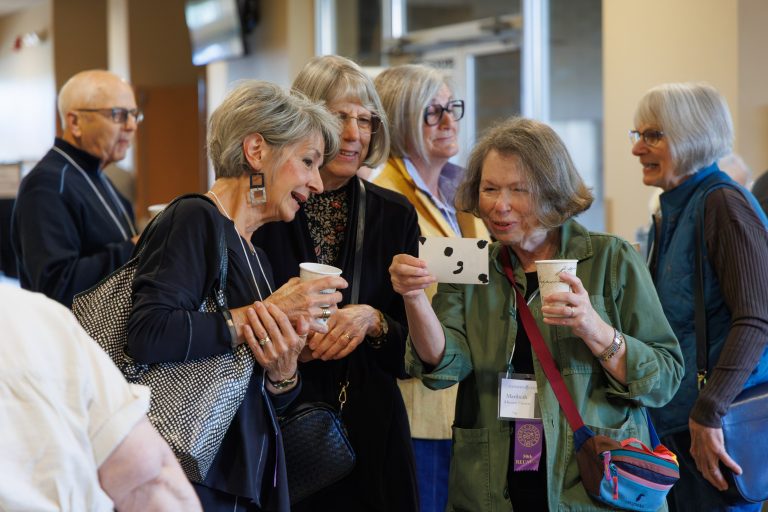 Photo Albums
Homecoming 2026: 1976 Class Reunion Dinner
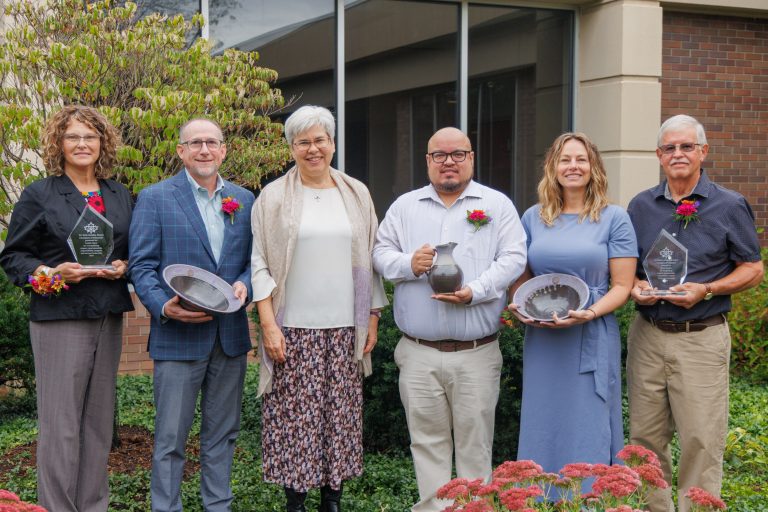 Photo Albums
Homecoming 2026: Alumni Awards Convocation
To kick off Homecoming 2025, Goshen College celebrated its amazing alumni awardees Friday in a special convocation!
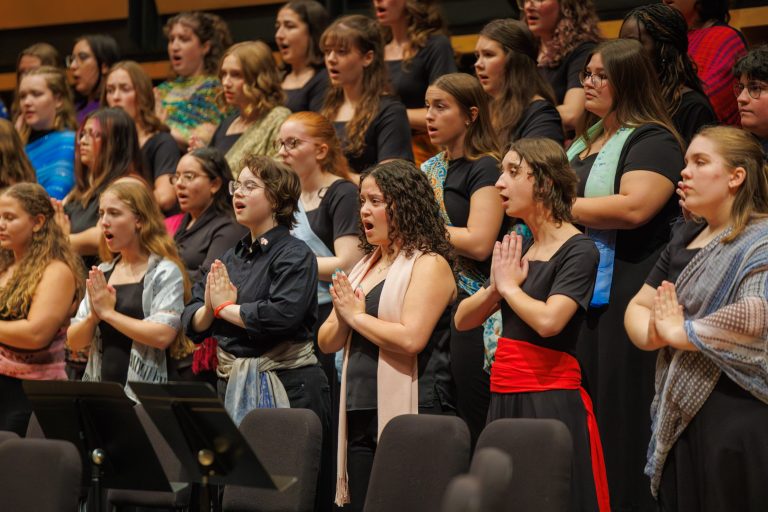 Photo Albums
Homecoming 2026: Homecoming Music Gala
On Saturday evening, to wrap up the day of Homecoming festivities, Goshen College student and faculty musicians performed their annual gala.