

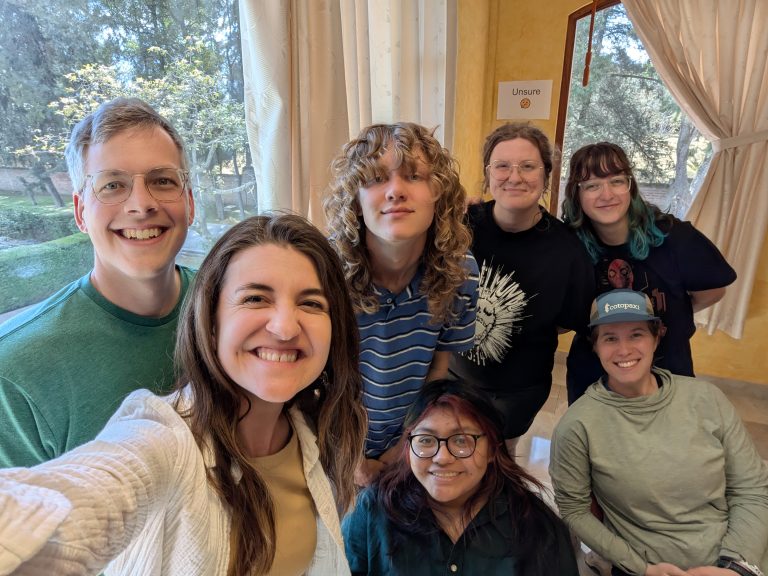
By Hillary Harder On Sunday, July 26, our students returned to Quito from their service communities and we began our final retreat together! The afternoon was full of joyful reunions as each student arrived at our Quito home, la Casa…
News
From Hanif Kureishi to the London Central Mosque: SST London Exploring Diaspora, Identity, and Belonging in London
May 18 2026
As our class continues to study the diaspora that exists in London, we read a short story by one of my most influential authors, Hanif Kureishi, author of The Buddha of Suburbia. Kureishi’s work often explores race, immigration, identity, and the lives of Muslim families in London, including, at times, the intersections of queerness and Islamic faith. For me personally, his screenplay for My Beautiful Laundrette was a pivotal film of my youth and deeply shaped the way I thought about queer identity, culture, and belonging.
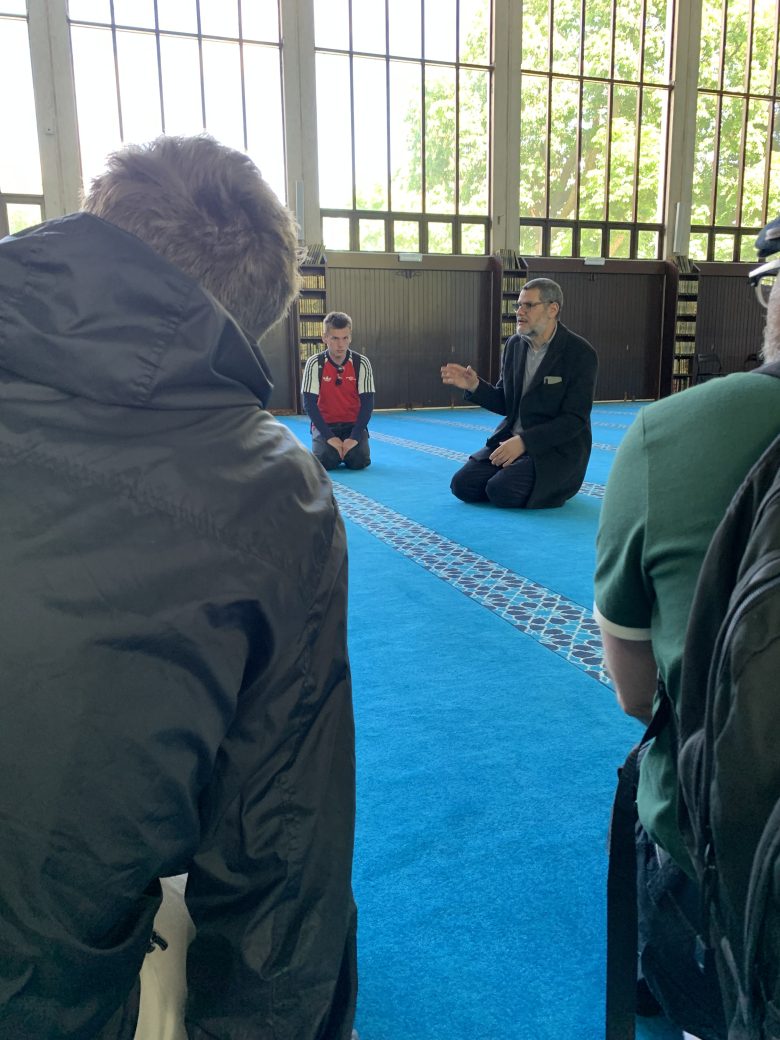
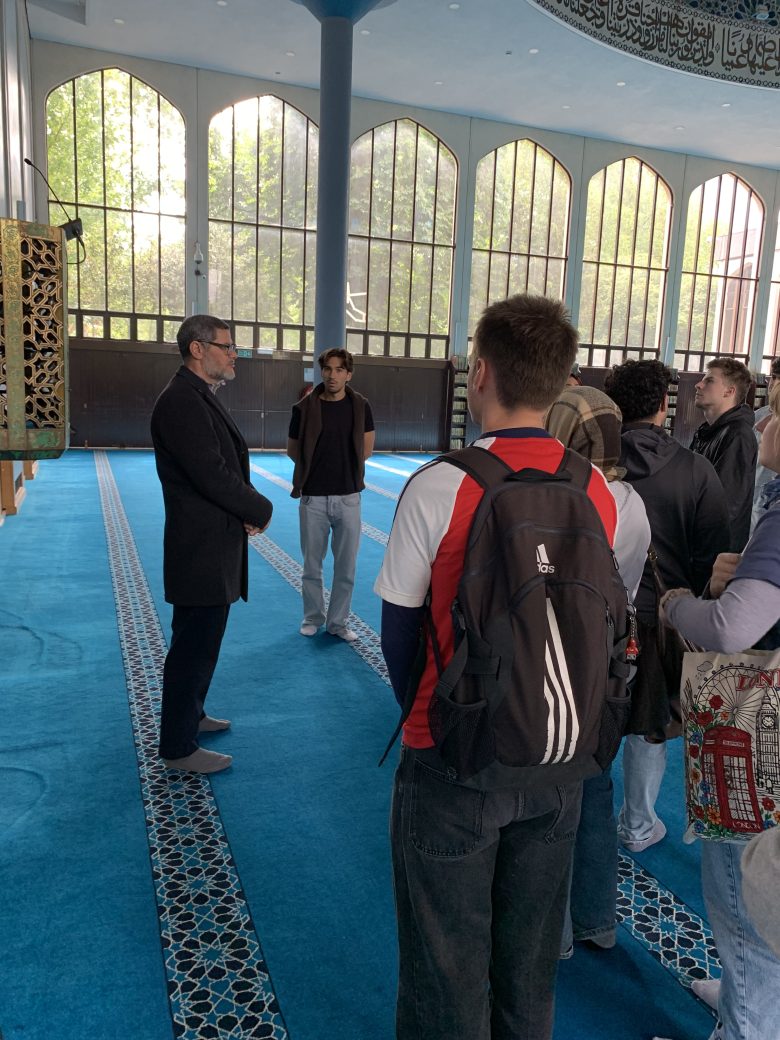
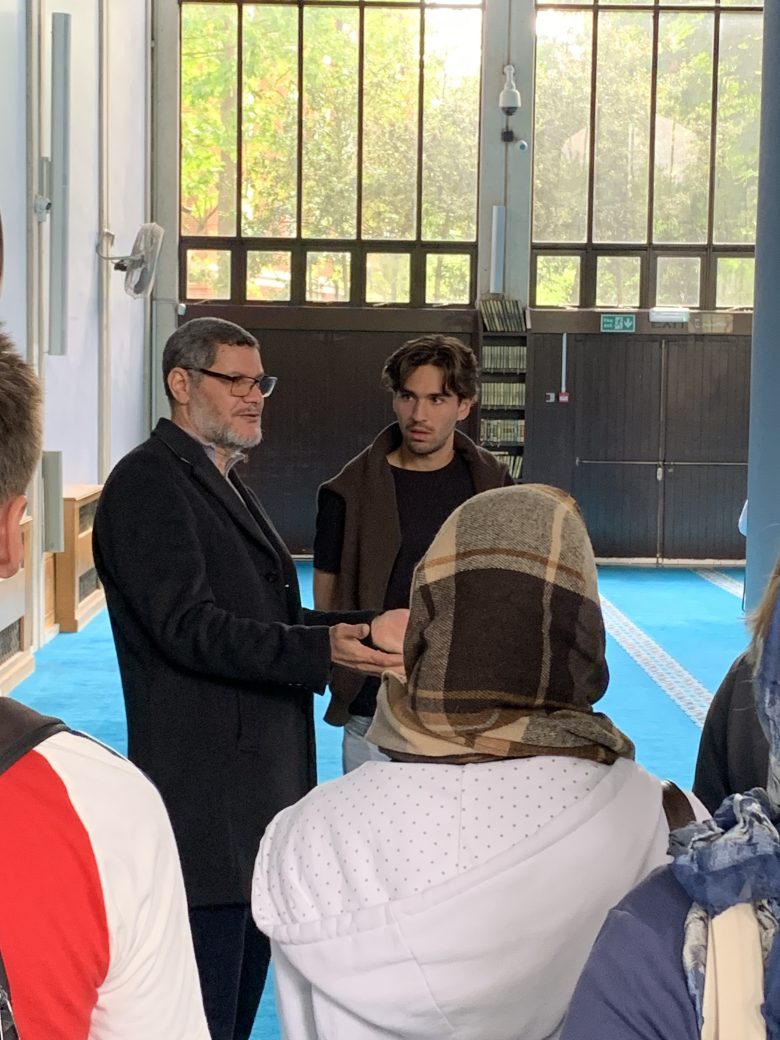
After a rich discussion, we were privileged to experience a wonderful tour and lecture/presentation at the London Central Mosque & Islamic Cultural Centre led by Mohamed Mezzi, Visits Co-Ordinator for the Centre.
– Roy Jackson
Student Reflections by Norah George-Miller and Kenna Roher
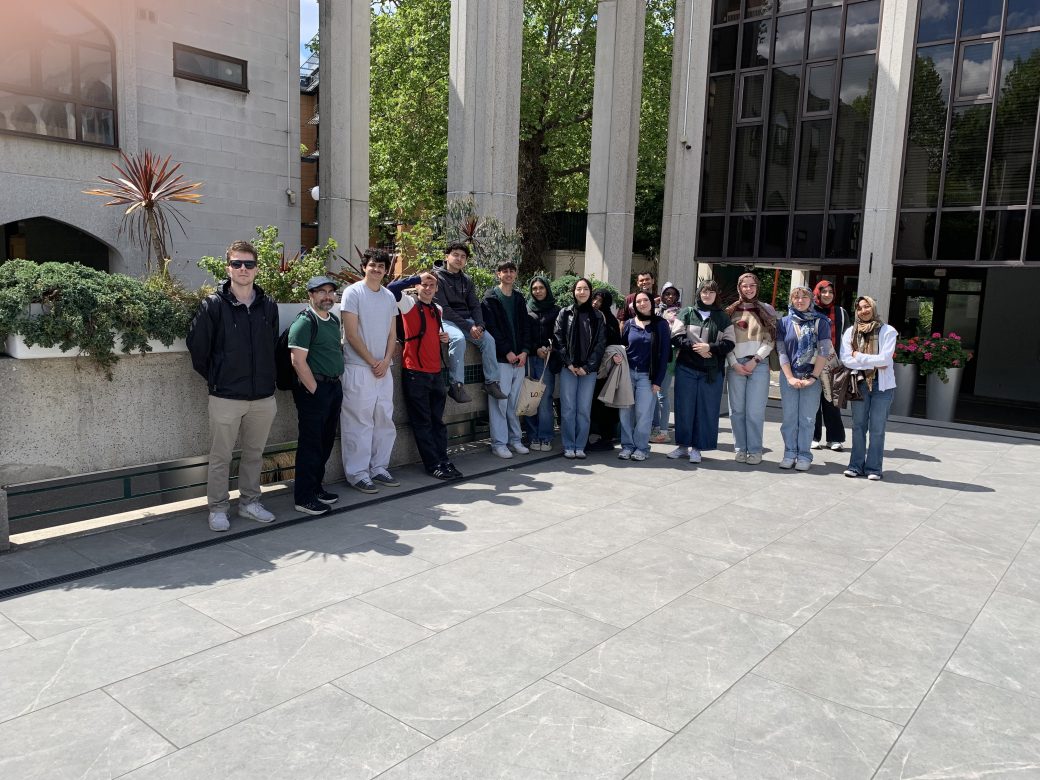
Today’s agenda included visiting the London Central Mosque & Islamic Cultural Centre. This excursion took us back to Regent’s Park, where the mosque is located. Before we left, the women in our group were instructed to dress in non-form-fitting clothing and to wear headscarves that adequately covered their hair. This was done out of respect for the mosque’s cultural and religious practices. After a short Tube ride on the Hammersmith & City line and a brief walk through the park, we arrived at the mosque. Many of us were nervous for this excursion because we did not know what to expect and wanted to be respectful in a new religious environment. The dress expectations and wearing head coverings were new for many of us, and there was some anxiety about how strict these rules would be. However, everyone was kind and patient as we were shown how to wrap our scarves properly.
Our guide, Mohamed Mezzi, gave us a brief history of Muslims and the Islamic faith. He used a prepared slideshow to explain the Five Pillars of Islam: Shahada (faith), Salah (prayer), Zakat (alms), Sawm (fasting), and Hajj (pilgrimage). Mohamed emphasized that prayer and faith are central parts of daily Muslim practice. We also learned how Muslims historically studied the moon and stars to determine times for prayer and fasting. Another interesting point was learning about the origins of “Al-,” an Arabic word that has influenced languages like English, Spanish, and French.
One of the things that stood out most during our discussion was Mohamed’s explanation of how people often judge Muslims and Islam based on the actions of a small number of individuals. He brought up 9/11 and encouraged us not to judge an entire faith by the actions of extremists, but instead to learn about Islam through its holy texts and broader community practices. He explained that every country and religion has people who commit harmful acts, but those individuals are not representative of everyone. Our class was struck by how openly and comfortably he addressed these topics, and many of us appreciated the different perspective he encouraged us to consider. Throughout the visit, Mohamed also emphasized the difference between religion and government as separate systems.
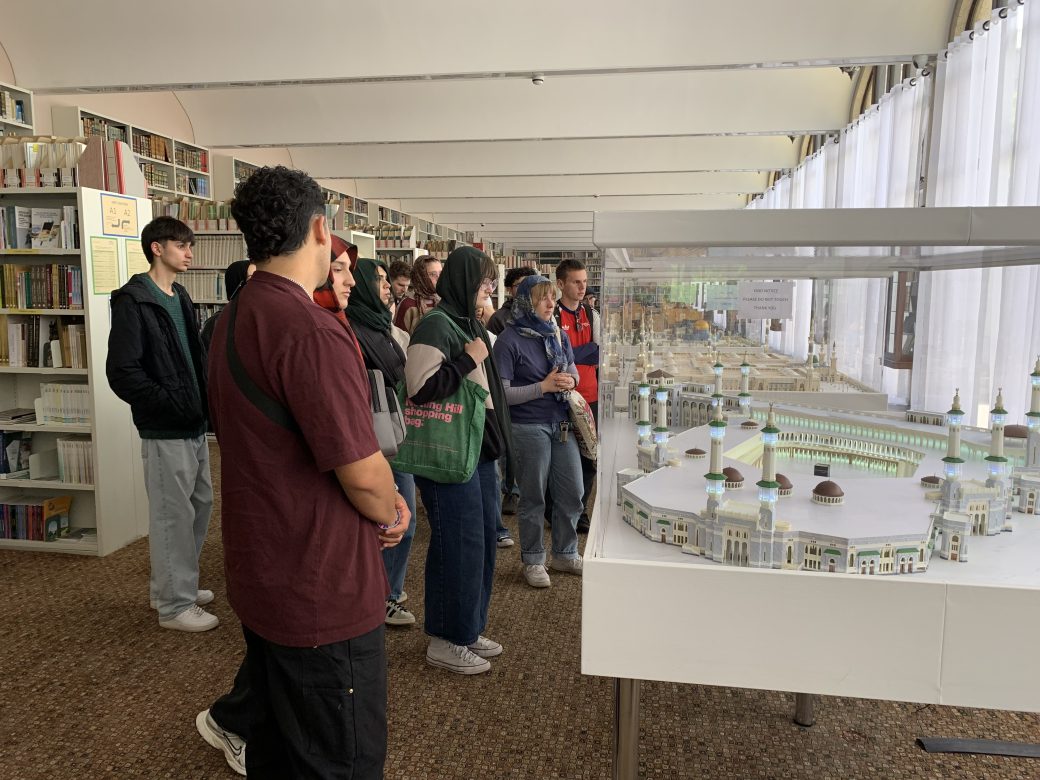
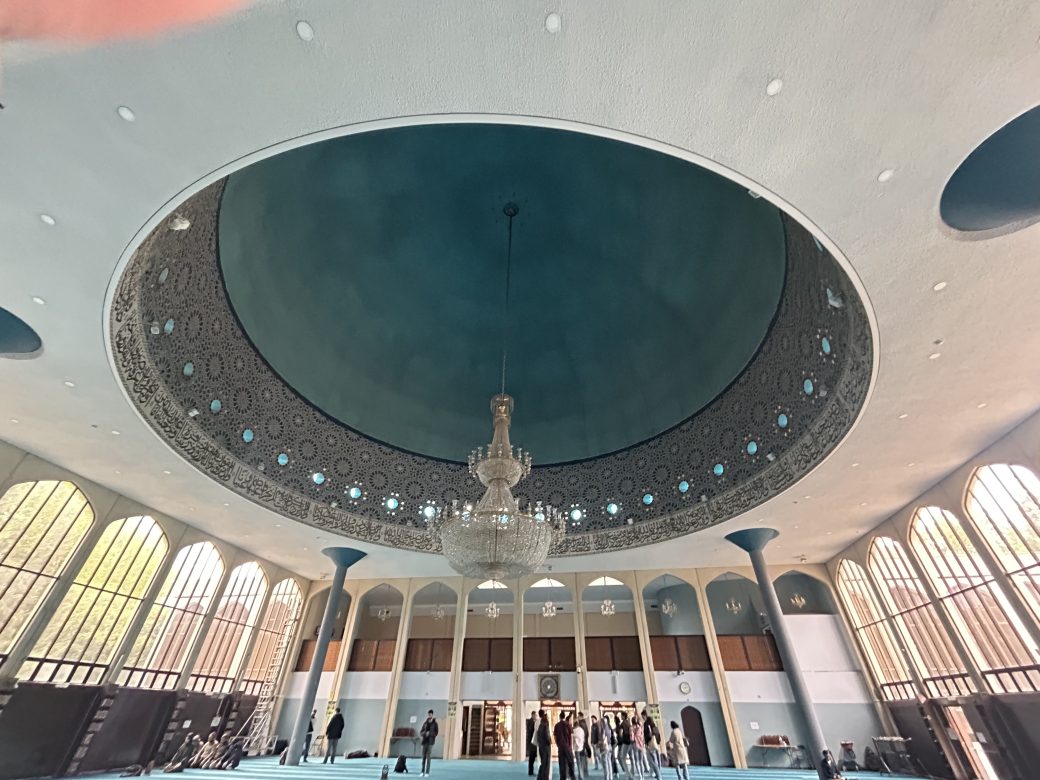
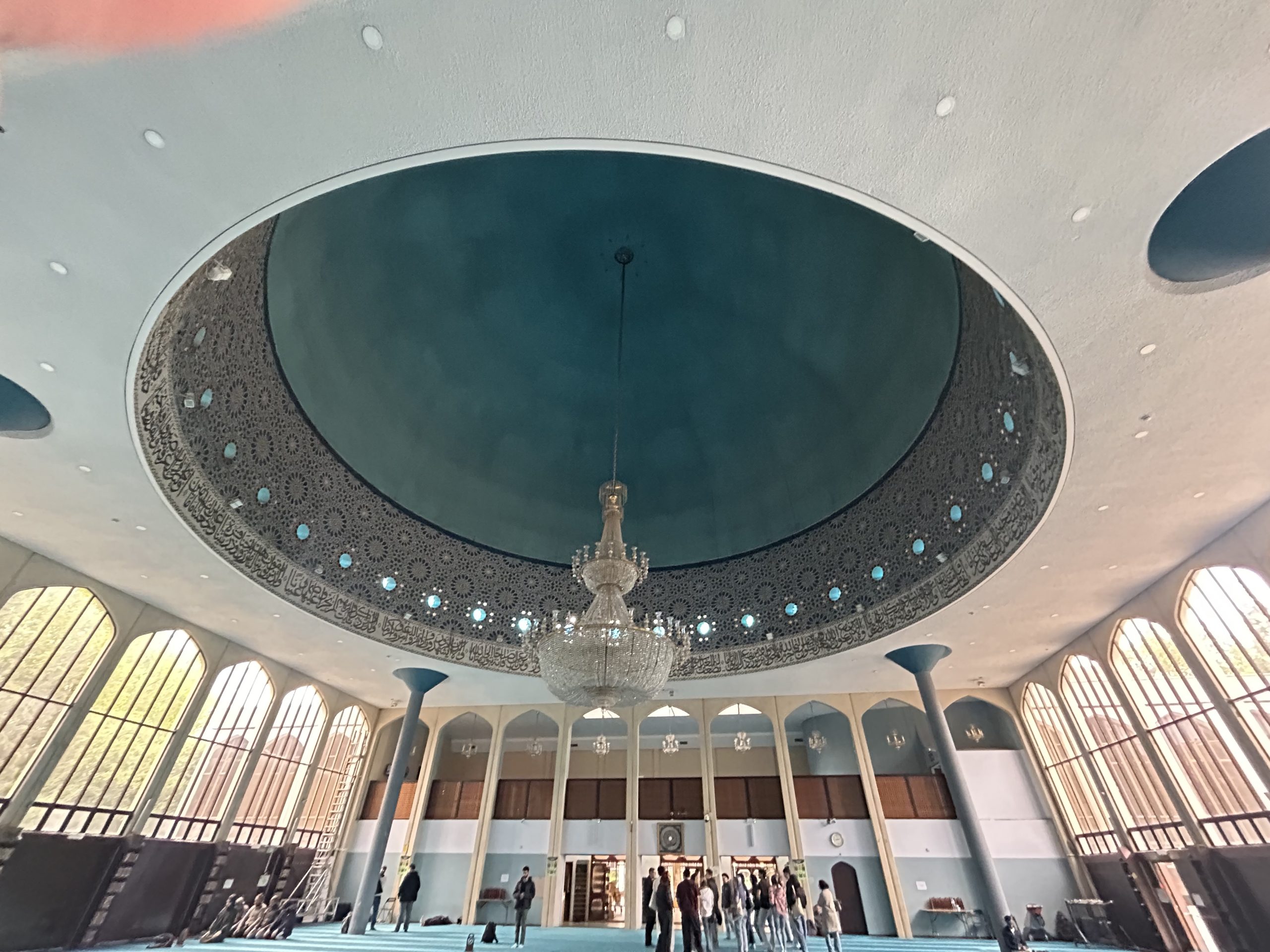
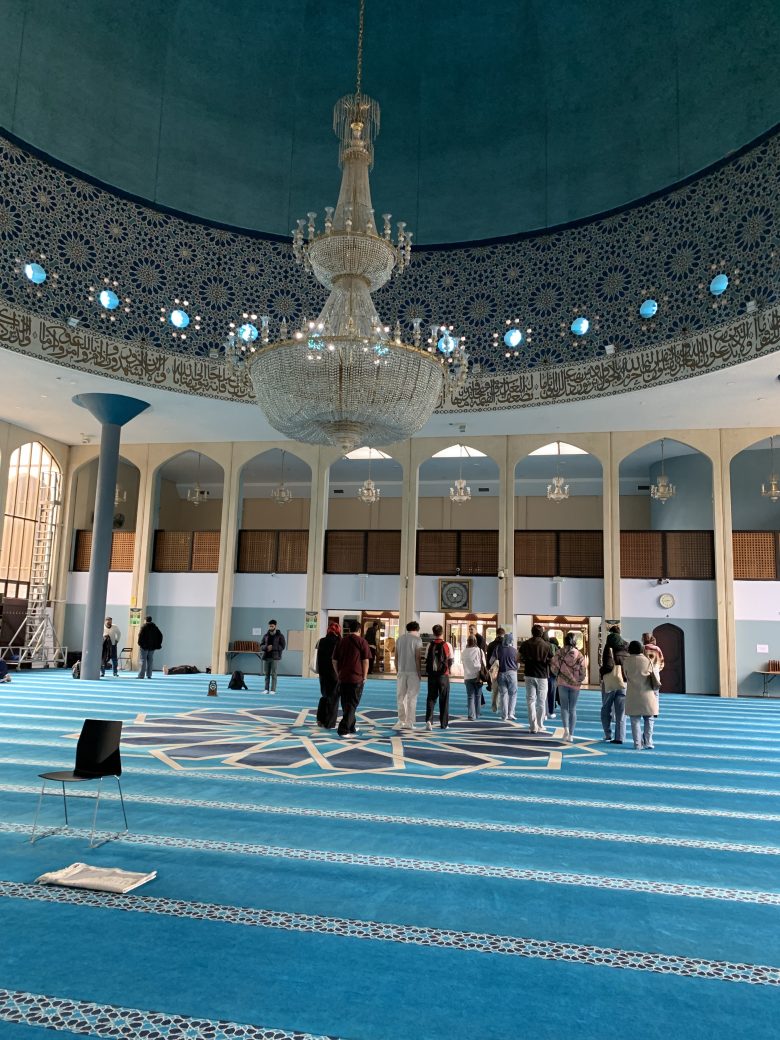
Mohamed then guided us through the mosque’s library of Islamic texts, which are read from what English speakers would consider back to front. We also viewed a 3D reconstruction model of three central mosques before entering the main prayer chamber. Before entering, we removed our shoes and stepped onto the teal carpet covering the floor. Underneath the giant dome, our voices echoed, which Mohamed explained helped amplify the prayer leader’s voice during services. Muslims gather there during noon prayer, which is one of the five daily prayers practiced in Islam.
After visiting the prayer chamber, we were guided downstairs into the basement of the mosque to examine two educational exhibitions.
The exhibitions were similar to what you might find in a museum, with information explaining the basics of Islam. Mohamed encouraged us to move around freely and focus on what interested us instead of trying to read every display in depth. There were two main exhibition rooms. The first focused on the pillars of Islam and the prophets mentioned in the Qur’an. One thing many of us found interesting was learning about Mary, who is the only woman mentioned by name in the Qur’an and is considered deeply important in Islam. The second room included a large section focused on women in Islam and explored verses connected to women and how those passages have shaped cultural understandings within the religion.
Overall, the experience felt very enriching. It was different from anything else we had experienced on this trip and gave many of us a new perspective. What began with nervousness and uncertainty turned into curiosity, conversation, and learning. We left the mosque with a stronger understanding of people and perspectives that many of us had not encountered before, which was one of the main goals of this SST experience.
 Global Education
Final retreat in Ecuador
 Global Education
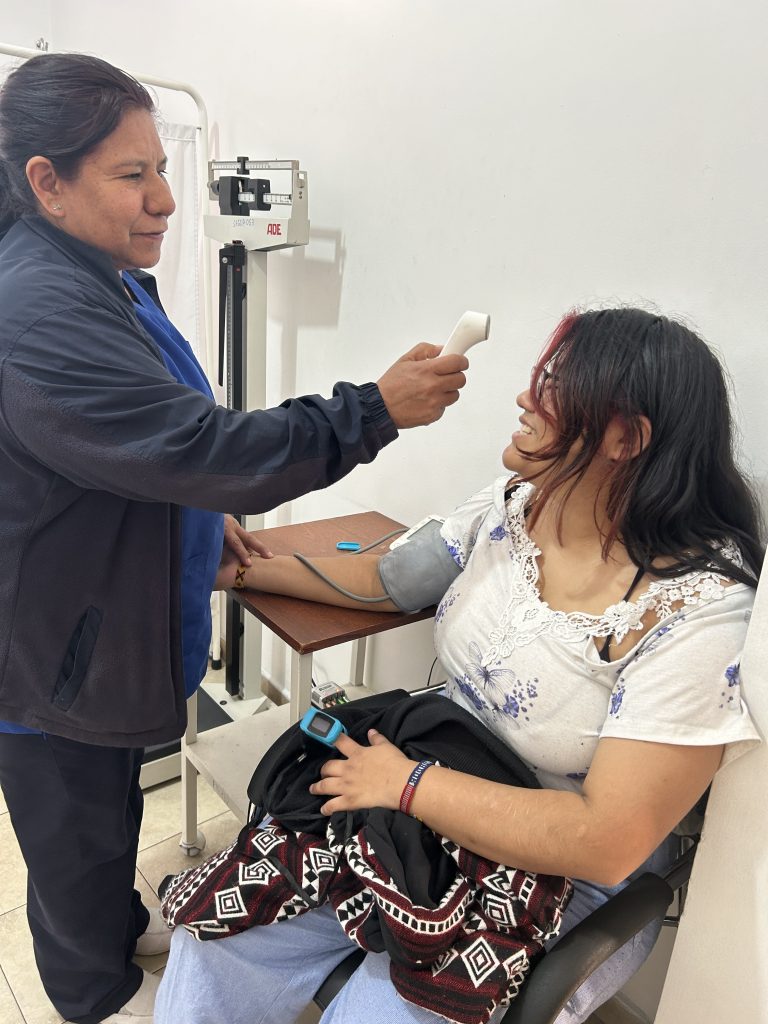
Life on the ward
By Dayanara Aguirre-Mulato During my service placement at the municipal Centro Médico in Riobamba, I had the privilege to be able to work alongside other nurses. Day to day each patient comes in to register for their appointment and I…
 Global Education
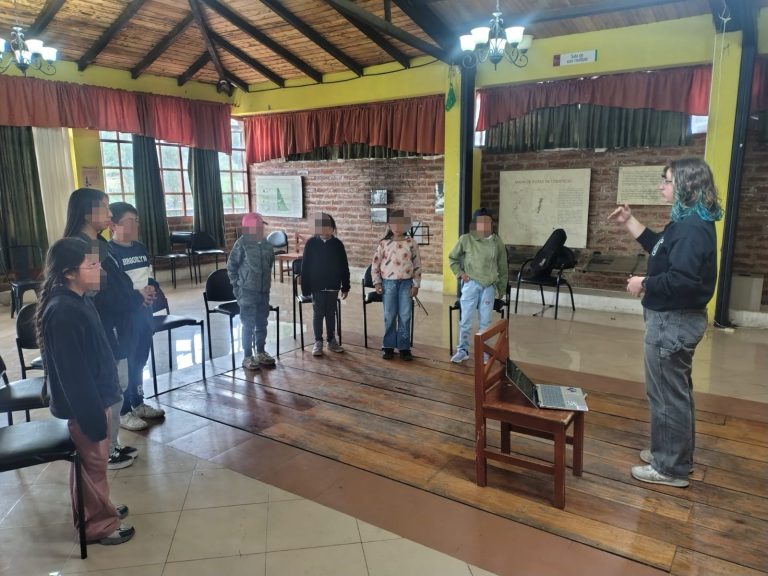
Service visits: opportunities for connection in Ecuador’s “provincias”
By Hillary Harder During the Service term, leaders have the privilege of traveling to visit each student at the home and volunteer assignment where they are spending their time during the second half of SST. For us, that meant traveling…