

By Hillary Harder On Sunday, July 26, our students returned to Quito from their service communities and we began our final retreat together! The afternoon was full of joyful reunions as each student arrived at our Quito home, la Casa…
News
Seaweed Farming & Eutrophication (by Ben Zimmerman)
Apr 05 2022
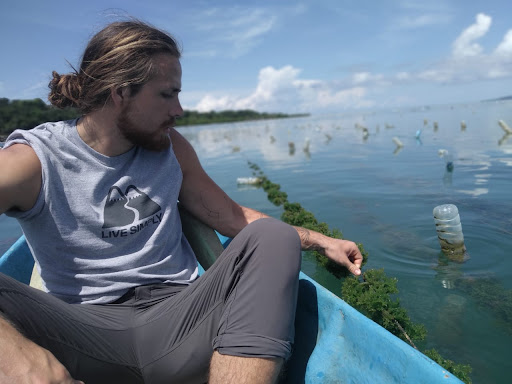
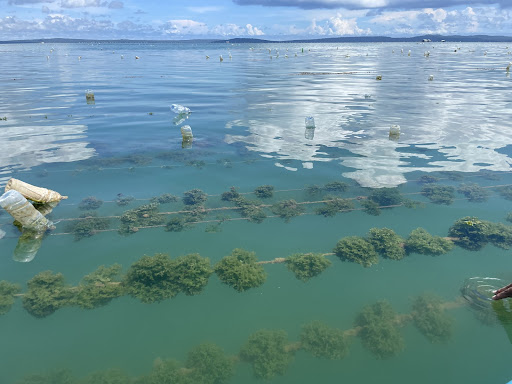
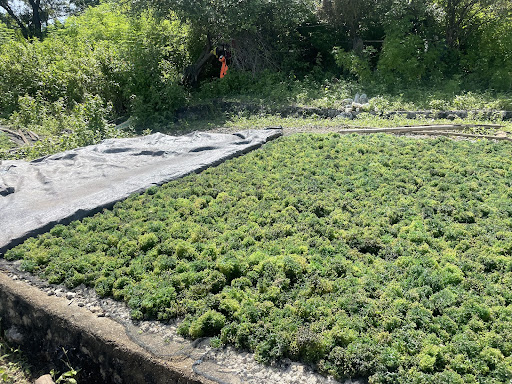
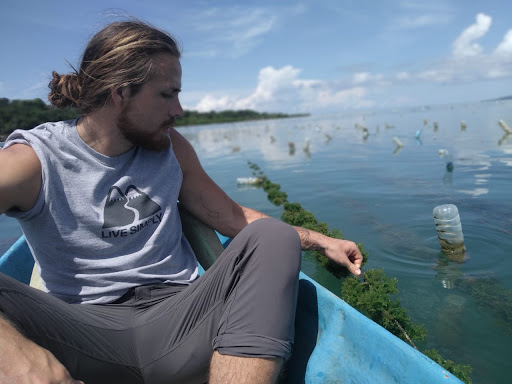
On Wednesday of this past week during my service placement in Timor I got to visit a seaweed farm. This was an interesting visit and I was able to discuss and learn quite a bit throughout the day. I could probably write a whole paper about seaweed farming and the issues facing it, but I will focus on a piece that relates to a problem we also face in Northern Indiana. This particular issue is that of eutrophication. Eutrophication occurs when there is an excessive amount of nutrients in a body of water causing dense plant growth (algae bloom) and the death of other life due to lack of oxygen. In Indiana, and other largely agricultural areas of the Midwest, eutrophication occurs mainly due to the runoff, from fields in which fertilizer has been applied, into waterways. Here, on the seaweed farms in Timor Island, it is a similar story just in the sea. For context, the type of seaweed being grown on Timor is largely Eucheuma cottonii, and is used in the production of carrageenan, an ingredient in many cosmetics and industrial manufacturing/food processing. The Philippines is the biggest exporter of this seaweed, but the production rate in the Philippines greatly affects the price value in Indonesia. Therefore, currently the price of seaweed is high due to lack of supply coming out of the Philippines, and this means that many villages and farmers are trying to grow and sell this seaweed. However, the problem is that many of these individuals have no prior knowledge of how to do this, and they fall back on their agricultural knowledge. This means that when they start the seaweed, they also mix in fertilizer into the seawater in this area. This significant increase in nutrients in the water combined with the warm water temperatures and abundant sunlight in Timor form the perfect conditions for an algae bloom. Now, these added nutrients can be beneficial for the seaweed, but too much and the algae will begin to out-compete and suffocate the seaweed. Therefore, these algae blooms, like in the US, are very destructive to the ecosystems. Not only does the seaweed often die as a consequence, but also much of the coral and marine life below suffers or dies due to lack of oxygen and sunlight being taken by the algae. This is just one of the challenges facing seaweed farming in this region of Indonesia. I found it fascinating to learn about eutrophication in seaweed farming as we work to solve this similar issue in the US.
 Global Education
Final retreat in Ecuador
 Global Education
Life on the ward
By Dayanara Aguirre-Mulato During my service placement at the municipal Centro Médico in Riobamba, I had the privilege to be able to work alongside other nurses. Day to day each patient comes in to register for their appointment and I…
 Global Education
Service visits: opportunities for connection in Ecuador’s “provincias”
By Hillary Harder During the Service term, leaders have the privilege of traveling to visit each student at the home and volunteer assignment where they are spending their time during the second half of SST. For us, that meant traveling…