

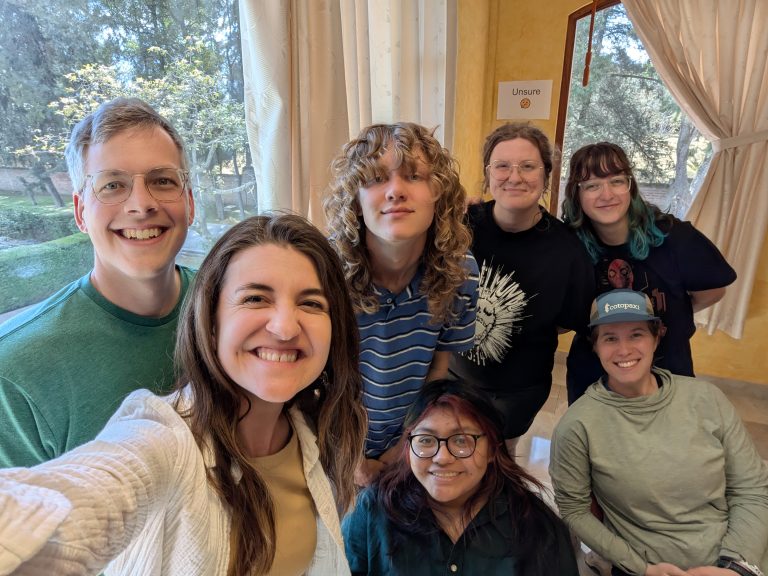
By Hillary Harder On Sunday, July 26, our students returned to Quito from their service communities and we began our final retreat together! The afternoon was full of joyful reunions as each student arrived at our Quito home, la Casa…
News
Yá’at’ééh shi’kis
Jul 08 2021
Meagan Gutierrez is a senior double major in English and Secondary Education.
On our second day at Black Mountain Mennonite Church, a local teacher came to talk to us about her life and career. Irene Bizahaloni teaches the Navajo language at Chinle High School. What was supposed to be only about an hour lesson, turned into much longer. However, nobody minded.
Irene first began speaking about the Navajo Code Talkers. I had never heard of this before so I was eager to learn. She brought in projects from her students, books, and even a newspaper referencing the Code Talkers. Apparently the Navajo that were drafted into the war used their language to make codes that the enemies couldn’t decipher. When they finally returned home, they would need to meet with a medicine man in order to “clean their bodies of what they experienced”. This isn’t practiced as much anymore. Instead, motorcycle parades for the returning soldiers are commonplace.
She then began her lesson into the Navajo alphabet. We learned that we have many of the same letters in common, but they have even more letters that we do not have including: ch, ch’, dl, dz, gw, hw, k’, kw, ł, sh, t’, tł, tł’, ts, ts’, and zh. As she taught us the letters, she gave us words to learn. Some of the words she taught were máazoo which means marble, chidí which means vehicle, and wóláchíí’ which means ant. I was very intrigued during Irene’s lesson and about the Navajo language as a whole. I have always been interested in the study of linguistics and this is the first time learning anything from their language and now I want to learn so much more.
She taught us how to specifically say certain letters because some of the older generation only knows it a certain way, while the younger generation develops sentences using English and Navajo words. She stressed the importance of saying each word and letter correctly in order to be understood. For example, the word ch’il, which means plants, needs to be said with a short “ch” sound due to the glottal (’) separating the word. The glottal means that the word is spoken with a quick stop when you are saying the word. Irene’s teaching style is informative, yet fun. I found myself captivated by what she was saying and I didn’t want her to stop teaching.
Irene came prepared with worksheets, which shows how skilled of a teacher she truly is. Her worksheets helped immensely. They taught us each thirty-two short vowels and each thirty-two long vowels. She gave us worksheets with pictures and as she said the word, we had to fill in the correct vowel sound for each word, which was only a little tricky, helped by her teaching. Overall, I learned how to say many different words and how to properly use the sounds to have the words make sense.
Irene told us that this coming school year will be her last year teaching at Chinle High School as a Navajo language teacher. She wants to retire so she can take care of her livestock at home or hooghan. It’s sad to know that we are losing an amazing teacher that truly does care about spreading the knowledge of this beautiful language. I hope in the short amount of time that we are present in the Navajo community that we have more opportunities to work with Irene and learn from her.
Hágoónee’!
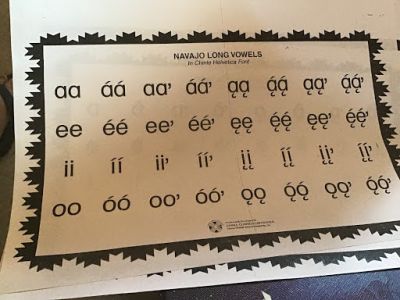
These are the 32 long vowels in the Navajo language.
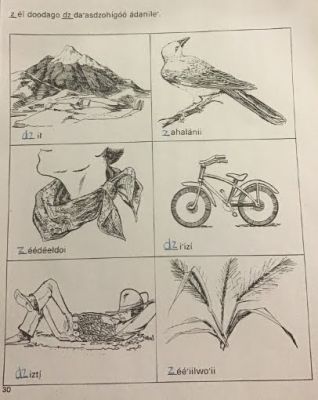
A worksheet that Irene gave us where we either chose a “z” or a “dz” sound to fill in the blank.
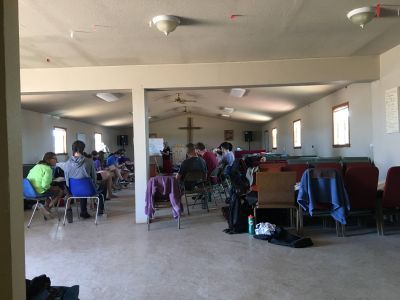
Irene Bizahaloni brings us a lesson in the Navajo language
 Global Education
Final retreat in Ecuador
 Global Education
Life on the ward
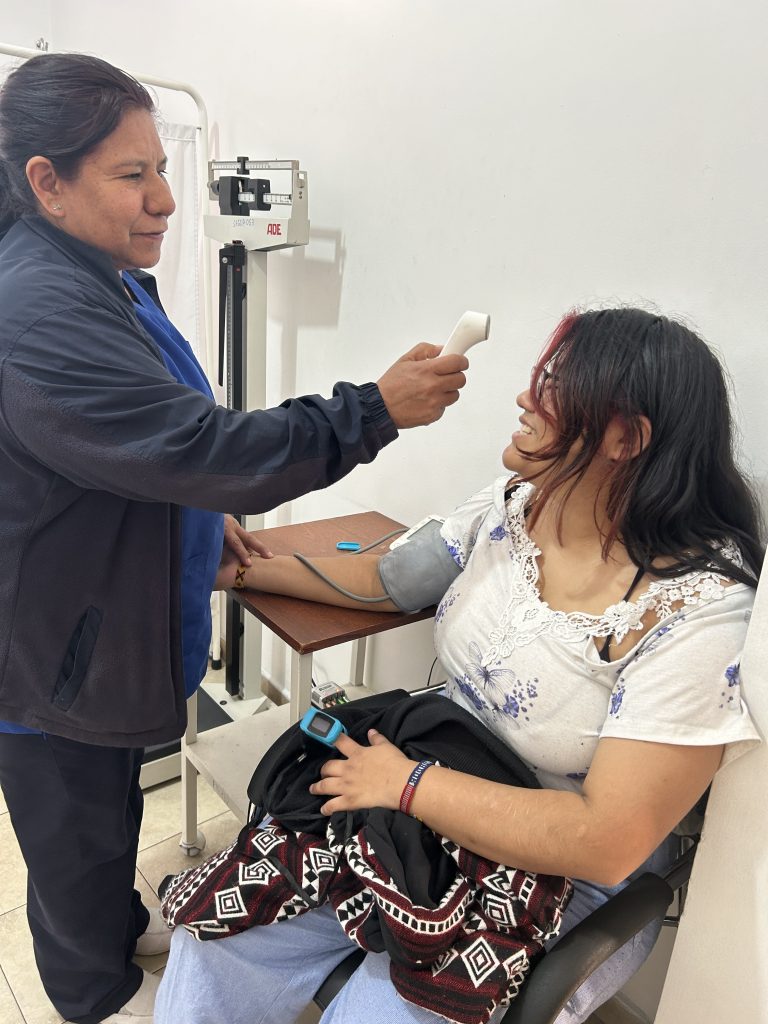
By Dayanara Aguirre-Mulato During my service placement at the municipal Centro Médico in Riobamba, I had the privilege to be able to work alongside other nurses. Day to day each patient comes in to register for their appointment and I…
 Global Education
Service visits: opportunities for connection in Ecuador’s “provincias”
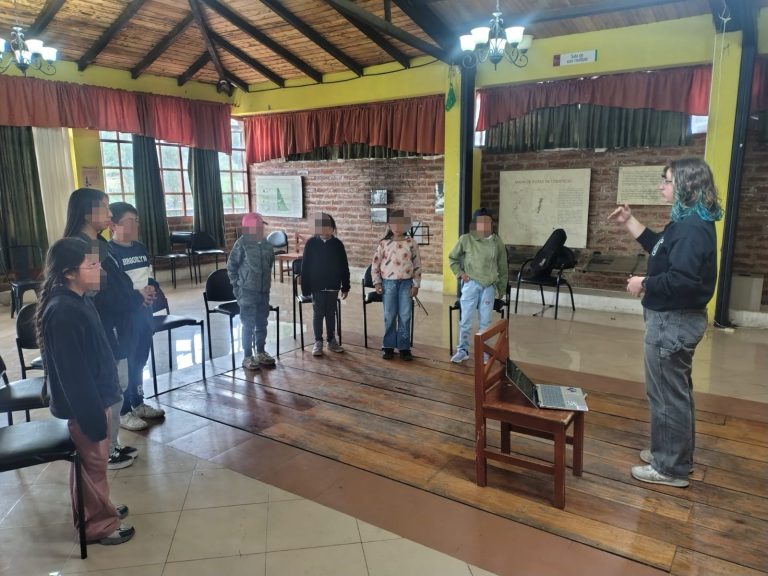
By Hillary Harder During the Service term, leaders have the privilege of traveling to visit each student at the home and volunteer assignment where they are spending their time during the second half of SST. For us, that meant traveling…