

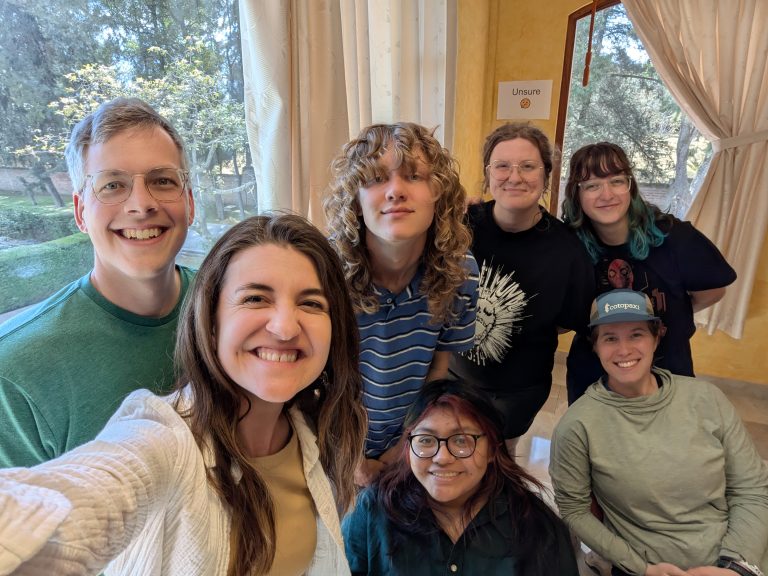
By Hillary Harder On Sunday, July 26, our students returned to Quito from their service communities and we began our final retreat together! The afternoon was full of joyful reunions as each student arrived at our Quito home, la Casa…
News
The Miami Nation: Journeys and Gender, Games and Giving
May 08 2021
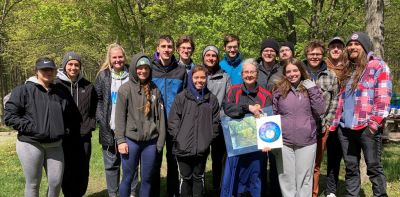
Ben Troyer is a Psychology major and senior from Kidron, Ohio. He writes about our visit with an indigenous elder at Chain O Lakes State Park:
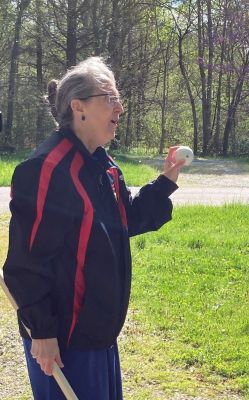
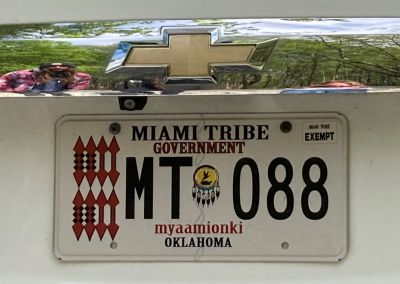 After waking up in our campsite at Chain’ O Lakes and having a little breakfast, we were joined by Diane Hunter, who is the Tribal Historic Preservation Officer of the Miami Nation of Oklahoma. While gathered around the campfire, Diane shared with us stories and the history of the Miami people. We learned about the history of the movement of the Miami people as they continually lost more and more land to settlers, until they were finally pushed all the way off of their land. Diane recounted the horrible way that her people were treated on their forced journey off of their homeland and into Kansas. At some points in their journey, they were all crammed together on a boat, and were referred to as cargo rather than people.
 Another interesting thing that Diane shared with us was the social and political structure of the Miami people. The Miami people had a much more egalitarian system concerning gender differences than the typical western model. In Miami culture, men and women had different roles, but one gender did not have more power than the other. One way that this was true was that a Miami group would have four chiefs. Two would be male, with one being a military chief, and one speaking for the needs of the males in the community. The other two would be female, with one being military and the other speaking for the needs of the women in the community. Within the social system of the Miami, the men did most of the work outside of the village such as hunting and going to war. The women did the work inside the village such as farming, childcare, and making all the things that the community needed to survive.
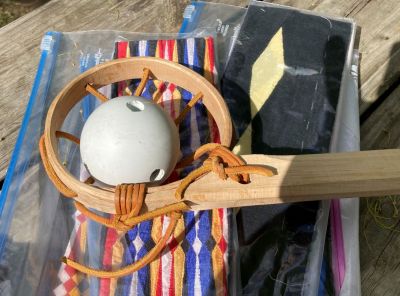 One last interesting thing that Diane shared with us were some of the customs of the Miami people. She shared with us some of the traditional games such as lacrosse and gambling. For the Miami people gambling was much different than what it is for people in the United States today. At the end of a game where they were gambling, the winner did not go home with all that they won, and instead they redistributed all that was gambled. This gives the winner the very high honor of being able to do gift giving, which is very important in Miami culture. One other custom that Diane shared with us was ribbon work. This practice has been revived in recent years, and has been an important part of Miami culture.
Overall, our morning spent with Diane gave us wonderful insight into the history and the culture of the Miami people.
 Global Education
Final retreat in Ecuador
 Global Education
Life on the ward
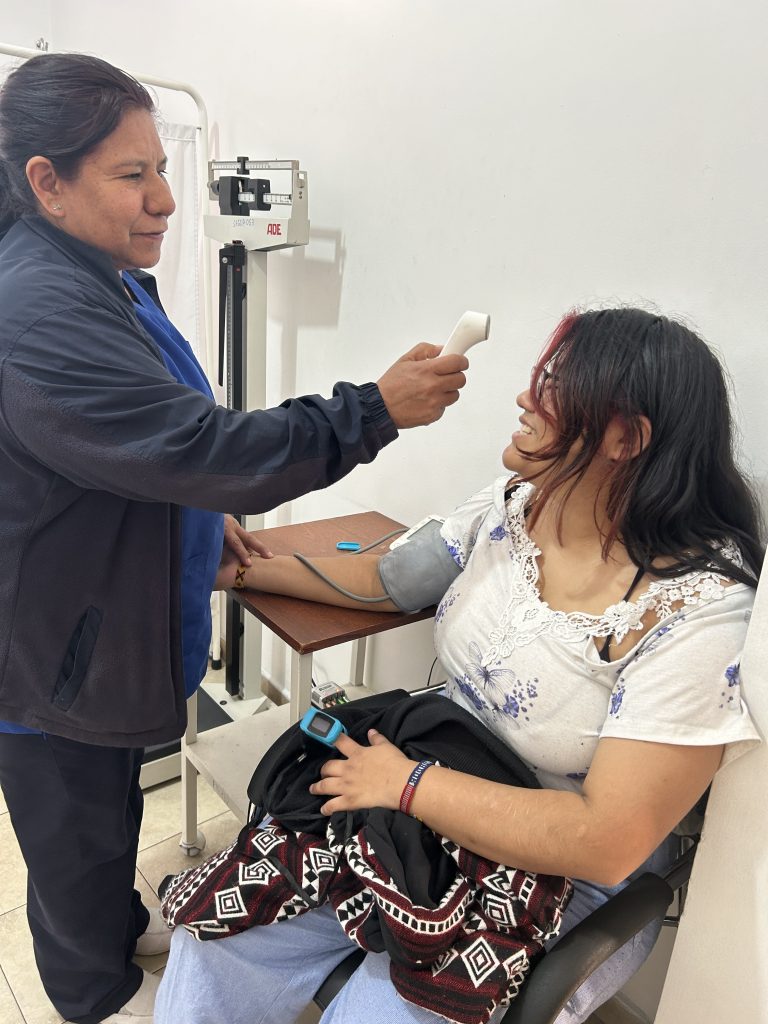
By Dayanara Aguirre-Mulato During my service placement at the municipal Centro Médico in Riobamba, I had the privilege to be able to work alongside other nurses. Day to day each patient comes in to register for their appointment and I…
 Global Education
Service visits: opportunities for connection in Ecuador’s “provincias”
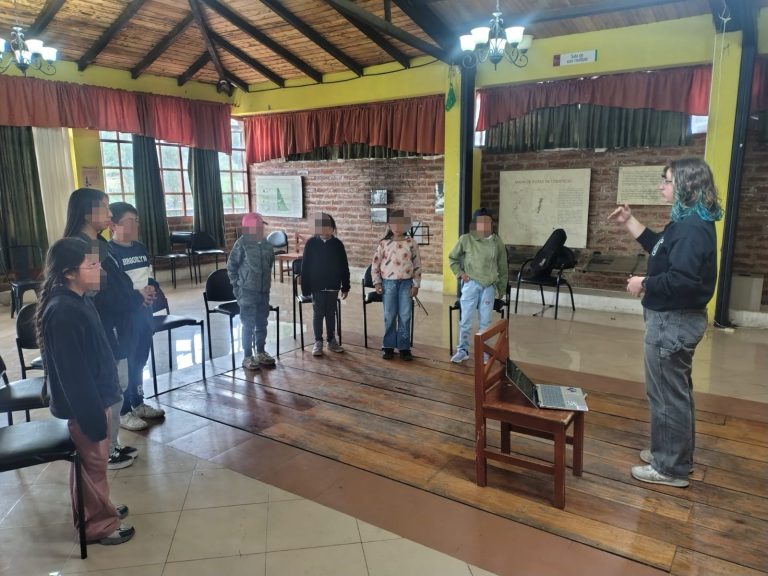
By Hillary Harder During the Service term, leaders have the privilege of traveling to visit each student at the home and volunteer assignment where they are spending their time during the second half of SST. For us, that meant traveling…