

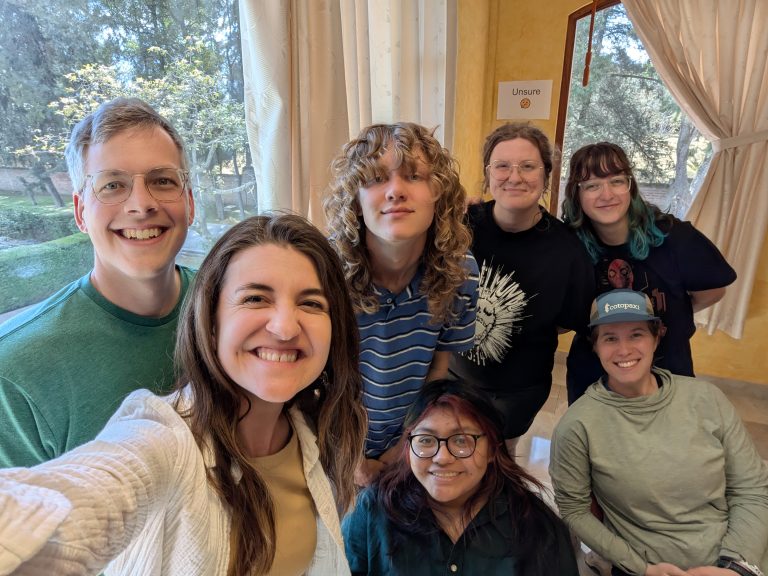
By Hillary Harder On Sunday, July 26, our students returned to Quito from their service communities and we began our final retreat together! The afternoon was full of joyful reunions as each student arrived at our Quito home, la Casa…
News
Reciprocity: Learning by Doing
May 28 2021
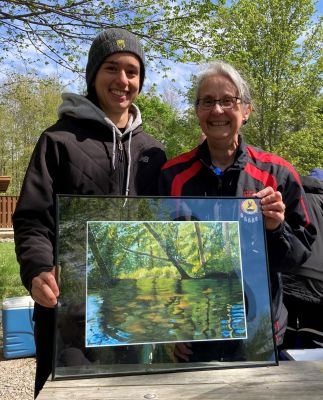
Ariana Perez Diener presents a framed print of her painting of the Mongo River to Diane Hunter, Historic Preservation Officer of the Miami Nation of Oklahoma
All good things must come to an end, including experiential learning in outdoor settings that give our lungs a chance to breath fresh air and our minds an encounter with paradigm-shifting perspectives, a.k.a. the Indigenous Economies May Term course. Most of us did not realize how different indigenous worldviews would be until we met George Godfrey, Diane Hunter, Scott Shoemaker, Billie Warren and others. Spending time in nature with members of the Citizen Potawatomi Nation, the Miami Tribe of Oklahoma and the Pokagon Band of Potawatomi, we realized that indigenous culture is alive and well, and that indigenous values can shape our views of the economy in ways we find both challenging and promising.
Indigenous economies are based on the core value of reciprocity. We began our three weeks of discovery with a reading from a member of the Citizen Potawatomi Nation, Robin Wall Kimmerer, who defines the concept in simple terms: “giving a gift in return”.
In her essay The Service Berry: A Gift of Abundance, the author explains that “gratitude and reciprocity are the currency of a gift economy, and they have the remarkable property of multiplying with every exchange, their energy concentrating as they pass from hand to hand, a truly renewable resource.” You can read the rest of Robin Wall Kimmerer’s essay here
We wondered what would happen if gift giving replaced, or at least complemented, our usual Western practice of monetary exchanges? There was one way to find out: In addition to the honorarium or mileage reimbursement offered by the college to our guest speakers, each student was given the opportunity to offer something made with their own hands to the indigenous leaders and thinkers who brought Native American culture to life through their stories, art and humor. Gifts ranged from framed prints of original paintings or photos to home-made cookies, banana bread and a sugar cream pie. We also made Thank You cards with original artwork and photos, which each of us signed in appreciation for the time our guests spent with us.
As the designer and instructor of a course I have never taught before, my hope for the fifteen students who took a chance on Indigenous Economies this May is that they will continue to reflect on what we have learned from our Native American teachers about the importance of place, the cyclical nature of time, the closeness of the Great Spirit, and the kinship we share with all of God’s creatures. And I trust that each of us will recognize, based on our experiences over the past few weeks, the benefits that come to everyone when we share what we have with others.
Have a generous summer!
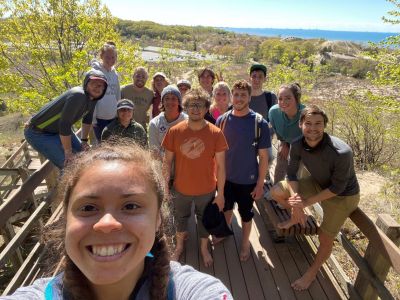
Group standing at the top of the “Diana of the Dunes Dare” in Indiana Dunes National Park
 Global Education
Final retreat in Ecuador
 Global Education
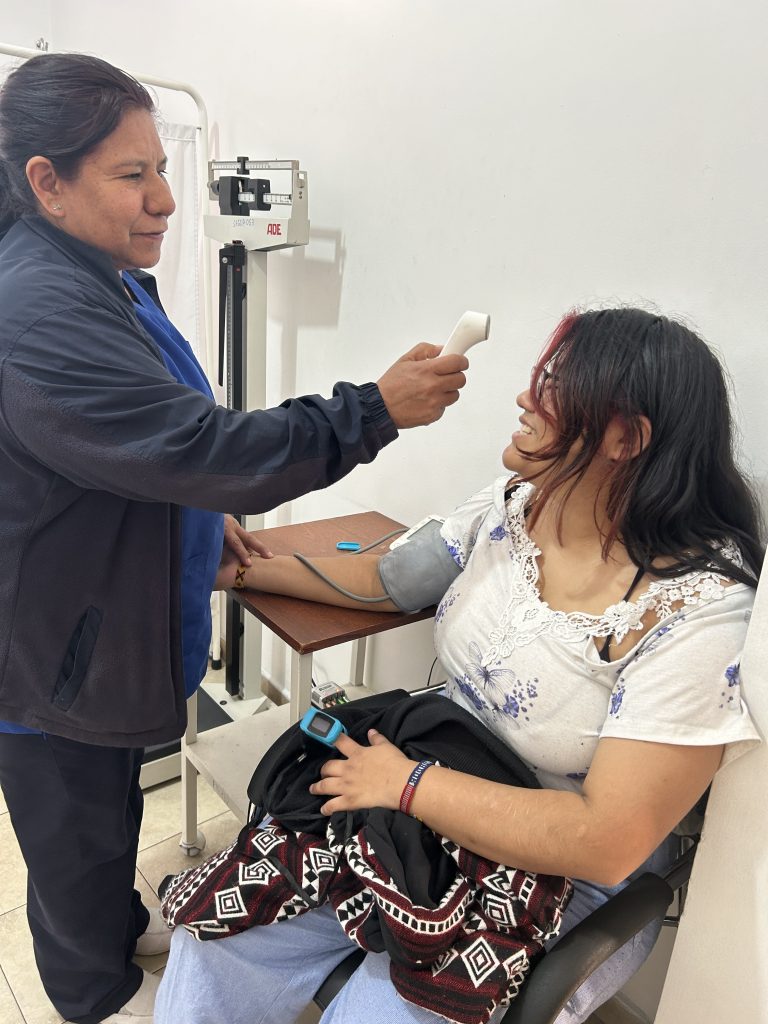
Life on the ward
By Dayanara Aguirre-Mulato During my service placement at the municipal Centro Médico in Riobamba, I had the privilege to be able to work alongside other nurses. Day to day each patient comes in to register for their appointment and I…
 Global Education
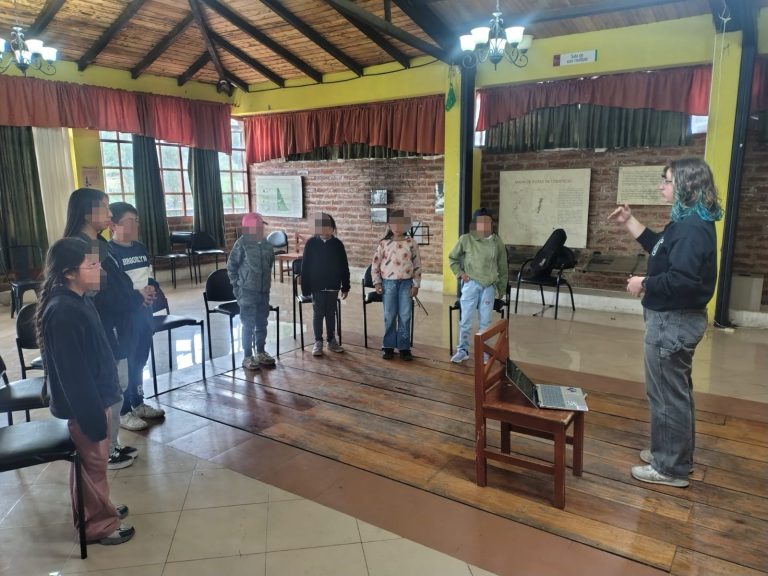
Service visits: opportunities for connection in Ecuador’s “provincias”
By Hillary Harder During the Service term, leaders have the privilege of traveling to visit each student at the home and volunteer assignment where they are spending their time during the second half of SST. For us, that meant traveling…