

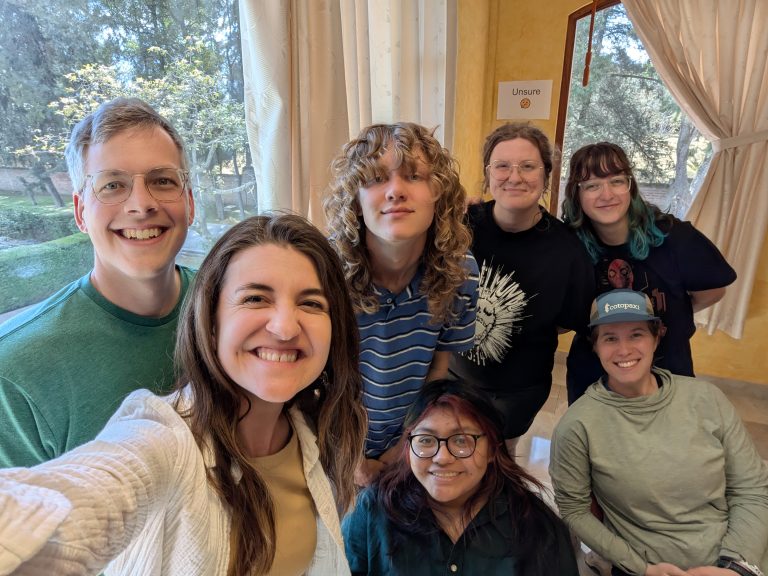
By Hillary Harder On Sunday, July 26, our students returned to Quito from their service communities and we began our final retreat together! The afternoon was full of joyful reunions as each student arrived at our Quito home, la Casa…

News
Three Questions
Apr 30 2021
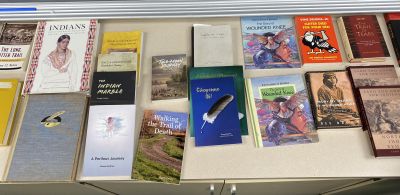
Today’s post is written by Naomi Willis, a senior nursing major from Mishawaka, Indiana:
We were honored to have a guest speaker, Rich Meyer, give our Indigenous Economies class some insight on the Potawatomi tribe and their land. Before we dove into the details of the Potawatomi, we talked about ownership. Ownership many years ago was defined as “owning by alienation,” meaning the only way to prove you own something is by being able to get rid of it or sell the item.  Rich proposed a great metaphor to set the stage for the rest of the presentation. He said imagine you go outside to get into your car and someone is staring at it, saying that the car is theirs. You are thinking this is impossible because you bought it from a used car dealership. This person then proceeds to say it was stolen from them which is why they can tell you there were ashes in the trunk and a sticker in the glove box. Your car is in fact their car, or for that matter, used to be their car. So, what is your relationship with them now? Well, this is exactly where the “three questions” come from. While we are buying a used car we are ignorant, to an extent, of the car’s past and where it came from. This is the same with the Potawatomi Tribe and their land.
In order to erase some of this ignorance we must ask and research these three questions:
- Whose land was it before?
- How did they lose their land?
- Where are their descendants today?
We later find out that there is an important fourth question that often gets left out. Let’s see if you can uncover the important final question. The land now known as Indiana was the Potawatomi’s land before colonization. They lost their land due to the overwhelming number of White settlers. In the 1800’s there were 6,550 White settlers and in 1830 that number was up to 344,508. The 1795 Treaty of Greenville is what allowed these settlers to continue to settle in Ohio and northern Indiana. The Potawatomi tribe was then forced out of their land and relocated to Kansas, known as the Trail of Death. 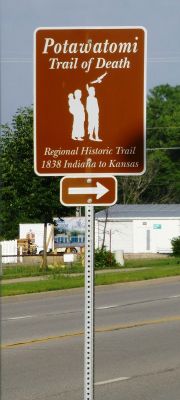 The Trail of Death was the deportation of the last few people from the Potawatomi tribe. Despite the name there were survivors. The descendants of the Potawatomi now reside in Kansas (Prairie Band), Oklahoma (The Citizen Potawatomi Nation), Michigan/Northern Indiana (Pokagon Band), etc. They are split into nine bands across the states and we are fortunate to speak with a member of the Citizen Potawatomi Nation (George Godfrey) in a few days.
This now brings up that important fourth question. Did you figure it out? With all this new found information, the final question is: What do we do now? Although this is a complex question we may not know the answer to immediately, we are hoping to discover a few next steps over the course of our time this May.
 Global Education
Final retreat in Ecuador
 Global Education
Life on the ward
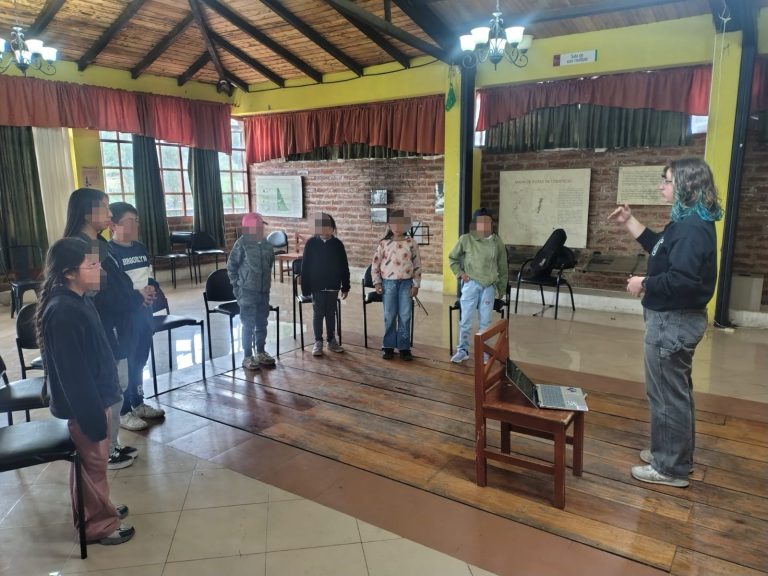
By Dayanara Aguirre-Mulato During my service placement at the municipal Centro Médico in Riobamba, I had the privilege to be able to work alongside other nurses. Day to day each patient comes in to register for their appointment and I…
 Global Education
Service visits: opportunities for connection in Ecuador’s “provincias”
By Hillary Harder During the Service term, leaders have the privilege of traveling to visit each student at the home and volunteer assignment where they are spending their time during the second half of SST. For us, that meant traveling…