Alumni and families of current students: Come back to campus for Homecoming Weekend, Oct. 2-4! See the schedule and register today


Events
Science Speaker: Evolving Dark Energy?
-
Free
-
Science Building, Room 106
Dr. Noah Weaverdyck ’11 is a researcher in cosmology at the Lawrence Berkeley National Laboratory. He’s immersed in building statistical models to analyze data from large-scale surveys of galaxies.
Two of the collaborations he takes part in recently unsealed their surveys and both found evidence that dark energy might *not* be as constant as the simplest models suggest, but rather seems to be weakening as the universe expands.
Weaverdyck is a member of the Dark Energy Survey (DES) collaboration, where he co-leads the Large Scale Structure Systematics analysis team and the Dark Energy Spectroscopic Instrument (DESI) at the Berkeley Lab.
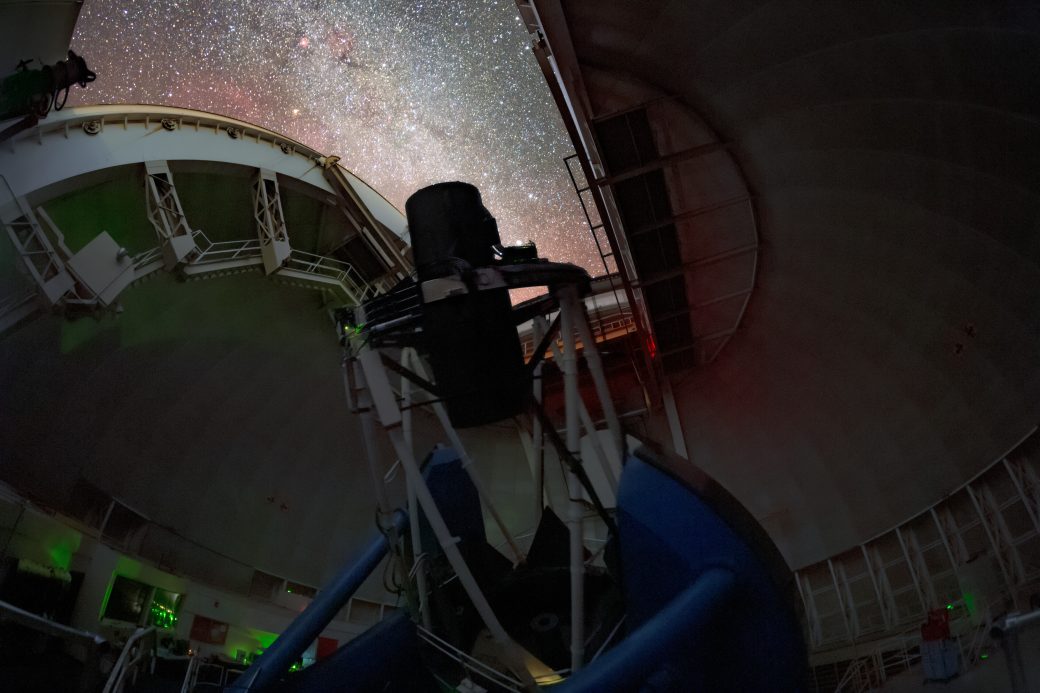
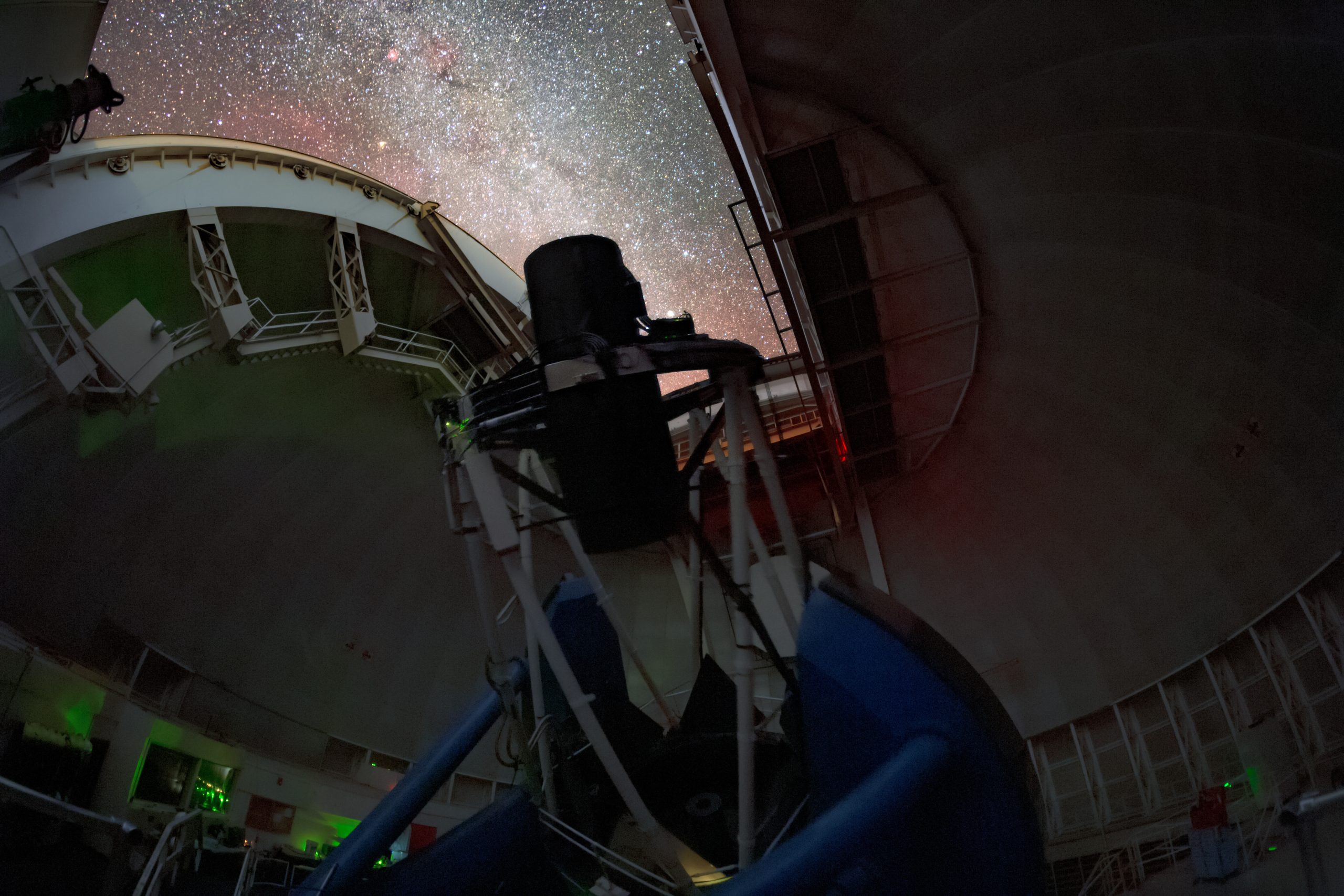
The Dark Energy Spectroscopic Instrument (DESI) making observations in the night sky on the Nicholas U. Mayall 4-meter Telescope at Kitt Peak National Observatory in Arizona.
Background: What is the universe made of?
Einstein showed that mass and energy are interchangeable. In terms of this “mass-energy,” our universe seems to consist of around 68% dark energy, 27% dark matter and only 5% normal matter that interacts with light.
Gravity causes mass (both dark and normal) to clump together, forming stars, solar systems and galaxies.
Early in the 20th century, red-shifted light in all directions showed that the universe is expanding. Two groups studying supernovae in the 1990s found that the expansion is accelerating. Unlike gravity, ‘dark energy‘ is pushing mass apart.
We have no direct observations of dark energy. The prevailing model of big bang cosmology, Lambda-CDM, makes a simple assumption that there is a constant dark energy density throughout ’empty’ space.
- Lambda, or Λ, is the symbol for this constant energy density, and also refers to Einstein’s cosmological constant (which implied a repulsive force, if greater than zero)
- CDM stands for Cold Dark Matter
Tue Jun 16–Sun Oct 04
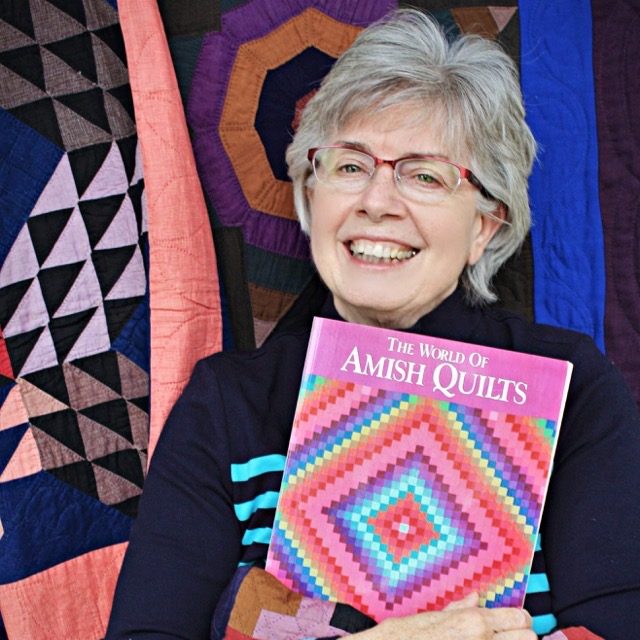
Northern Indiana Amish Quilts From the Rebecca Haarer Collection
The Good Library Gallery will host an exhibit of Amish quilts, collected and documented by Rebecca Haarer ’75, from now until Oct. 8, 2026.- Livestream
Tue Sep 15, 7pm
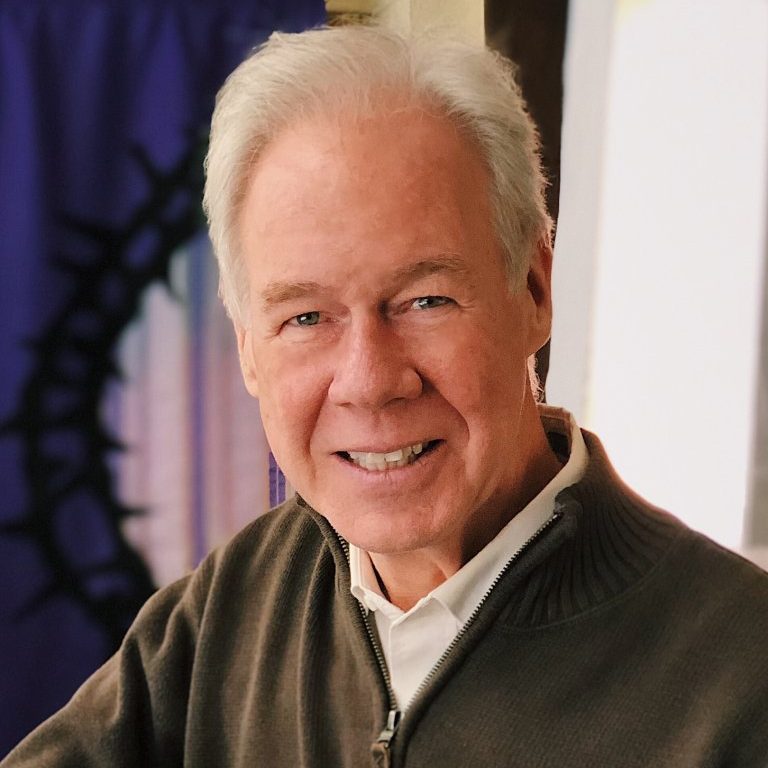
Yoder Public Affairs Lecture: Martin Doblmeier, “Christianity at a Crossroads”
Martin Doblmeier will deliver the Yoder Public Affairs presentation at Goshen College on Tuesday, Sept. 15. Thu Sep 17, 7:30pm
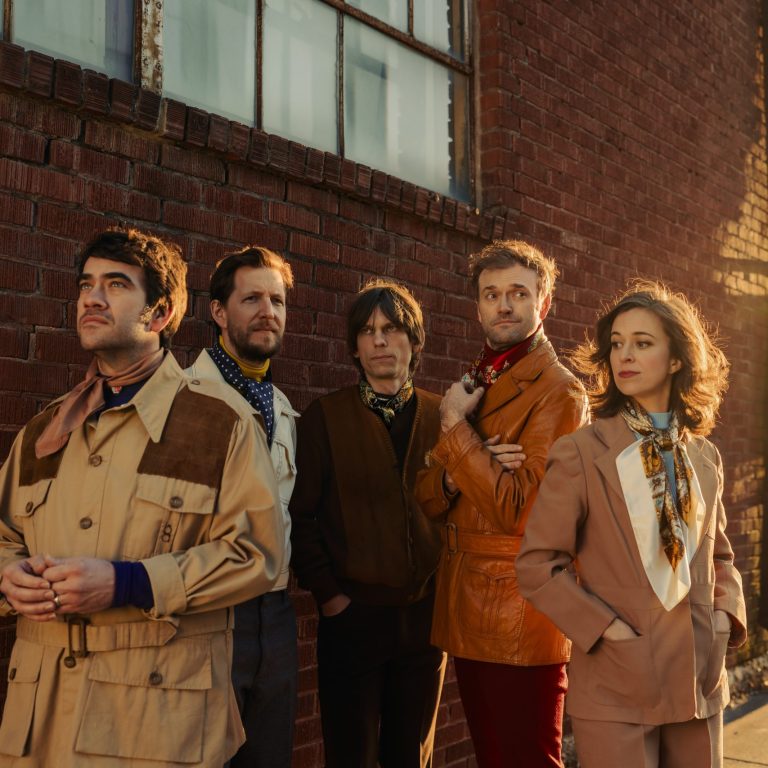
Performing Art Series: Punch Brothers
Formed by mandolinist Chris Thile in 2006, Punch Brothers is known for pushing the boundaries of acoustic music.