Browser statistics
- What monitor widths (in pixels) are in use? How wide should we design for?
- What fraction of users still have IE 6? IE 6 doesn't fully support PNG partial opacity, or CSS like max-width.
Readings
 Lynch & Horton
On the Web
Statistics that webservers gather
When you browse to a particular webserver, your browser transmits information to the webserver that can be gathered and analyzed. The information you typically transmit includes:
- What browser you're using (IE, Mozilla, Opera, etc)
- Your "IP" number (this page shows your IP number...), that is, what computer you're coming from, but *not*
your login name (This means it's generally impossible for a webserver to figure out your e-mail address just because you browsed there.)
- Some things about your computer, such as what operating
system you're using.
- The previous page, if you followed a link on it to get to "this one".
Most webservers "log" every access, and you can look at your website's webserver statistics to get an idea of who is visiting your site with what browsers, and what the most popular pages are, and which search engine search terms land folks on your site.
Companies such as websidestory gather statistics for many websites, and can then report on wider trends across many sites.
What's in use now?
Use the resources above to find out...
- What are the browsers in widest use across the Internet now? Approximately
what fraction is using IE, Firefox, Safari?
- What about at Goshen College? Note our stats summaries distinguish between off- and on-campus
- For off-campus GC visitors...what's the ratio of IE 7 to IE 6?
- What fraction are using Macs, PCs, something else?
- What are the recently most important searches at GC?
Screen resolution is going up
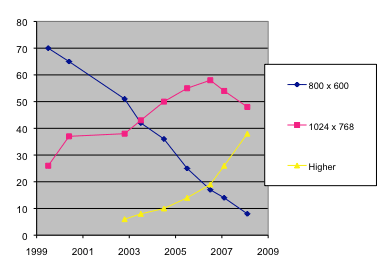
January 2008: 1024 X 768 was the most widely used resolution (source).
Still?
Played-out trends
Target audience
There are three important "audiences" to keep in mind.
All this material on browser statistics only touches on the first of these:
- People using one of the typical browsers that visit our site.
- Search engine robots are also 'site visitors'. Although they make
up a small number of our hits, they are extremely important in helping the
humans find their way to our pages, so we need to adapt our design/writing
to them.
- Handicapped folks. Although they make up a small number of our hits, we typically adapt our design/writing to handicapped accessible browsers either out of sense of compassion or (for U.S. government departments and contractors) because the law requires us to.