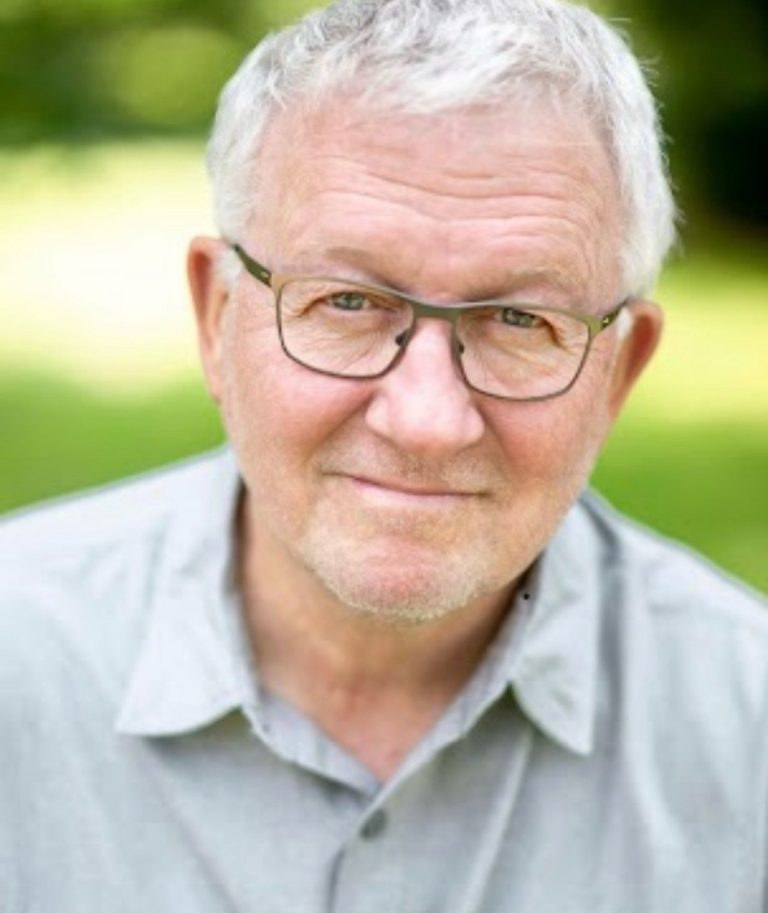
An Interview with David Wright
(October 2004)

What was your childhood like?  I'm particularly interested in things related to your family and education.

I guess I'd characterize my childhood as typical for a middle-class white kid in a small Illinois farming/bedroom community. I was raised mostly in Washington, Illinois, a town of about 10,000 located 15-20 minutes from Peoria. My parents were both educators who met while teaching high school in Northern Illinois. My mom quit teaching business skills to stay at home with me and with my sister (who is 2 yrs younger). She later went to work part-time at the local public library, where I remember spending a good deal of time hanging out, reading, and, come to think of it, getting my first job (mowing the library lawn). My mother's sense of loyalty--to her own family history and to her kids is her great virtue and an organizing factor in her life. If she loves you, you stay loved, with a tenacious love. I could say more, but I won't unless you ask. She's still living in Washington.

My dad was a commmunity college math professor and an all around restless soul. He loved teaching, but never quite got over the wound of not getting a doctorate. He was always trying new approaches to teaching, trying to write textbooks and invent programs to help students. He took up running when he was 40, and in a couple of years was running the Boston Marathon. He had a restless faith as well, for a while throwing himself energetically into a large evangelical/fundamentalist church in Peoria and later leaving that congregation to join a much more liberal United Methodist Church. Part of his restlessness grew from his own family of origin, a very poor family from Southern Indiana. He became the most visibly successful and, while enjoying his professional status and his family, always felt a responsibility to his Mom and his two sisters. He died in 1997, at the age of 59. I took quite a while to come to terms with his loss, a fact that's probably a bit too obvious in my first book of poems.

My sister and I were both educated in the Washington public schools, getting an adequate if not especially innovative education. I do, though, recall several outstanding teachers who affected me greatly--Mrs. Hickam in first grade (for whom I wrote my first poems); Mrs. Richert and Mr. Adams in sixth grade; Mrs. Lewellyn and Gus Gustafson, the grade school music teachers; and in high school, Dorothy Turner, the senior English teacher, and Betty Zook, the choral director. Especially these final two influenced my sense that my gifts in writing and in music were probably part of my calling.

I earned my undergraduate degree at Millikin Unversity in Decatur, IL and went on for a Masters at Northeast Missouri State University in Kirksville, MO. (I could give you more on why I liked this sort of education, but you may not need as much as I've already offered). During that time, I met and married Rebecca Josefson. We've been married for 14 years and have one daughter, Hannah, who is 8 and a baby on the way next month. After I finished my M.A., we moved to Chicago where I worked on my doctorate at Loyola University while she worked as a pediatrics nurse. Before I finished my Ph. D. We moved back to Central so I could teach at Richland Community College. I taught there for six years, during which time my daughter was born, my dad died, my wife started medical school, I found my way to a sweet, major clinical depression, became a Mennonite, and self-published my first poetry collection. After she finished med school, we moved back to the Chicago area for her residency and that¹s when I began teaching at Wheaton College. I¹m still teaching there, though we¹ve now returned (again) to Central Illinois, this time to Pontiac, another small town, for Becky to start her practice as a pediatrician.


What got you interested in writing in general, and more specifically writing poetry?

I first came to love language through music (and, if truth be told, through telling lovely little lies to get out of trouble). The church, the King James Bible, and television all affected how I think of language--rhythms, narrative, sound. I wrote down my first poem in first grade: I love the wind / Do you know why? / Because the wind / goes whistling by. However, I really learned how to write because I was a bad shortstop but still wanted to be close to sports. So I became a sports reporter for the local weekly paper when I was still a high school student. I thought I¹d go on to journalism school, but I got sidetracked by good experiences in high school band and choir (and a greater amount of praise for my singing than I actually had the talent to deserve).

When I went off to Millikin, I majored in both music and English, eventually discovering that I didn¹t like to practice but I did like to read and talk about books. My undergraduate mentor, Dan Guillory, helped me find my way to poetry as a way to combine these two loves. I took a course in Illinois Poetry that also helped me see the ground of my own upbringing as the potential ground of an artistic/literary life.

In graduate school, I lost some of my time and interest in writing poems, but came back to it around the time my father died. That¹s when I became serious about the craft of poetry and about writing poems that might be more than memorials to my own experience. That¹s when I began to read contemporary poetry more in earnest, more as a writer rather than as a critic or a theorist. Several key writers helped me learn how to do this, key among them Jeff Gundy and Scott Cairns.


Lastly, how would you describe your own writing style?  Do you feel that this has changed over the years?


I¹d be hesitant to describe my style, I guess, except to say that it relies, as much as I can figure out how, on the tension between a narrative and a musical sensibility. I'm too much of a needy, social creature to write poems that cannot be connected to by a fairly broad audience, and that leads me to, at least, the hints of narrative in much of what I write. Yet I¹ve grown more and more commited to the notion that it¹s the musical qualities of language- that push any writing towards the poetic. So this play between story and song is primary for me as a reader and, I guess, as a writer. Usually one of them wins. Lately, it's been the reliance on sonic qualities that has been winning more and more often.


Login Button