
The Bulletin | Fall/Winter 2023
When looking back on history, it can be tempting to think that progress and transformation has been easy, fast, painless and linear. And yet, change is rarely any of those, including at Goshen College.

Submit your news and photos related to births, deaths, marriages, job changes, achievements, etc. to alumni@goshen.edu for publication in the Bulletin. When sending in photos, please submit digitally in the highest resolution available. You can log on to the Alumni Directory to read more news about alumni, find contact information for them and submit your own updates.
When looking back on history, it can be tempting to think that progress and transformation has been easy, fast, painless and linear. And yet, change is rarely any of those, including at Goshen College.

Finding one’s voice and helping others find theirs is central to a Goshen College education and our motto, “Culture for Service.” It is exemplified over and over again by students, employees and alumni in surprising, compelling and transformative ways, and it is a connecting thread through each of this issue’s feature articles.

The Fall/Winter 2022 issue of The Bulletin features alumni awardee profiles, an introduction of the college's new mascot Dash and a roundtable discussion with a small group of alumni community healthcare leaders about the urgent needs in the industry — particularly in relation to nursing and public health.

One of the defining features of Goshen College is the boldness of our imagination — especially imagination that embraces the world. This issue of the Bulletin features three stories that exemplify the bold imagination of Goshen College — examples of how imaginative leaders have embraced the world with visionary dreams that are bearing fruit in these present times.

Community engagement is rooted in a place and in its people. While Goshen College may be more broadly known for our history of global community engagement, our local community engagement goes back to our founding in 1894 as the Elkhart Institute of Science, Industry and the Arts.
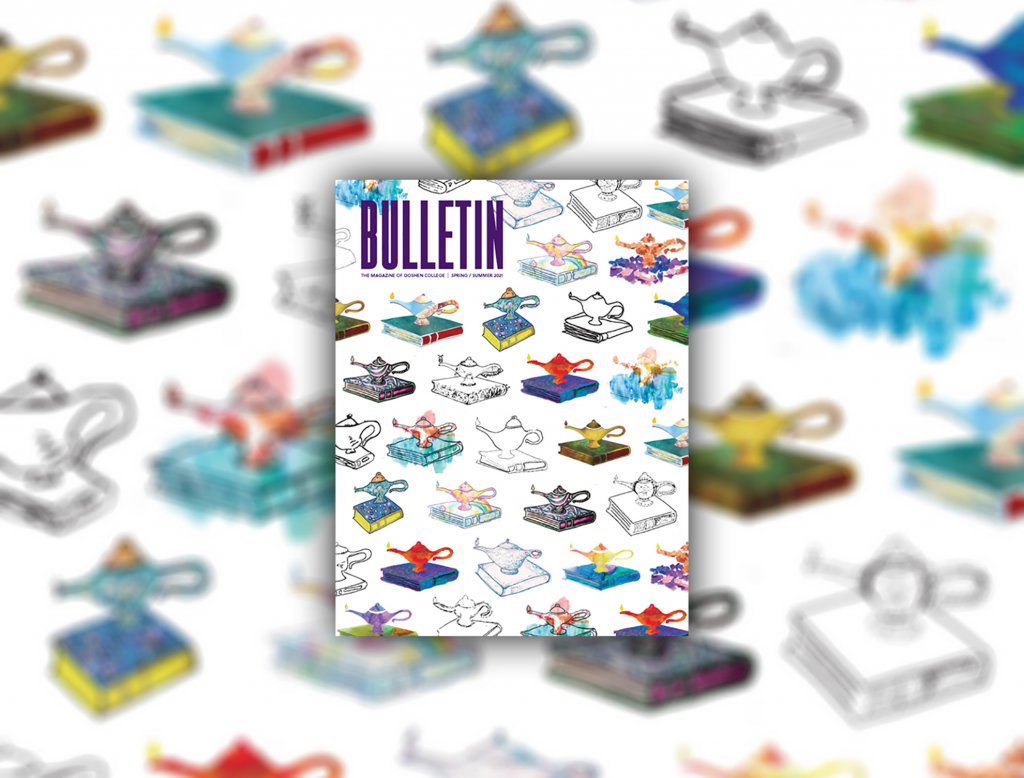
Faith and Learning. Goshen College is a place of light and enlightenment, a place where faith and learning connect in deep and diverse ways.
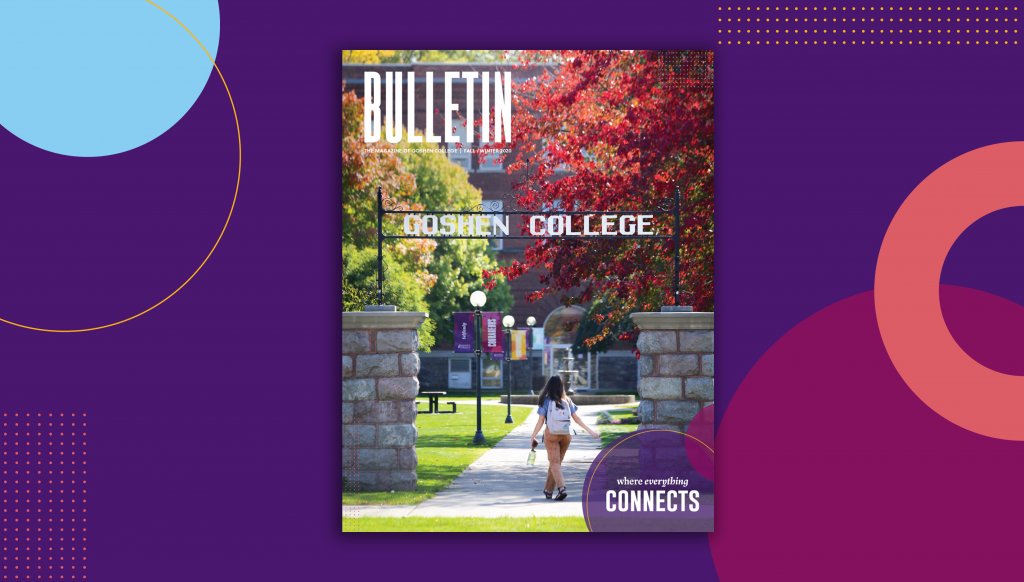
For so many alumni this was a place where many of the connections that still matter in their lives — to people, to new ideas, to future vocations, to God — began or were deepened.
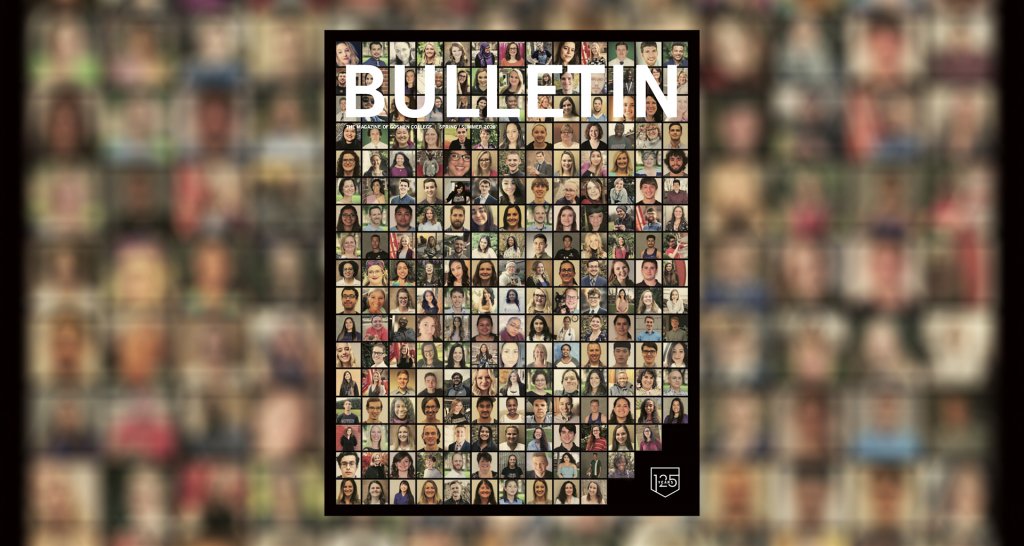
In this issue we hear from alumni who are working to cure and find cures during the COVID-19 pandemic, artists who are processing quarantine life through art, and members of the Class of 2020 whose final year of school ended in ways they never expected.
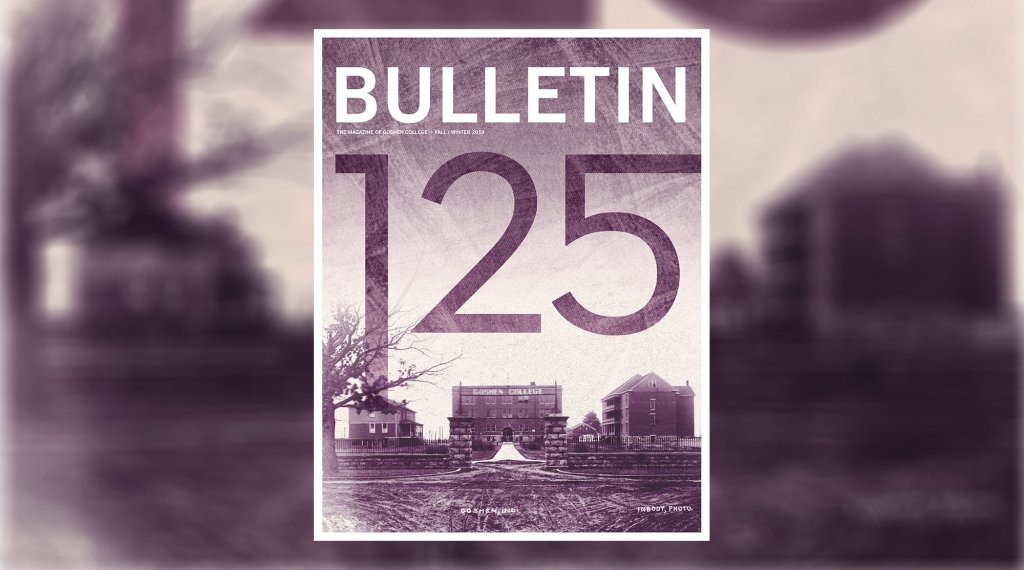
The Fall/Winter 2019 issue explores the 125th anniversary of the college, shares the stories of this year's alumni awardees and gives a peek at the new Hunsberger Haitian Art Collection on display in the renovated Union.
The spring/summer 2019 issue of the Bulletin lays out Goshen College's commitments to diversity, equity, inclusion and global citizenship.